What products have Ukrainians stopped buying, and where are they saving the most money?
21 July 17:27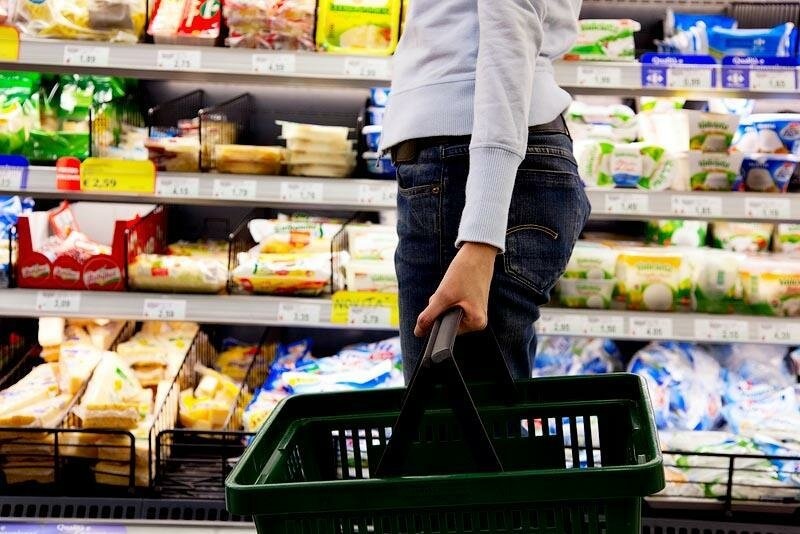 ANALYSIS
Over the past year in Ukraine, the most significant price increases were seen in fish, eggs, sunflower oil, bread, and meat. According to the State Statistics Service, prices for food and non-alcoholic beverages rose by 9.6% in 2026 compared to the previous year, while certain categories saw price increases of nearly 20%.
The price increases have already changed Ukrainians’ consumer habits. Shoppers are increasingly opting out of expensive varieties of fish, hard cheeses, veal, and other delicacies. Instead, they are choosing cheaper alternatives, buying items on sale, or completely changing the composition of their grocery basket.
"Komersant Ukrainian" has determined what to expect from prices in the near future.
According to economist Oleg Pendzin, the composition of the grocery basket directly depends on the population’s income level. This is a universal pattern that holds true not only in Ukraine but also in most countries around the world.
Even before the full-scale war began, Ukrainians were consuming less meat than doctors recommend. While the recommended intake is about 90 kg of meat per person per year, this figure stood at around 75 kg before the war and has now dropped to approximately 70 kg.
A similar situation, the economist notes, is observed with dairy products—their actual consumption also remains below recommended levels.
At the same time, the situation is the opposite for cheaper products. Ukrainians consume about 10% more bread than the recommended amount. This indicates a gradual shift in dietary patterns toward more affordable foods. The economist explains that after the outbreak of full-scale war, a significant portion of the Ukrainian middle class lost part of their income, which immediately affected consumer behavior.
“People have actually started eating less meat, dairy products, and fish, while demand for grains, bread, sugar, and potatoes has increased. This is a normal reaction by Ukrainians to falling incomes and high prices,” notes Pendzin.
According to him, this consumption pattern is typical for countries where the population is forced to cut back. First and foremost, people reduce spending on the most expensive items, keeping in their shopping carts those goods that provide satiety at a lower price. In particular, shoppers are more likely to choose chicken over more expensive cuts of meat, seasonal vegetables over imported ones, and are increasing the proportion of grains, pasta, and other relatively inexpensive foods in their daily diet.
The National Bank of Ukraine regularly notes this trend in its inflation reports. The regulator notes that amid accelerating inflation, Ukrainian consumers are adapting to rising prices primarily by substituting more expensive goods with cheaper alternatives and cutting back on discretionary spending. This is a typical pattern of household behavior during periods of high inflation and indicates a shift in consumption patterns rather than a complete abandonment of certain food categories.
It is worth noting that despite an overall reduction in spending on expensive food products, alcohol is not experiencing the same decline in demand. According to Oleg Pendzin, the reason lies not only in economic factors but also in psychological ones.
“For many people today, alcohol has become a way to relieve psychological stress. Therefore, they may give up red fish or expensive cheeses, but not this form of relaxation,” the economist explains.
At the same time, he warns that in the event of a sharp increase in alcohol prices, the official market could lose customers not because of a decline in consumption, but because part of the demand shifts to the black market.
Watch us on YouTube: important topics – without censorship
What Ukrainians Are Saying on Social Media
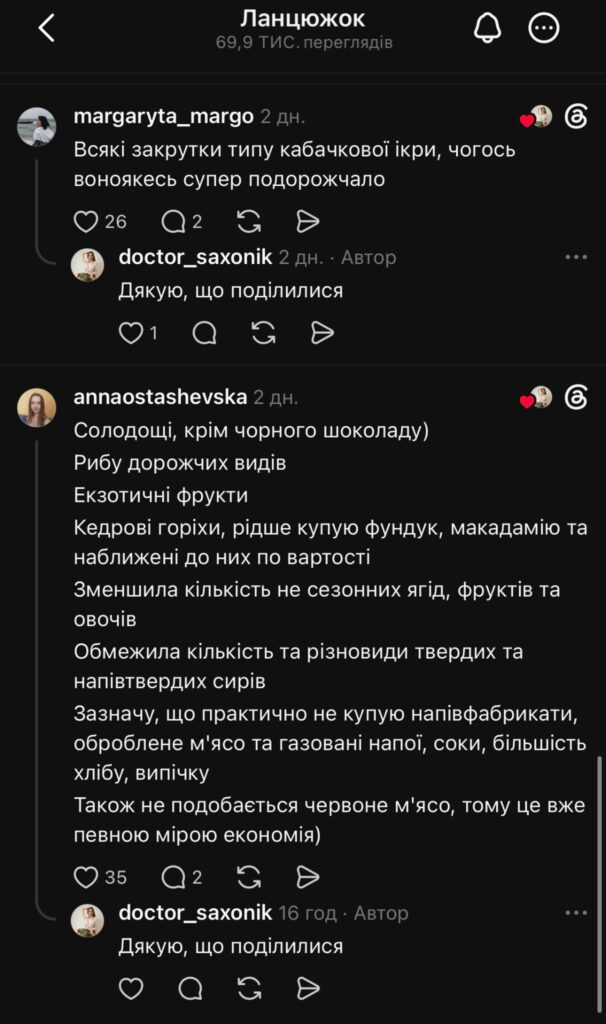
Discussions on social media confirm the trends economists are discussing and that official statistics show. Ukrainians are increasingly not giving up certain products entirely but are changing their habits, looking for ways to cut costs. Most often, users write that they have cut back on buying expensive types of fish, primarily salmon and other red fish. Many note that they now buy it only during sales or have even started curing it themselves, since that works out to be much cheaper.

Another category Ukrainians mention most often is hard and aged cheeses. In their comments, people explain that they’re cutting back on them not only because of the high price but also because of declining quality. Some note that they’ve limited their shopping to basic dairy products and now buy expensive cheeses much less often—or have stopped buying them altogether.

Many Ukrainians also report that they are buying expensive types of fish, veal, jamón, red caviar, delicacies, nuts, exotic fruits, and out-of-season berries less and less frequently. Some users admit that they have almost completely given up expensive pastries, cakes, and certain sweets.
People are increasingly changing not only the types of food they buy but also their consumption patterns. Comments often mention that people buy food mainly on sale, stock up on discounted items, or prefer to cook at home instead of buying ready-made products. For example, some users note that they have stopped going to cafes and restaurants, instead preparing at home even those dishes they used to buy ready-made.

It is noteworthy that many Ukrainians emphasize that they are not cutting back on basic food items, but are significantly reducing spending specifically on non-essential goods. It is precisely expensive cheeses, delicacies, red fish, caviar, nuts, and exotic fruits that are most often the first items cut from the family budget.
At the same time, there are also opposing views. Some users note that they make a point of not cutting back on food expenses, considering high-quality food a priority. Even so, they admit that they’re paying closer attention to sales and trying to shop more wisely.

What Will Happen to Prices Next
The National Bank of Ukraine does not expect food prices to fall quickly. On the contrary, food inflation may intensify further in the second half of 2026, although overall, the regulator forecasts a gradual slowdown in the rate of price growth in the medium term.
In its April inflation report , the NBU forecasts that inflation will stand at 9.4% by the end of 2026. At the same time, a gradual slowdown is expected starting in early 2027: to 6.5% by the end of 2027 and to the target level of 5% in 2028. To curb inflation, the National Bank also forecasts that the discount rate will remain at 15% at least until the second quarter of 2027.
At the same time, the regulator emphasizes that Ukrainians are unlikely to see any significant relief when buying groceries in the coming months. The reason is that high business costs continue to put pressure on production costs. This primarily refers to rising costs of energy, logistics, and labor, as well as the consequences of the war and infrastructure damage. According to the NBU’s assessment, these factors will remain the key drivers of food inflation.
The National Bank is paying particular attention to the food sector. The report notes that in the first half of the year, price increases for certain products were partially offset by the high-base effect and an increase in the supply of some vegetables. However, this effect will gradually fade in the second half of the year, and food inflation may exceed 9% due to further increases in production costs, primarily for logistics and labor.
At the same time, the NBU expects the situation to gradually improve in 2027–2028. Among the factors that will contribute to a slowdown in inflation, the regulator cites the stabilization of fuel prices, a reduction in external price pressures, a gradual increase in crop yields, the normalization of the situation in the energy sector, and the effect of tight monetary policy. According to the National Bank, these factors should create the conditions for inflation to return to the 5% target.
However, the NBU emphasizes that the forecast remains contingent on developments in the security situation. Further attacks on energy infrastructure, rising global energy prices, a decline in crop yields, or logistical problems could once again intensify inflationary pressures and delay the expected slowdown in price growth.
Read us on Telegram: important topics – without censorship