Despite the war, there is demand for agricultural land in regions near the front lines
14 August 14:55 ANALYSIS
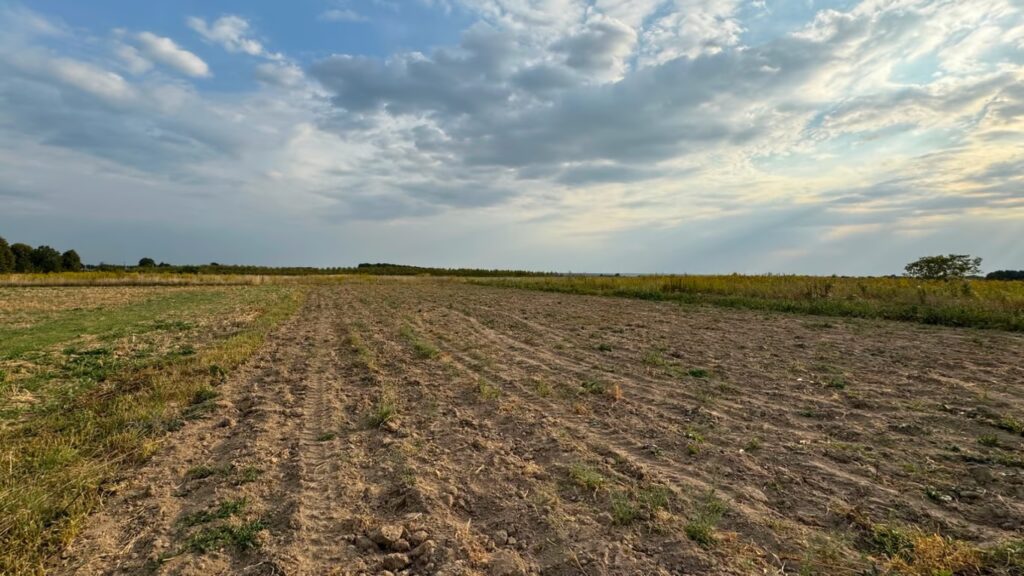
Competition for land in Ukraine is intensifying. Moreover, as experts note, the number of people seeking to acquire a plot of land is growing even in regions near the front lines. *Komersant* investigated what lies behind this trend
The highest lease rates in 2026 were recorded in Poltava (20,700 UAH/ha), Ternopil (19,500 UAH/ha), Zaporizhzhia (18,500 UAH/ha), Kharkiv (17,200 UAH/ha), Vinnytsia (17,200 UAH/ha), and Ivano-Frankivsk (16,900 UAH/ha) regions.
These figures come from an analytical report prepared by the Center for Food and Land Use Research at the Kyiv School of Economics to mark the 5th anniversary of the opening of the land market in Ukraine.
This year’s rates significantly exceed historical averages, and, as the researchers note, this indicates a gradual recovery in demand for agricultural land leases in the southern and eastern regions compared to the period from 2022–2025, and also reflects increasingly intense competition for available land, even in regions near the front lines.
Specific Demand
Interest in land is evident not only in frontline regions such as Kharkiv and Zaporizhzhia. Quite specific demand for land is also observed in the northern regions bordering Russia, where the security situation remains consistently challenging. This was noted in a comment to the publication
“Land is selling quite quickly in the gray zone. For example, in the Chernihiv region. I’ve heard farmers complain that the closer they are to the front lines, the more people are trying to sell their land because they see no future there. They decide to sell a plot of land, and as soon as they put it out there, they say there are already several people who want to buy it—of course, at a low price. The risk is quite high, but people are investing this money,” the farmer notes.
Watch us on YouTube: important topics – without censorship
The existence of such interest in land in the Chernihiv region was confirmed in a comment to the publication
“People’s mental state hasn’t been great lately. They don’t know what to do, but they need money. So people are selling. And there are those who are buying up land. There’s demand. There are no vacant plots. As soon as a plot becomes available, buyers immediately appear. It’s profitable for them, but there’s also a significant risk,” the farmer emphasizes.
Similar examples can be found in the Sumy region as well. This was described by local farmer Mykhailo Makhitko, who serves as honorary chairman of the Sumy Region Farmers’ Association.
“The land isn’t being cultivated, so the farmer can’t pay taxes. Because whether you farm it or not, you still have to pay taxes. You have to pay people rent, and you can’t explain this to everyone. So the farmer is forced to give it up. There are also those who are interested in such land,” says the farmer.
He also explained which types of land are most often bought and sold—and why.
“This land in the villages has been abandoned. We’re talking about areas that are roughly 25–30 km from the contact line, from the border. Everything there is in ruins. People are selling this land. They’ve left, and they need to settle down somewhere in another region. And then people come along and say, ‘I’ll buy your land.’ And they buy it. Most likely, it’s an investment for the future, because it’s inexpensive right now,” the farmer notes.
A Risky Strategy
Buy low, sell high later. That may be the calculation of those who are currently investing in land in frontline regions and believe the land market will grow after the war. But there are plenty of risks—and not just security-related ones—in such a strategy. Pavlo Martyshev, deputy director of KSE Agrocenter, continues.
“Buying land in frontline regions at a discount, hoping that its value will rise later, is, in my opinion, a rather risky strategy. It’s important to understand that the Sumy region, for example, is not only located close to Russia but is also far from ports. In other words, the logistical costs are quite high. Consequently, entrepreneurs’ profits there may be at risk due to these lengthy logistics. Plus, the soil in the Sumy region isn’t the best. In the Kharkiv region, for example, the situation is a bit better in this regard,” explains the expert.
As for this year’s average land rental cost, for example, according to data from the KSE Agrocenter analytical report, this figure stands at 8,400 UAH/ha in the Chernihiv region and 12,700 UAH/ha in the Sumy region.
Read us on Telegram: important topics – without censorship