Fire in the Chernobyl Exclusion Zone: Why Is the Smoke Dangerous, and Has the Radiation Level Changed?
8 May 13:27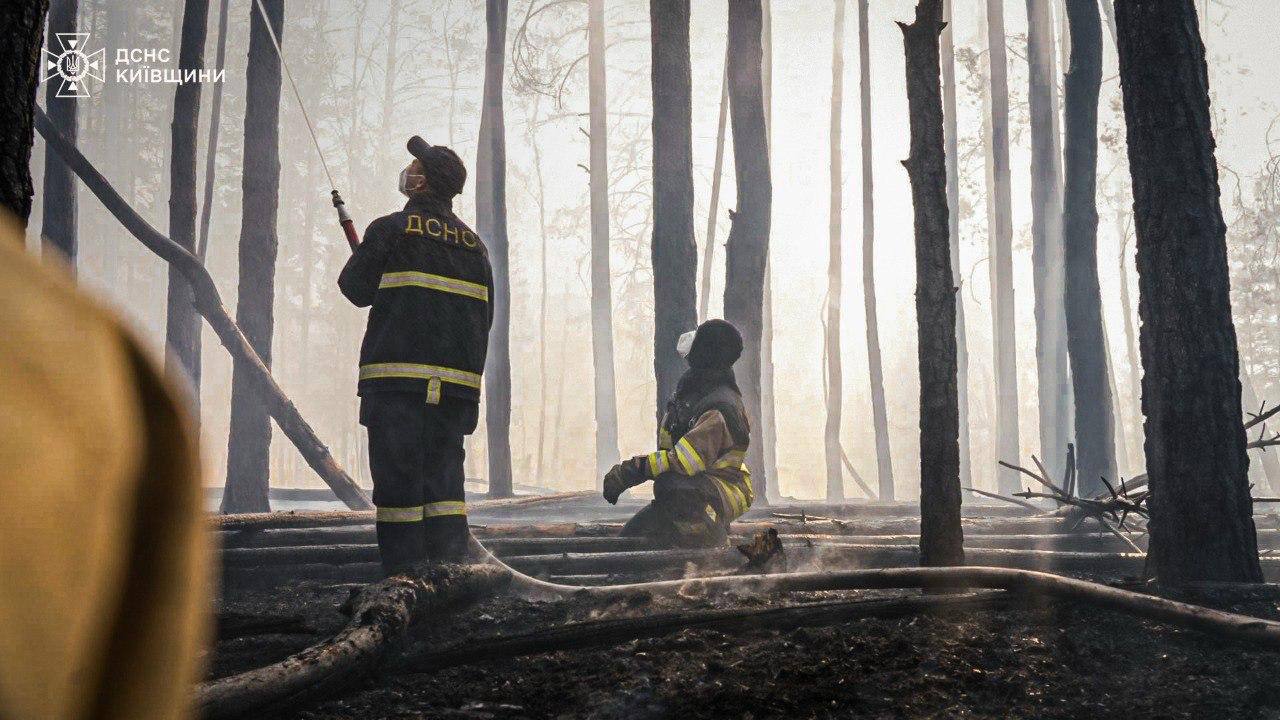 EXPERT
Efforts to extinguish a large-scale forest fire are underway in the Chernobyl Exclusion Zone . Due to dry weather and strong gusts of wind, the fire is spreading rapidly through the forest, engulfing new areas. Iryna Chernysh, a public environmental inspector, co-founder of SaveEcoBot, and pro bono advisor to the Minister of Economy, Environment, and Agriculture on environmental issues, explained in an exclusive comment to "Komersant Ukrainian" whether smoke from the Chernobyl zone could carry hazardous substances.
The estimated area of the fire already exceeds 1,100 hectares. Firefighting efforts are complicated not only by weather conditions but also by the danger of landmines in certain areas of the Exclusion Zone.
Due to the threat of explosive objects, rescue workers cannot operate in some forest areas, which limits the ability to quickly contain the fire.
Why are fires in the Chernobyl zone so dangerous?
Fires in the Chernobyl Exclusion Zone pose a particular danger due to radioactive contamination of the area following the Chernobyl disaster. When the forest burns, not only ordinary smoke but also dust particles and aerosols containing radionuclides—which have accumulated in the soil and vegetation over decades—can be released into the air.
Iryna Chernysh, advisor to the Minister of Economy, Environment, and Agriculture on environmental issues, co-founder of SaveEcoBot, and public environmental inspector, explained that such a fire is not just a forest fire, but a double environmental threat.
“Fires in the Chernobyl Exclusion Zone pose a dual environmental threat because the fire acts simultaneously as a conventional forest fire and as a mechanism for the secondary spread of radionuclides that have accumulated in the soil and vegetation over the decades since the accident,” noted Iryna Chernysh.
According to her, during combustion, radioactive particles can rise with the smoke and be carried by air currents.
“When the forest burns, these substances rise with the smoke in the form of aerosols, are carried by the wind beyond the Zone, and settle in new areas, including farmland and water bodies,” the expert explained.
Watch us on YouTube: important topics – without censorship
Radionuclides are not the only threat
In addition to the radiological component, smoke from large-scale forest fires contains substances hazardous to health. These are combustion products that can affect the respiratory system and overall health.
“In addition to the radiological component, the emissions contain carbon monoxide and carbon dioxide, polycyclic aromatic hydrocarbons, dioxins, and heavy metals produced during the fires,” emphasized Iryna Chernysh.
Another distinctive feature of the Chernobyl zone is the accumulation of large amounts of dry and dead wood. It can smolder for a long time, sustain combustion, and generate significant amounts of smoke.
“In the Chernobyl Exclusion Zone, the situation is exacerbated by decades of accumulated dead wood, which can burn for a long time and intensely, producing large volumes of smoke,” the environmentalist added.
What is the main risk to people
According to Iryna Chernysh, the greatest danger to people is linked specifically to inhaling contaminated air.
“The main risk to people is inhalation: breathing in radioactive dust and carcinogenic compounds. That is why real-time monitoring of such fires is a practical tool for protecting health,” she explained.
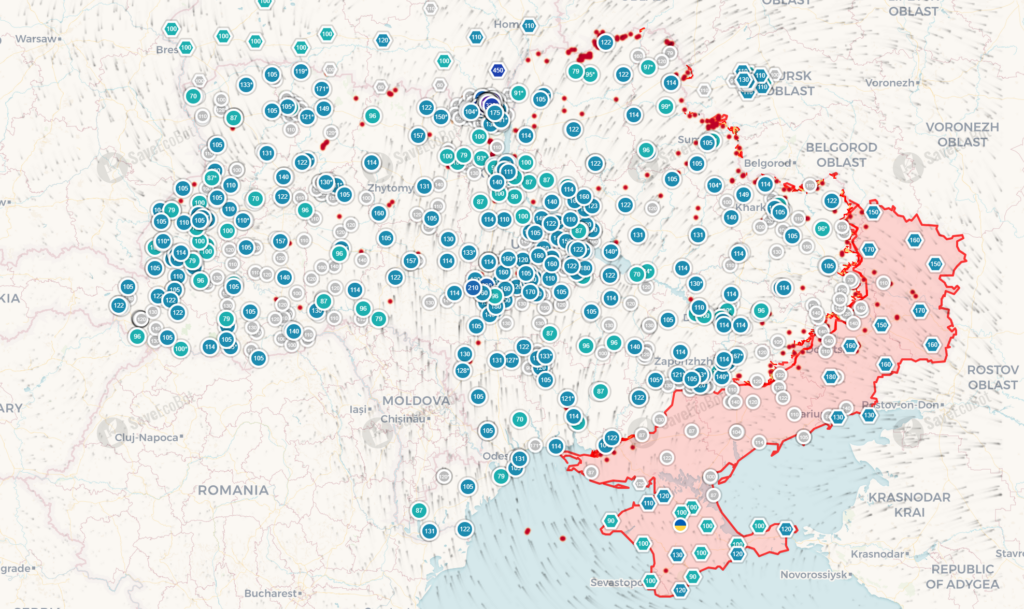
The expert emphasizes that the situation can be monitored online—specifically on SaveEcoBot’s map of radiation levels and fires in Ukraine. The service collects data from various sources, including automatic monitoring stations, government systems, and community sensors; however, SaveEcoBot itself notes that for official decisions, this data must be verified by government agencies.
Has the radiation background changed?
According to the Ministry of Internal Affairs, as of 11:00 a.m. on May 8, the radiation situation in Ukraine (particularly in the north of the Kyiv region) remains stable.
Gamma radiation levels are within normal limits throughout the territory, according to data from the National Hydrometeorological Service of the State Emergency Service of Ukraine.
According to SaveEcoBot, as of May 8, 2026, the radiation background in the city of Chernobyl is within typical limits for the Chernobyl Exclusion Zone. Data from radiation monitoring posts and information about fires are also available on the interactive map.
Why continuous monitoring is important
Even if the radiation background is currently stable, a large-scale fire in the Exclusion Zone requires constant monitoring. Due to wind, the direction of smoke spread can change, and individual fire hotspots can intensify.
That is why environmentalists emphasize the importance of real-time monitoring: it allows for quickly detecting changes in radiation levels, tracking fires, and assessing potential risks to populated areas.
Read us on Telegram: important topics – without censorship