Goodbye, “single tax”? Will the government take drastic measures to secure Western aid?
1 May 15:02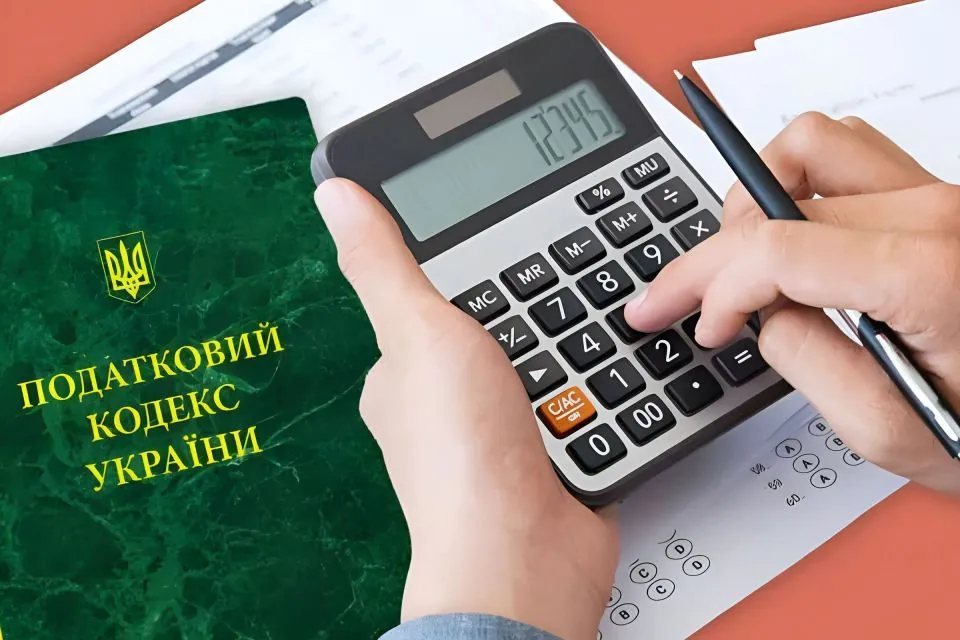 ANALYSIS FROM
VAT for sole proprietors is back on the agenda for Ukrainian officials. This time, the initiative comes from the European Commission. At a meeting held yesterday, government officials and members of parliament discussed how to proceed with this and other tax initiatives that Ukraine’s international partners are urging the country to implement. "Komersant Ukrainian" investigated exactly what was discussed.
The Ukrainian parliament is currently working on two tax reforms that serve as structural cornerstones of cooperation with the IMF: taxation of income earned through digital platforms and the elimination of tax exemptions for high-value international shipments. But the topic that received the most attention at Thursday’s meeting between government officials and lawmakers was VAT for sole proprietors: the European Union’s focus on this issue has had an impact.
VAT for sole proprietors – under EU scrutiny
On April 20, following consultations in Washington with foreign creditors,Prime Minister Yulia Svyrydenko stated that the International Monetary Fund had changed its stance on the idea of introducing VAT for sole proprietors.
“The IMF has shown understanding regarding the sensitivity of the issue of introducing VAT for sole proprietors—both for society and for parliament. During the spring meetings, we found understanding among our partners that this is indeed a sensitive topic and an unconstructive idea,” the official noted.
She diplomatically refrained from specifying the timeframe for this understanding on the part of the IMF, leaving room for speculation. Shortly thereafter, this was confirmed by information from anonymous government sources: the new tax burdens for sole proprietors are planned to be postponed for just one year.
Meanwhile, the EU has expressed a desire to take up the baton from the IMF. Bloomberg reported this week that the European Union is considering tightening the conditions for Ukraine to receive a €90 billion loan and linking part of the financial aid the country is set to receive in 2026—amounting to approximately €8.4 billion—to specific tax changes, including the introduction of VAT for sole proprietors. Lawmakers sought to determine how realistic these intentions are during their discussions with government officials. Nina Yuzhanina, a member of the parliamentary committee on finance, tax, and customs policy, continues:
“The issue that has been interpreted in various ways: what about VAT for sole proprietors? Has it been postponed, or has it been scrapped, and when is the actual implementation of VAT possible, or is it even realistic at all? The Prime Minister and the Minister of Finance clarified this situation somewhat during the meeting. If the IMF has indeed listened to the government’s arguments and recognized the issue of VAT for sole proprietors as sensitive—meaning they agreed that it could be postponed for a certain period—then the situation regarding the European Commission’s corresponding requirement is worse. And at this stage, the task of our negotiators is to advocate for this issue to be dropped. “Our government officials are currently negotiating the mechanism for utilizing the €90 billion loan. Therefore, as I heard from government officials, their top priority is to do everything possible to ensure that VAT for sole proprietors is removed from the requirements for macro-financial assistance,” the MP noted.
Yaroslav Zheleznyak, First Deputy Chairman of the Verkhovna Rada Committee on Finance, Tax, and Customs Policy, also believes that the Ukrainian government is counting on at least a pause on this issue. Moreover, lawmakers are not ready to vote for unpopular changes.
“The IMF may postpone the requirement for a year. And if so, Brussels will likely follow suit. But the issue won’t go away. Because VAT for small businesses with a certain turnover is standard practice in the EU. And if Ukraine wants to join the EU, something will have to be done about the tax for sole proprietors,” the lawmaker emphasized in a comment on his YouTube channel.
VAT on international parcels – a major question mark
Many MPs would not object if government officials agreed to postpone the IMF’s requirement to abolish tax exemptions for international parcels. This measure is also unpopular among ordinary Ukrainians, although there are plenty of experts and business representatives who support such a tax burden.
The European Business Association, for example, states that the issue of abolishing the VAT exemption for international shipments (parcels) is not only a tax issue but also a matter of economic justice, the survival of Ukrainian businesses, and defense funding.
“Honest Ukrainian businesses that pay all their taxes are forced to compete with goods that arrive without any taxation,” the EBA emphasizes.
The Association insists on the official publication of the full updated version of the relevant draft law and its immediate discussion and adoption.
MP Yaroslav Zheleznyak discussed the status of this tax reform in a comment on his YouTube channel.
“I am convinced that there are currently no votes in favor of the bill on parcel taxation. Plus, there are two other problematic issues regarding parcels. First, no one knows yet how all of this could work. Second, let me remind you that we’re talking about two bills. One concerns tax changes, and the other concerns customs changes. And they won’t work without each other. So, no one is really focusing on the customs changes either. Moreover, drafting a tax bill is much easier than drafting a customs bill. No one is allocating funds for the system. No one is even voicing any ideas or a general plan for how it might work. And to be honest, no one has even tried to discuss this with members of parliament,” the lawmaker asserts.
Incidentally, the aforementioned statement by the European Business Association also cites the following data: in 2025, over 56% of international shipments were not taxed, and goods worth 92.9 billion hryvnias remained outside the fiscal accounting system. Thus, direct budget losses amount to at least 18.6 billion hryvnias in just one year.
Given the existing challenges with abolishing tax exemptions for parcels, as well as with introducing VAT for sole proprietors, government officials will certainly have to continue searching for alternative measures to finance the revenue side of the 2027 budget. This was also discussed at the meeting between lawmakers and government officials. MP Nina Yuzhanina explains.
“Lawmakers have even managed, in some way, to get government officials to think differently and look for ways to broaden the tax base through other means, rather than, for example, by imposing VAT on sole proprietors. We need to propose other taxation mechanisms, some sort of transition periods. Look, everyone now acknowledges that the market for renting out real estate is completely ‘in the shadows.’ This is a massive resource for the budget. Or why not adopt, for example, a 5% personal income tax rate and a 5% military levy in the Tax Code? Will this bring the market into the open? It definitely will. “These are the kinds of mechanisms we need to look for,” the lawmaker emphasizes.
For now, however, the legislative work that the IMF is ready to evaluate does not look very convincing. The draft law on amendments to the Tax Code of Ukraine regarding the taxation of e-commerce transactions with value-added tax has been adopted in the first reading. The second initiative—regarding the taxation of parcels—has fared less well: the relevant draft laws received support only at the level of the relevant parliamentary committee.