The “Tatarka” restaurant has come under fire for its menu and the owner’s comments about deportation
2 June 18:05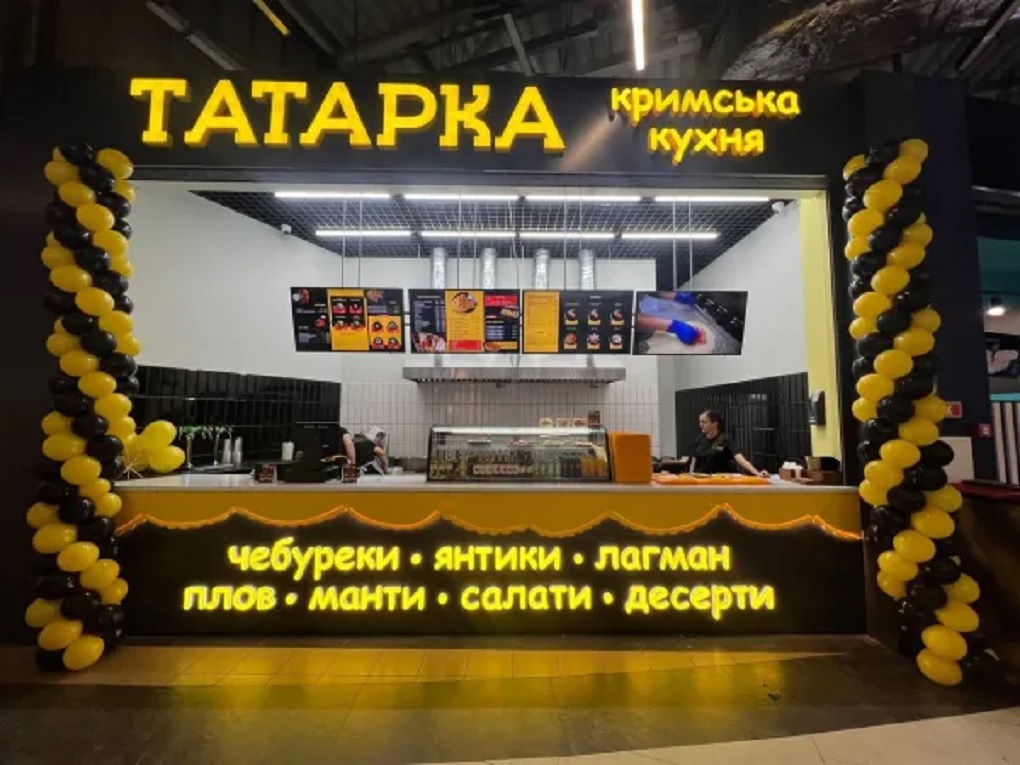 РОЗБІР ВІД
The “Tatarka” franchise chain, which operates more than 16 restaurants across the country, has faced serious reputational risks while attempting to establish itself in Odessa’s restaurant market. A recently opened restaurant here, which positions itself as an ambassador of Crimean cuisine, found itself at the center of a high-profile scandal due to its disrespectful treatment of Crimean Tatar culture in its visual design and menu.
What is known about the incident—read on in the article "Komersant Ukrainian"
The Odessa restaurant opened this year. The opening celebration, which took place on May 9, was themed around Romani culture.
Restaurant owner Oleksandra Mykolyuk posted a video in which she appeared in traditional Romani attire at the entrance to the restaurant. In her post, she noted that the event’s concept involved inviting “nomadic peoples” and creating the atmosphere of an impromptu bar inspired by the character Thomas Shelby. The entrepreneur also emphasized that living in different countries has shaped her personal attitude toward travel and the nomadic way of life.
Opponents of the restaurant owners have, since the restaurant’s opening, pointed to serious conceptual missteps by the marketers. In their view, the commercial use of the word “Tatar” in the context of Crimean culinary traditions grossly erodes the identity of the peninsula’s indigenous population—the Crimean Tatars—by mistakenly equating them with the Volga Tatar ethnic group.
Ethnographic objections were quickly joined by religious ones: the presence of pork and alcohol on the menu, as is well known, openly contradicts the tenets of Islam.
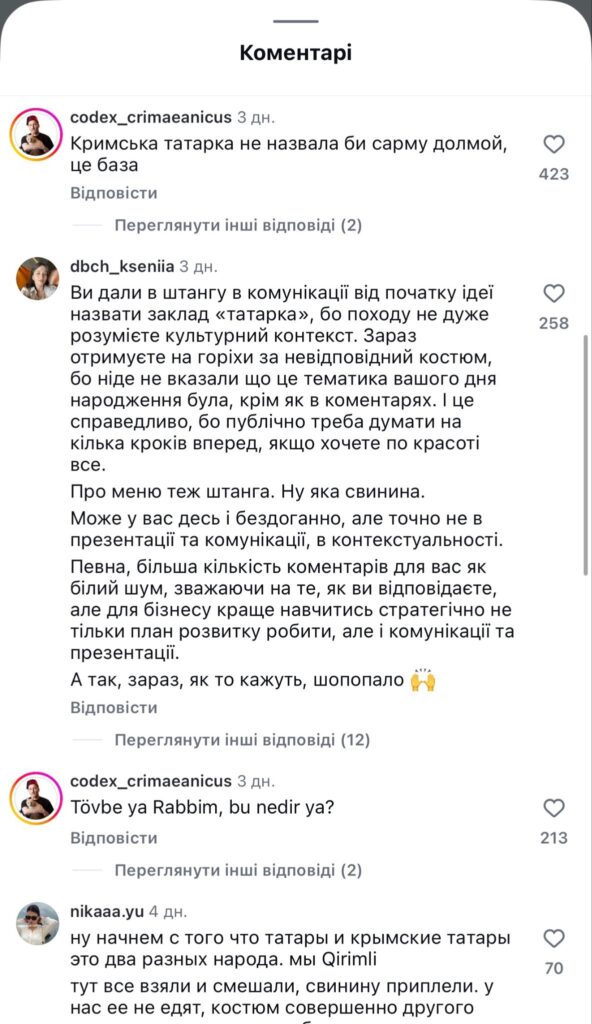
Zakhida Adilova, a representative of the Crimean Tatar community, stated on her Facebook page that the problem is not merely the restaurant’s use of elements of a foreign culture. Although, she noted, these elements are also, in some cases, presented incorrectly or distorted.
“While the world is paying increasing attention to the protection of indigenous peoples’ rights and decolonization processes, a phenomenon that could be called internal gastronomic colonialism is gaining ground in Ukraine. People who have no connection to Crimean Tatar culture, as well as large restaurant chains and entrepreneurs, are using our name and traditional dishes, presenting them in a simplified and stereotypical manner and reaping significant profits from this,” Adilova noted.
She was outraged not only by the use of Crimean Tatar symbols and imagery, but also by the very interpretation of the national cuisine.
Zakhida Adilova pointed out that traditional Crimean Tatar dishes have deep cultural significance and should not be served in a fast-food format or positioned as appetizers to accompany alcoholic beverages.
She considers the inclusion of pork in dishes presented by the establishment as Crimean Tatar to be a particular insult. As is well known, this contradicts the religious and cultural traditions of the people, the majority of whom are Muslim.
According to Adilova, Crimean Tatar cuisine is an important component of the national heritage and deserves to be preserved and promoted in its authentic form. She emphasized that dishes such as chebureki and yantiki are historically not prepared with pork and are not associated with alcohol consumption. In her view, this culinary tradition has world-class cultural value and requires protection, not commercial simplification.
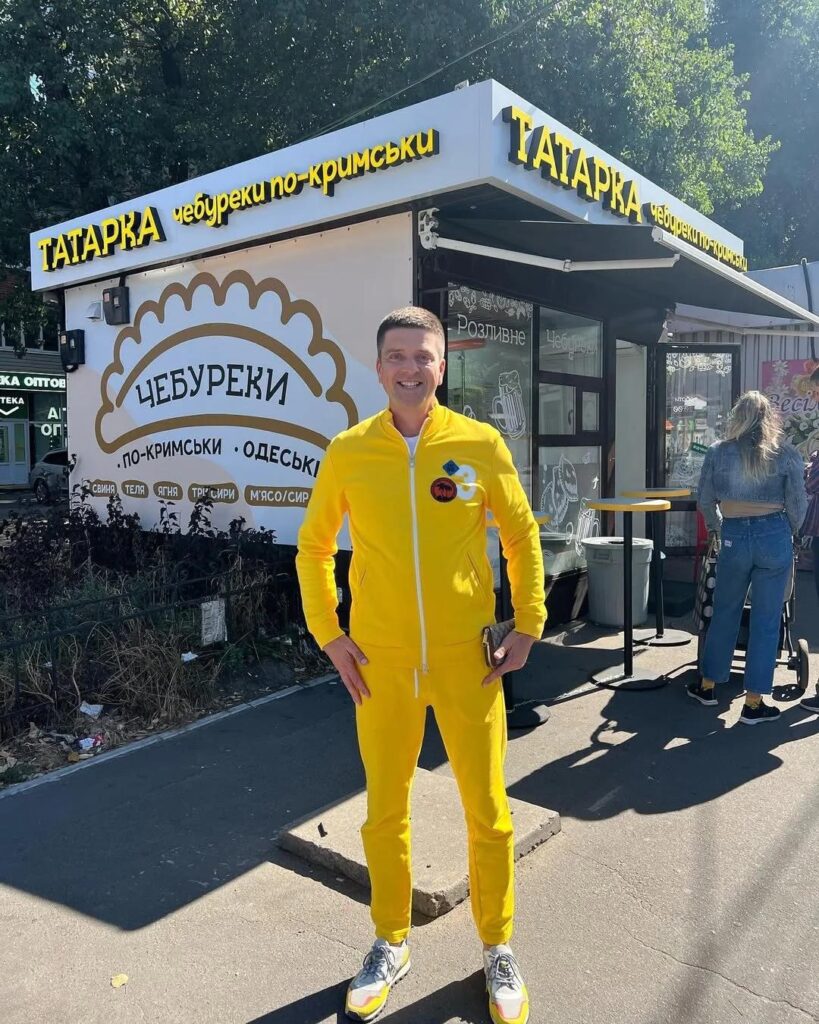
However, the matter did not end with a simple boycott over the menu. The debate surrounding the establishment quickly escalated following public statements by the business owner himself.
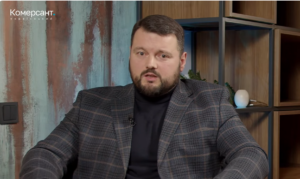
Under one of the restaurant’s social media posts, the chain’s owner, Volodymyr Biryukov, instead of providing clarification or responding to the criticism constructively, got into an argument with users.
In particular, after one commenter stated that she would defend the history, culture, and culinary traditions of her people, a user with the nickname vladymyr_b responded with a dismissive comment.
When the woman pointed out that such behavior could lead to conflict with an entire nation, he replied in Russian: “We’re looking forward to it, the whole nation; get ready for deportation.”
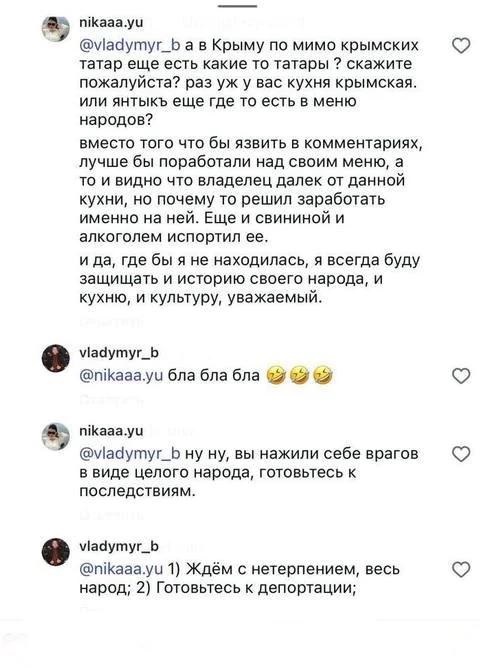
Following a wave of outrage, this comment was deleted, but its content had already spread across social media and sparked a strong public reaction.
Reaction of the Crimean Tatar community and the public
The mention of a possible “deportation” of Crimean Tatars provoked the strongest reaction in society. Such statements were perceived as particularly painful given the tragic chapters in the people’s history and caused a wave of outrage among Crimean Tatars and the Ukrainian public.
Refat Chubarov, Chairman of the Mejlis of the Crimean Tatar People, emphasized that any public threats cannot be ignored, especially if they are directed not at individuals but at an entire ethnic community. In his view, such rhetoric is unacceptable and requires proper assessment.
Ukrainian MP Tamila Tasheva also reacted to the situation. She recalled that the forced deportation of Crimean Tatars in 1944 is one of the most tragic crimes of the Soviet totalitarian regime. According to her, this event is recognized as the genocide of the Crimean Tatar people, which resulted in the death of a significant portion of the nation.
Ukrainian journalist and public figure of Crimean Tatar origin, Ayder Muzhdabaev, called on Ukrainian citizens not to support establishments linked to the scandal.
In addition, he appealed to the Security Service of Ukraine and the Office of the Prosecutor General to provide a legal assessment of public statements which, in his opinion, may contain signs of inciting interethnic hostility and justifying crimes against the Crimean Tatar people.
The Deportation of the Crimean Tatars: A Historical Tragedy
The Soviet authorities justified the mass deportation of Crimean Tatars from Crimea in May 1944 by accusing a portion of the population of allegedly collaborating with Nazi Germany.
At the same time, historical sources indicate that tens of thousands of Crimean Tatars fought in the Red Army during World War II. Among them were well-known military figures, including twice Hero of the Soviet Union Amet-Khan Sultan and intelligence officer Alime Abdenanova, who was awarded high state honors.
The deportation operation began following a decision by the Soviet leadership in May 1944.
NKVD officers went from house to house among the Crimean Tatars, giving people minimal time to pack. Afterward, they were forcibly taken to train stations and sent to special resettlement sites in freight cars.
The transport took place under harsh conditions: the deportees suffered from a lack of food, water, and medical care. According to various estimates, thousands of people died during the transport alone.
Overall, the consequences of the deportation proved catastrophic for the Crimean Tatar people—researchers estimate the losses at between one-third and nearly half of the entire population that was forcibly evicted.