Russia destroyed a drone factory whose drones were not vulnerable to Russian electronic warfare: what will happen to UAV production?
31 July 06:30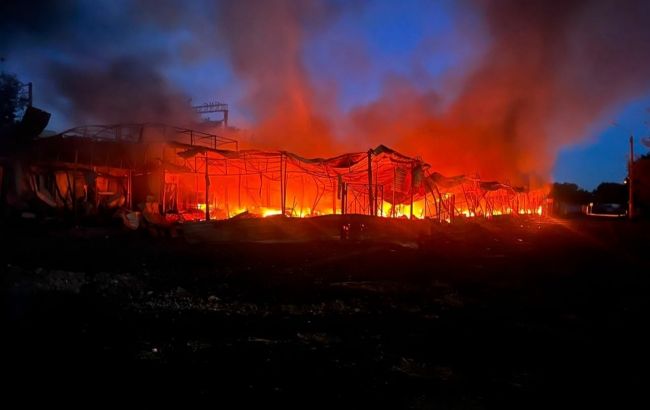
During the Russian missile strike on Kyiv, the production facility of Terminal Autonomy, a company registered in the United States, was destroyed. The company manufactured attack drones used by the Ukrainian Armed Forces.
This was reported by the British publication The Guardian, citing a source familiar with the company’s operations, according to "Komersant Ukrainian"
According to the source, there were no fatalities as a result of the attack.
What is known about the strike on the plant in Kyiv
According to journalists, the facility was destroyed by a Russian ballistic missile during an attack on July 24.
The plant belonged to Terminal Autonomy, a corporation registered in the U.S. state of Delaware in 2023. The Guardian calls this likely the first known instance since the start of the full-scale war in which a Russian missile destroyed a U.S. company’s facility in Ukraine.
However, neither Terminal Autonomy nor the Ukrainian Ministry of Defense had officially commented on the strike or the extent of the damage at the time of publication. Therefore, information regarding the complete destruction of the production site is currently based on data from The Guardian’s source.
What drones did the company manufacture?
The plant produced the AQ-400 Scythe and AQ-100 Bayonet strike UAVs.
On Terminal Autonomy’s official website, the company describes itself as a Ukrainian-American manufacturer of autonomous combat systems, with products manufactured in Ukraine and the United States.
The AQ-400 Scythe is positioned as a long-range strike drone. According to the manufacturer, its claimed flight range reaches 750 kilometers, and its design is intended for large-scale, distributed production.
The AQ-100 Bayonet is a more compact loitering munition designed for high-precision strikes. The company reports that it is already in serial production and is being used in combat operations.
How Artificial Intelligence Works in Drones
The term “Terminal Autonomy” refers to so-called autonomy during the final stage of flight. When communication with the drone is jammed by electronic warfare systems, the system can independently complete guidance to a predefined target.
The company states that it is developing high-precision, AI-controlled systems designed to operate under conditions of active electronic warfare countermeasures.
Russia was the first to report the attack
The Russian state news agency TASS was the first to report the strike on the facility, citing the Russian Ministry of Defense.
The Russian report mentioned a facility where specialists from a Ukrainian-American company were working and allegedly manufacturing the AQ-400 Scythe and AQ-100 Bayonet drones. However, the Russian side did not mention that the facility belonged to a U.S.-registered corporation.
Reports from the Russian Ministry of Defense regarding the results of the strikes should be treated with caution, as Moscow regularly disseminates unconfirmed claims about strikes on Ukrainian targets. In this case, the destruction of the facility was separately confirmed by a source at a British publication.
According to The Guardian, at the time of publication, representatives of Terminal Autonomy had not responded to journalists’ inquiries regarding the consequences of the strike. The Ukrainian Ministry of Defense also did not provide a comment.
Why the strike on the American company is significant
Former senior U.S. intelligence official Anthony Vinci noted that for Russia, the form of ownership of a company is irrelevant if it is working for Ukraine’s defense.
In his view, Moscow will similarly attempt to attack other manufacturing facilities belonging to Western companies if they emerge in Ukraine.
This takes on particular significance amid negotiations regarding the deployment of Western defense systems production and maintenance facilities in Ukraine. The attack on Terminal Autonomy demonstrates that such enterprises will require enhanced protection and the decentralization of production capabilities.
Will the attack halt drone production?
Terminal Autonomy has not disclosed what portion of its total production was handled by the destroyed plant or whether the attack affected drone deliveries to the Defense Forces.
The company’s website notes that production of its systems can be decentralized, and the AQ-400’s design is scalable without the need for complex specialized equipment. This may reduce the company’s reliance on a single facility, but there is no official information yet on when operations will resume.