The U.S. and Iran have exchanged blows again in the Persian Gulf: what we know
6 June 11:17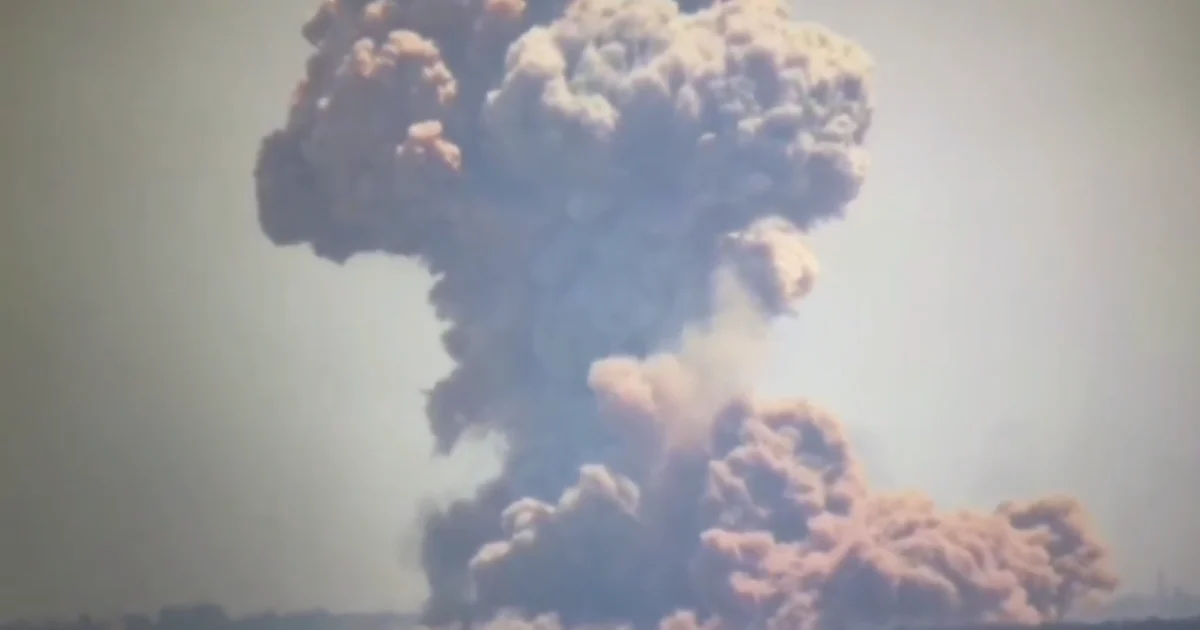
Despite the current ceasefire, the United States and Iran once again launched strikes against each other’s positions in the Persian Gulf region on the night of Saturday, June 6. According to the U.S. side, U.S. Central Command (Centcom) intercepted six ballistic missiles launched by Iran at U.S. allies in the Persian Gulf—Kuwait and Bahrain—while another missile failed to reach its target. This was reported by "Komersant Ukrainian" citing DW.
Earlier, in the Strait of Hormuz area, the U.S. military shot down four Iranian combat drones, after which it struck radar positions on the Iranian island of Qeshm and in the town of Goruk.
Watch us on YouTube: important topics – without censorship
Mutual accusations
Iran’s Islamic Revolutionary Guard Corps (IRGC) confirmed that it had attacked enemy bases in the region in response to the U.S. strikes. Washington, in turn, characterized its actions as self-defense: the intercepted drones threatened shipping in the Strait of Hormuz, and the strikes on Qeshm and Goruk were carried out to “defend against further attacks.” The U.S. military denied Iranian claims that the U.S. Navy headquarters in the Middle East, located in Bahrain, had been damaged. The information provided by both sides cannot be independently verified.
Iran has repeatedly fired upon Kuwait and other Gulf states, where the U.S. maintains military bases just a few hundred kilometers from the Iranian border. On June 3, a drone struck Kuwait International Airport, killing at least one person and injuring dozens.
War and Negotiations
The war began on February 28 with U.S. and Israeli strikes on Iran, and a ceasefire was declared nearly two months ago—but the sides continue to exchange blows periodically. At the same time, difficult negotiations are underway regarding a framework agreement to end the war. Since the start of the war, Iran has controlled the Strait of Hormuz—the most vital artery of the global economy for the export of oil, gas, and fertilizers. The U.S. has imposed a naval blockade that hinders Iranian oil exports.
U.S. President Donald Trump estimated Iran’s remaining missile arsenal at approximately 21–22 percent of its pre-war level.
“Most of the drone factories, launch sites, and missile production facilities have been taken out of commission, but they still have some capabilities,” he told NBC News.
Meanwhile, a number of American media outlets, citing intelligence data, reported different figures: according to The New York Times and The Washington Post, Iran has retained up to 70 percent of its mobile launchers and approximately 70 percent of its missile arsenal.
Read us on Telegram: important topics – without censorship