The U.S. is leaving the Strait of Hormuz unprotected: what’s behind Trump’s decision
6 May 12:03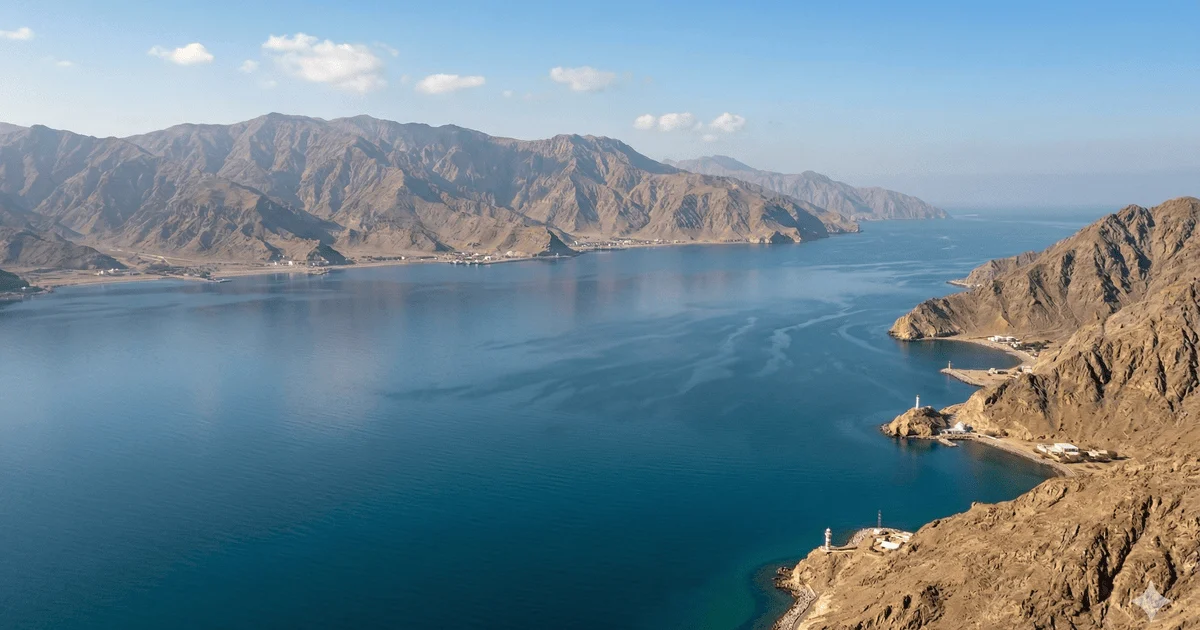 FORECAST
U.S. President Donald Trump announced the suspension, for a “short period of time,” of the operation to remove neutral vessels from the Strait of Hormuz. He made the announcement on his social media platform, Truth Social.
According to him, this decision was made “at the request of Pakistan and other countries” and in light of the “tremendous military success” achieved during the campaign against Iran, as well as “significant progress toward a comprehensive and final agreement” with Iran.
At the same time, Trump stated that the naval blockade of Iranian ports remains in effect.
Meanwhile, U.S. Secretary of State Marco Rubio stated that Operation “Epic Fury” against Iran has been completed. Washington has already finished this phase and is now moving on to Project “Freedom.”
Read us on Telegram: important topics – without censorship
“Operation Freedom”—the movement of ships through the Strait of Hormuz—was announced by the U.S. on May 3. Trump warned at the time that measures would be taken if Iran attempted to interfere with the U.S. mission.
U.S. Central Command (CENTCOM) stated that the mission “will include guided-missile destroyers, over 100 land- and sea-based aircraft, multi-domain unmanned platforms, and 15,000 service members.”
It should be noted that tensions surrounding the Strait of Hormuz remain one of the key factors in global energy and security instability. Despite the loud statements from politicians, experts estimate that the actual state of affairs is changing very little.
Energy expert Gennady Ryabtsev commented
“Someone will once again make a few billion off the next tweet… on the eve of Trump’s tweets, someone is either buying up or selling large quantities of derivatives, that is, secondary financial instruments,” he notes.
In his opinion, the relevant regulatory authorities should respond to such signals, but this is not happening. At the same time, the situation in the region remains consistently tense.
“Those very groups—the two aircraft carriers—are still standing there in front of the Strait of Hormuz, just as they were before,” he states.
Ryabtsev emphasizes that loud statements are not accompanied by real changes.
“Nothing has changed; it’s just more of the same old blah-blah-blah. Of course, the stock markets will react to this, and of course, someone will make another billion, but so what… how many ships passed through the Strait of Hormuz last month—15? So, in fact, the situation hasn’t changed,” the expert is convinced.
Thus, information waves have a greater impact on financial markets than on the situation in the strait itself.
Political analyst Ruslan Bortnik commented
“The U.S. has never been able to control the Strait of Hormuz. At the start of the ‘Freedom’ project—which was legally intended to replace Operation ‘Epic Fury’ so that Congress could not interfere in the matter—it was expected that the U.S. might begin sending ships through the Strait of Hormuz. But that never happened,” the political analyst clarified.
As a result, a stalemate has emerged: the strait is blocked, and Iranian ports are blocked by the United States. This is already having serious economic consequences for Iran, including high inflation and shortages of basic goods. According to Bortnik, the U.S. is relying on economic pressure as a tool for regime change.
“This is provoking an internal economic crisis in Iran. Inflation in Iran is currently at 50%. There is a shortage of essential goods. The U.S. hopes that the blockade of Iranian ports will lead to an internal systemic economic crisis and the collapse of the regime, simply by suffocating it through economic hardship,” the expert notes.
In short, as Bortnik emphasizes, what is currently unfolding is simply a game between the U.S. and Iran aimed at suppressing one another.
Watch us on YouTube: important topics – without censorship