“It was an emotional breakdown”: Anzhelika Rudnytska on her first trip to the front lines, the loss of a loved one, and a war that “went unnoticed”
20 January 14:20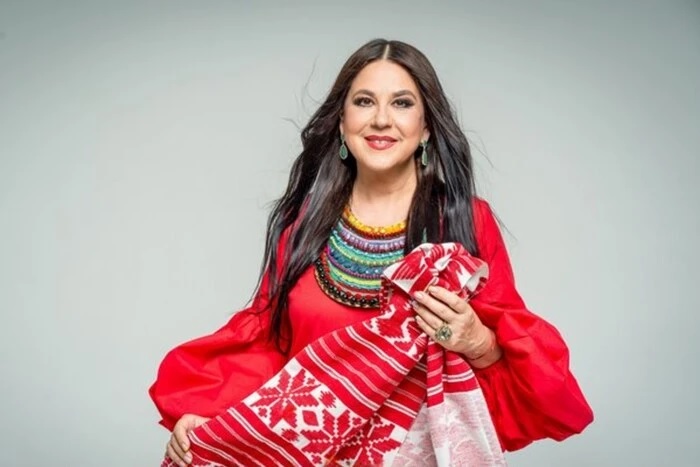 YOUTUBE
For social activist Anzhelika Rudnytska, her first trip to the front lines in 2014 marked a point of no return to civilian life. The loss of a loved one, a face-to-face encounter with war, and the indifference of the home front forced her to completely change her path—from performing concerts to providing systematic support for military personnel and civilians in frontline territories. She spoke about this in an interview with the YouTube channel "Komersant Ukrainian"
Rudnytska recalls that the decision to go to the front was unquestionable and deeply personal for her. Two weeks before the trip, she lost a loved one—her uncle, who was killed in the war.
“Two weeks before my trip, my uncle, my mother’s brother Oleg Mikhailov, died; he was 46 at the time. And when I had the opportunity to go to the front, I responded immediately,” she said.
Together with her friends, she decided to organize a concert for the troops, although the details of the itinerary and their location remained classified for security reasons.
The most emotionally devastating revelation was that their destination turned out to be the unit where her uncle had served.
“We arrived at the ‘Aidar’ unit’s base, where my uncle served. And they immediately took me to the barracks where he lived… Imagine how I felt. For me, it was an internal breakdown, but I couldn’t allow myself to show it. So I held it together, and then I cried for a whole year,” Rudnytska recalls.
It was then that Rudnytska first saw the war for what it truly was—a stark contrast to the peaceful life behind the front lines.
“I saw the war with my own eyes: shelled houses, people looking at everyone suspiciously, volunteers, 40-degree heat, weapons they can only obtain in battle. It’s like hell, yet the country is living it up, and everyone’s fine,” she added.
After that trip, Rudnytska could no longer return to her normal life and began working systematically with the military and frontline territories, combining cultural support with volunteer aid.
“I just couldn’t go back to my normal life and started making endless trips to the front lines because I understood how important it is to provide psychological support to our soldiers,” she said.