The Price of Disarmament: Military Officials Weigh In on Whether the Terrorist Attack in Kyiv Will Be a Turning Point in the Debate Over Gun Legalization
19 April 19:07 ANALYSIS FROM
A bloody terrorist attack in the heart of the capital, which claimed the lives of six people, has once again divided Ukrainian society. This time, however, the debate over the legalization of handguns has taken on a different tone: it is no longer seen as a theoretical right, but as a matter of survival. While the police conduct their investigations, military and international experts unanimously state that an armed citizen could have stopped the killer in the very first minute. Would a handgun have been a lifesaver? Why doesn’t “police reform” provide a sense of security? And which country’s experience should be implemented today? Read more in the article
A day off on April 18 in central Kyiv turned into hell when an unknown assailant opened fire on passersby. Six dead, more than ten wounded—the price the city paid for a few minutes of chaos. This incident sparked a wave of anger among military personnel, who see weapons on the front lines every day but remain defenseless in the rear.
What are the soldiers saying?
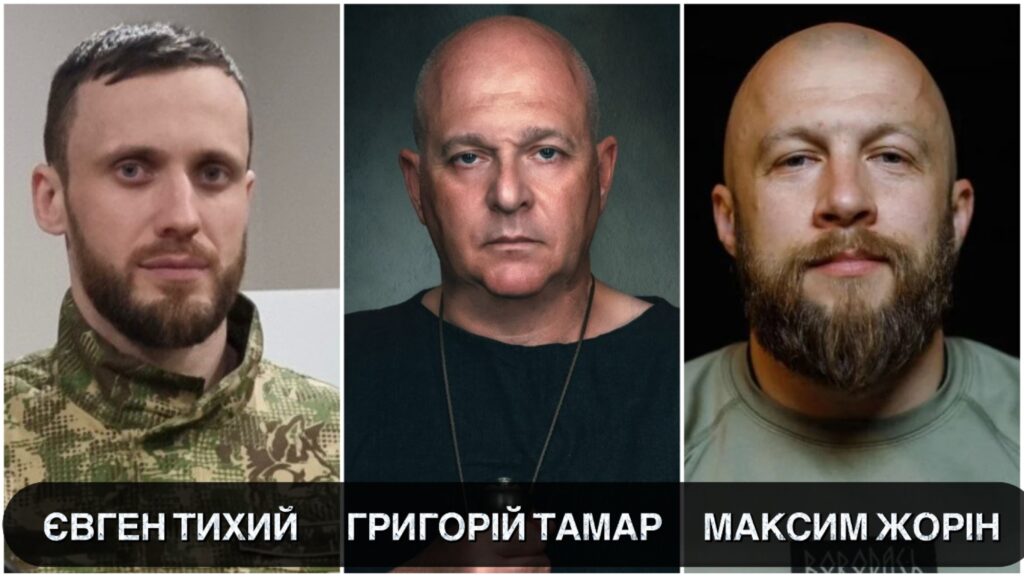
Deputy Commander of the 3rd Mechanized Brigade, Maksym Zhorin, spoke out sharply, calling the lack of a right to self-defense a critical flaw in the system:
“If the people who encountered the terrorist today had had weapons, there wouldn’t have been so many victims. Legalizing handguns—that is the only correct conclusion from this tragic event. All the lunatics, criminals, and thugs already have guns. They can use them at any moment. But ordinary people, who end up as victims of these bastards, don’t have any.”
According to the military officer, Ukraine must finally transition to a “culture of gun ownership,” where self-defense skills are part of everyday life.
“We live in a world where it is critically important to be able to defend oneself. Otherwise, right there on the street in the middle of a weekend, you can become a random victim with no chance to fight back,” Zhorin emphasized.
Beyond the tactical advantages of an armed society, the question of state control strategy arises . While the Ministry of Internal Affairs may be considering options to tighten restrictions in response to a terrorist attack, the military warns that excessive strictness will only worsen the security situation.
Ukrainian Defense Forces officer Yevhen Tykhyi, in a comment to
“Imagine that instead of a phone, a carbine with an optical sight had simply been extended from a high-rise building. A skilled shooter would have eliminated this scoundrel on the spot. That’s it, the matter is settled, and many more casualties would have been avoided. The person who eliminated the criminal actually saves the state colossal resources right at the start of the terrorist attack.”
Current legislation allows citizens to defend themselves by any means, but bureaucratic obstacles render this right formal rather than real.
The Israeli Experience
The issue of security in wartime is not unique to Ukraine. Israel has lived under a constant terrorist threat for decades. IDF Reserve Officer Grigory Tamar notes in an exclusive comment that it is precisely the presence of weapons among civilians that often saves dozens of lives.
“It happens very often here that armed citizens neutralize a terrorist on the spot after the very first shot. I believe that for many reasons, Ukraine needs to carry out serious reform regarding gun ownership. The more armed, responsible citizens there are on the streets, the safer the country is,” Tamar asserts.
He also dispelled the myth that legalization would lead to a surge in domestic violence due to post-traumatic stress disorder (PTSD). According to the officer, in Israel, which survived the horrific events of October 7, instances of civilians misusing firearms are a rare exception.
Grigory Tamar emphasizes that Ukraine will never return to the state of a “peaceful country” in the sense that it was 5–10 years ago. We have become a major military power, where the level of militarization of society is an objective reality.
The reform should be based on:
• Screening out dangerous individuals: Law enforcement agencies must focus on verifying licenses to ensure that weapons do not fall into the hands of potentially dangerous individuals.
• Police training: The Ukrainian police must transform according to the Israeli model—from criminal investigation to skills in urban firefights.
• Rehabilitation: PTSD is a challenge for both frontline soldiers and those in the rear under bombardment. The state must create effective mechanisms for psychological support, rather than simply banning defensive tools.
Gun legalization or law enforcement reform: what will actually save Ukrainians?
The issue of the right to own firearms is once again dividing Ukrainian society. Ruslan Sushko, a lawyer and former senior investigator for particularly important cases at the Main Directorate of the Ministry of Internal Affairs, shared his opinion on the Apostrophe TV channel.
Commenting on calls for the mass arming of the population, Sushko poses a tough counterquestion: could an armed person realistically defend themselves in a critical situation without proper training?
“To possess a weapon, you need to have a clear head, and secondly, you need to have the skills to use and apply it. Arming the population will not solve the problem; it will only make it worse. It will be a nightmare,” Sushko is convinced.
According to the lawyer, simply having a weapon does not guarantee safety. Without psychological readiness and professional skills, an attempt at self-defense could turn into a tragedy or a “preemptive” shooting, which would only increase the number of victims.
Discussing the level of security in the country, Ruslan Sushko touched on a fundamental problem—the inefficiency of the law enforcement system. He is critical of the results of the Ministry of Internal Affairs reform, calling it “cosmetic.”
• A change in form, not substance: The expert believes that the reform was limited to changing the uniforms of employees and adopting a new name.
• Staff shortage: According to Sushko, qualified personnel were effectively eliminated, and they were replaced by people whose level of training raises serious questions.
• Lack of accountability: It is unclear who trained the new patrol officers, how they were trained, and on what basis they were deployed to the streets.
“This is not a police force in the true sense of the word. And the reform is not complete. The quality of work by law enforcement and the judiciary is always measured by the level of public trust,” emphasizes Sushko.
Thus, the tragedy in Kyiv has served as a painful lesson. The issue of legalizing short-barreled firearms is no longer a matter of “wanting or not wanting.” It is a question of society’s readiness to take responsibility for its own safety in a country at war. If the state cannot guarantee the absence of terrorists on the streets, it must give citizens the right and the means to defend themselves.