Russia’s in trouble: Islamic State allegedly involved in shooting in Dagestan
24 June 2024 12:04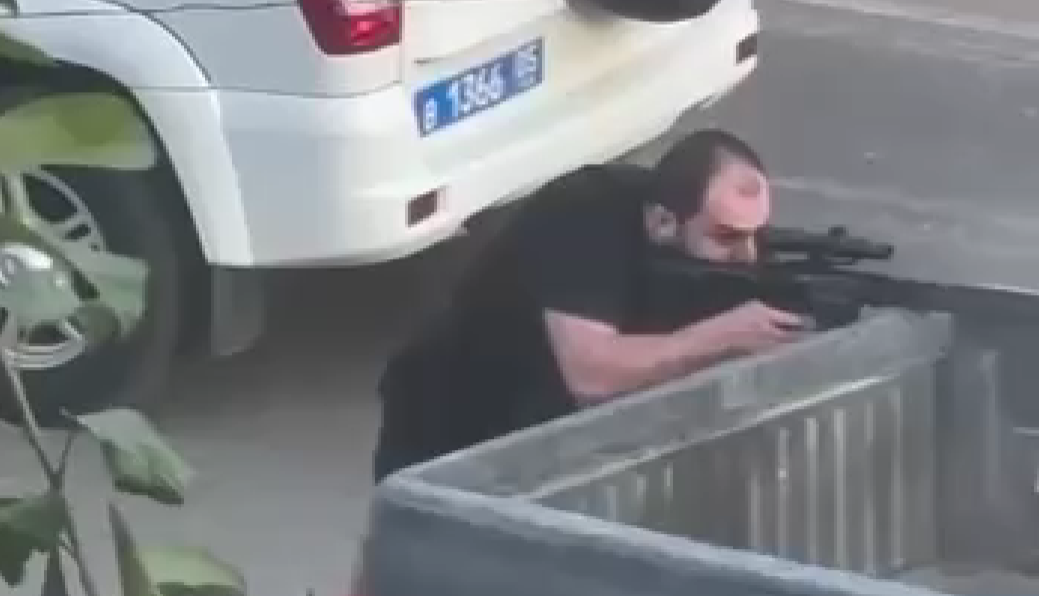
Yesterday’s attack on churches, synagogues and law enforcement agencies in the Russian republic of Dagestan was allegedly carried out by the Islamic State (IS) branch in the North Caucasus, Wilayat Caucasus. This is stated in a report by the Institute for the Study of War (ISW), according to "Komersant Ukrainian"
Dagestan’s Ministry of Internal Affairs reported that unknown gunmen opened fire on an Orthodox church and synagogue in Derbent at around 18:00 local time. Within an hour, it was reported that another group of unidentified persons opened fire on a traffic police post in Makhachkala (120 kilometres north of Derbent). There were also reports of a fire in a synagogue in Makhachkala.
After the attacks began, a counter-terrorism operation was declared in Dagestan. Russia’s National Anti-Terrorist Committee announced the end of the counter-terrorist operation in Derbent after the deaths of two suspects, but the shootings in Makhachkala continued until 23:00 local time on 23 June.
In total, according to the head of Dagestan, Sergei Melikov, six militants, “more than 15 policemen” and several civilians, including a priest, were killed in the shootings. Two of the killed attackers in Makhachkala, Osman and Adil Omarov, were sons of the head of the Sergokalinsky district, Magomed Omarov. He was detained and his house was searched. The Russian news agency Interfax claims that Omarov’s nephew, who was killed by Russian law enforcement, also took part in the attack.
On 23 June, the Russian branch of the Islamic State’s media agency Al-Azayem issued a statement after the attack, praising “their brothers from the Caucasus” for demonstrating their capabilities. Notably, al-Azayim did not claim responsibility for the attack, and the mention of the Caucasus indicates that Wilayat Caucasus, the local “branch” of ISIS, was responsible for the attack.
The regional counter-terrorism structure of the Shanghai Cooperation Organisation (SCO) has warned that Wilayat Caucasus has become more active since the IS attack on Crocus City Hall on 22 March and has stepped up recruitment calls in the North Caucasus since April 2024.
The Russian authorities have been conducting an ineffective counter-terrorism operation in the North Caucasus since March 2024 to combat the growing influence of IS and Wilayat Caucasus, but have largely focused their response to the Crocus City Hall attack on baseless accusations against Ukraine and NATO. Some Russian officials are already baselessly claiming that Ukraine and NATO were involved in the 23 June attack, underscoring that Russia’s current approach to counter-terrorism is likely to remain tied to rhetorical positioning against Ukraine and the West, rather than identifying and neutralising IS threats within Russia itself.
Russia’s increasingly tense relations with its Muslim minority, especially in the Caucasus, are likely to continue to provide Wilayat Caucasus and other extremist groups with a valuable recruiting base.