Ukraine is moving closer to EU accession talks: a date has been set
28 May 08:20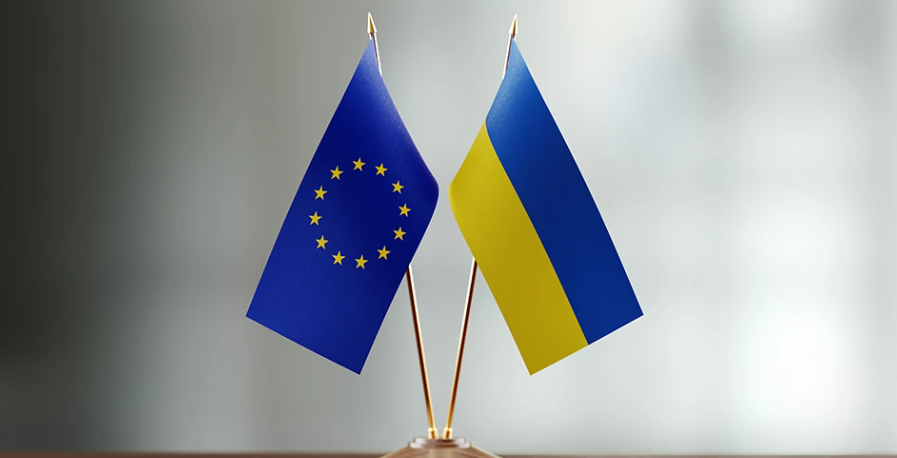
The European Commission has set an indicative timeline for opening the first negotiation chapter on Ukraine’s accession to the European Union. According to Euractiv, the first chapter could be officially opened as early as mid-June, reports "Komersant Ukrainian"
According to Euractiv, citing a senior EU official, the European Commission plans to bring the issue of opening the first cluster up for consideration on June 16. This concerns negotiations on Ukraine and Moldova’s EU membership.
This timeline allows EU leaders to finalize the decision at a European Council meeting scheduled to take place two days after the ministerial meeting. Other negotiation clusters for Ukraine and Moldova could be opened as early as July.
This means that the process of negotiations on Ukraine’s EU membership could move from political statements to a concrete, practical phase.
What are negotiation clusters?
The process of joining the European Union consists of six so-called negotiation clusters. They cover various areas of European legislation, standards, and policies that a candidate country must gradually implement.
The first cluster is considered the foundation. It concerns the EU’s key democratic, economic, and institutional principles.
This is the cluster that is opened first but closed last. This approach is explained by the fact that fundamental reforms must accompany the entire negotiation process.
Why the first cluster is so important
The first negotiation cluster covers the fundamentals of state functioning in accordance with European rules. This includes the rule of law, democratic institutions, economic governance, public administration, the judicial system, and other core areas.
For Ukraine, the opening of this cluster will be an important political signal. It will mean that the European Union is ready to move on to substantive negotiations regarding specific reforms and commitments.
At the same time, this does not mean automatic and rapid accession. Each stage of the negotiations requires meeting the criteria and approval from all EU member states.
Consent from all 27 EU countries is required
Unanimous support from all 27 EU member states is required to approve each stage of the negotiation process.
It is precisely this factor that has previously significantly hindered Ukraine’s progress. For a long time, Hungary blocked Kyiv’s steps toward European integration.
Progress in the negotiations may become possible following a change in the political situation in Budapest. According to Euractiv, Viktor Orbán’s defeat in the March elections has paved the way for a less confrontational Hungarian stance on the Ukrainian issue.
Watch us on YouTube: important topics – without censorship
How Hungary’s Position Has Changed
Former Hungarian Prime Minister Viktor Orbán systematically blocked decisions related to Ukraine’s European integration. After 16 years in power, his government lost the March elections.
The new head of the Hungarian government, Péter Magyar, is taking a more moderate stance. Budapest has not yet declared unconditional support for Ukraine’s EU accession, but, according to media reports, it is ready to make compromises in exchange for the unfreezing of European funds that were blocked due to rule-of-law issues during the Orbán era.
This could remove one of the main political obstacles to opening negotiation chapters.
Ukraine and Moldova are moving forward together
The European Commission plans to open the first negotiation cluster simultaneously for Ukraine and Moldova. Both countries have been granted candidate status and are moving forward within the framework of the EU’s enlargement policy.
It is expected that after the opening of the first cluster, other negotiation blocks could be opened as early as July.
This timeline reflects Brussels’ desire to accelerate the enlargement process while maintaining the formal procedure, which involves assessing reforms and meeting criteria.
What the European Commission is saying
EU Enlargement Commissioner Marta Kos previously stated that the start of negotiations would be possible after the completion of the power transition in Hungary. According to her, this could take place during Cyprus’s EU presidency, which will last until the end of June.
European Commission President Ursula von der Leyen also stated that the coming weeks will be crucial for Ukraine’s progress toward EU membership.
Europe is debating the format of Ukraine’s membership
Despite progress in the negotiation process, discussions continue in Europe regarding the future format of Ukraine’s membership.
In particular, German Chancellor Friedrich Merz has suggested the possibility of Ukraine’s integration into the EU without full voting rights as an interim step. However, Kyiv has rejected this idea, deeming it unfair.
Reuters previously reported that the EU had discussed ideas for a faster but limited format for Ukraine’s accession; however, such models could spark political disputes between member states and candidate countries.
Read us on Telegram: important topics – without censorship