Ukraine has imposed sanctions targeting the entire chain of grain theft from the occupied territories
14 August 23:51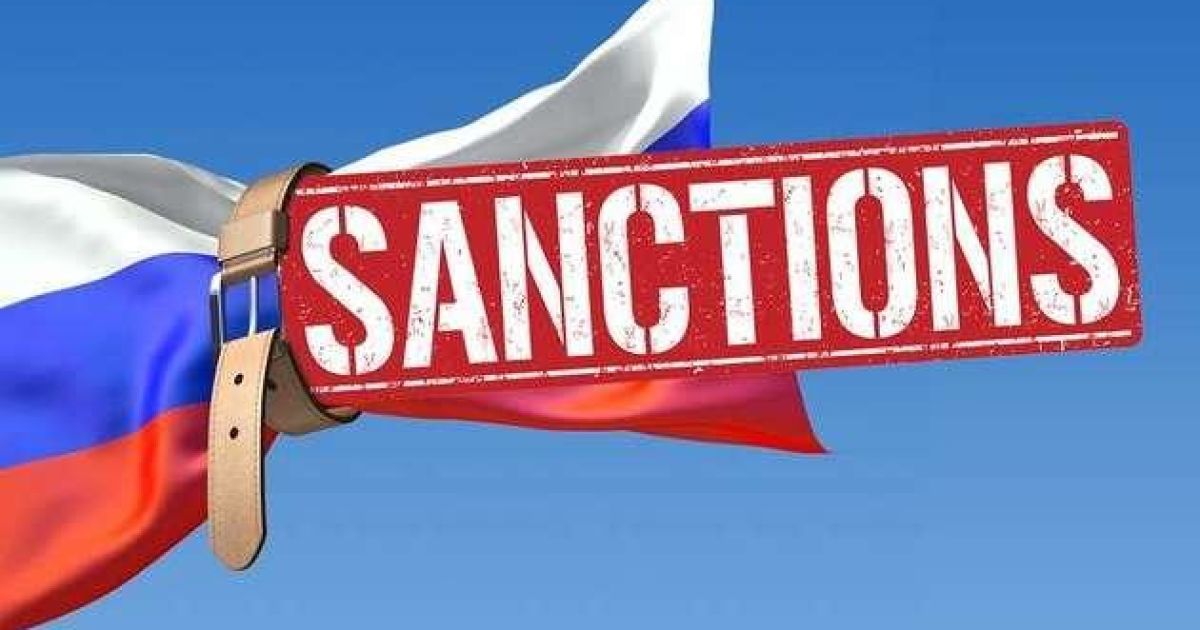
President Volodymyr Zelenskyy enacted a decision by the National Security and Defense Council imposing sanctions on those involved in schemes to illegally export Ukrainian grain from the temporarily occupied territories.
The head of state signed the corresponding decree No. 725/2026 on August 14, according to "Komersant Ukrainian", citing the Office of the President of Ukraine.
The restrictions apply to 13 seagoing vessels, 11 Russian citizens, and 28 legal entities. In total, the sanctions package covers 52 entities involved in the transportation, documentation, and logistical support of illegally exported agricultural products.
“President Volodymyr Zelenskyy signed a decree enacting the decision of the National Security and Defense Council of Ukraine to impose sanctions against individuals and companies involved in the illegal export of Ukrainian grain, as well as the vessels involved in this activity,” the statement reads.
Which vessels are subject to sanctions
Thirteen dry cargo ships used to transport Ukrainian grain from Russian-occupied territories have been added to the new list.
Eight vessels fly the Russian flag, and three are registered under the Panamanian flag. One each flies the flags of Belize and St. Kitts and Nevis.
Among the vessels added to the sanctions list are:
- Volgo-Balt 205;
- Asomatos;
- Panormitis;
- Don;
- Falcon S;
- Greendale.
A complete list of sanctioned vessels and other participants in the scheme is contained in the annexes to the decree and in the National Security and Defense Council’s register of sanctions decisions.
The use of flags from various countries allowed those involved in the shipments to make it more difficult to identify the actual owners of the vessels and to conceal the origin of the cargo.
Read us on Telegram: important topics – without censorship
Sanctions have been imposed on captains and fleet owners
Ukraine has imposed restrictions not only on maritime transport. The list includes 11 Russian citizens who own vessels or have served as their captains.
The sanctions also targeted 28 legal entities involved in organizing transportation and logistics. These are companies that could have facilitated vessel registration, cargo clearance, chartering, fleet management, or the delivery of agricultural products to buyers.
Thus, the new package targets the entire chain of illegal grain exports—from loading the produce in the occupied territory to its transportation and subsequent sale.
Why Ukraine Is Sanctioning the Entire Logistics Chain
The Russian side is attempting to sell grain exported from the occupied regions as if it were of its own origin. To do this, they may use mixed cargoes, transshipment at sea, altered documentation, and vessels registered in other jurisdictions.
This is precisely why restrictions targeting a single ship cannot completely stop the scheme. After changing its owner, name, or flag, a vessel can resume operations.
The new approach involves applying simultaneous pressure on ships, shipowners, captains, and logistics companies. This is intended to make it more difficult to re-register the fleet and prevent stolen grain from reaching international markets.
Vladyslav Vlasyuk, the President’s Advisor on Sanctions Policy, emphasized that the illegal export of Ukrainian agricultural products must have consequences for every participant in the scheme.
“The illegal export of Ukrainian grain from the temporarily occupied territories must have consequences for everyone involved: from companies and owners to captains and ships. We expect our international partners to prevent it from entering their markets,” said Vladyslav Vlasyuk, the President’s Advisor on Sanctions Policy.
What impact will the Ukrainian sanctions have?
Restrictions against vessels, individuals, and legal entities have been imposed for a period of ten years—until August 14, 2036.
The list of sanctions was compiled in accordance with Law of Ukraine No. 1644-VII “On Sanctions.” The numbers in square brackets correspond to the paragraphs of Article 4 of this law.
The following restrictions may be applied to sanctioned individuals, companies, and vessels:
- [1] Asset freeze —temporary deprivation of the right to use and dispose of assets belonging to an individual or legal entity. The restriction also applies to property that such a person controls directly or indirectly through other persons.
- [2] Restrictions on trade transactions —a prohibition or significant limitation on the ability to conduct trade within Ukrainian jurisdiction.
- [3] Restrictions on transit and transportation —partial or complete suspension of the transit of resources, flights, and other forms of transportation through Ukrainian territory.
- [5] Suspension of economic and financial obligations —the suspension of payments, contracts, and other financial transactions in favor of sanctioned entities.
- [6] Revocation or suspension of licenses —the revocation or temporary suspension of licenses, permits, and other documents required to conduct certain types of activities. This category also includes special permits for the use of subsoil resources.
- [8] Prohibition on the use of Ukraine’s radio frequency spectrum —entities subject to sanctions lose the right to use Ukrainian radio frequencies.
- [11] Prohibition on vessels entering Ukrainian waters and ports —foreign non-military vessels and military ships may be fully or partially prohibited from entering Ukraine’s territorial sea, internal waters, and ports. The restrictions also apply to flights and landings of aircraft on the territory of Ukraine.
- [17] Additional control measures — the introduction of enhanced environmental, sanitary, phytosanitary, and veterinary controls.
Thus, the sanctions package is not limited to formal inclusion on the list. It blocks the ability to use assets, engage in trade, carry out transportation, conduct financial transactions, and enter Ukrainian ports.
Information on the duration and types of restrictions is contained in the official register of NSDC sanctions decisions.
National sanctions impose restrictions within Ukrainian jurisdiction. At the same time, the greatest practical impact is possible once international partners join in enforcing them.
Ukraine plans to share the collected data with foreign governments and sanctions authorities. Kyiv expects that similar restrictions will be applied in countries where the vessels, companies, or their owners are registered.
In the event of international coordination, the sanctions could make it more difficult for sanctioned vessels to:
- entering foreign ports;
- obtaining insurance services;
- conducting banking transactions;
- repair and maintenance;
- changing their flag and registering in another country;
- finding buyers for illegally exported goods.
Panama, Belize, and St. Kitts and Nevis may receive special attention, as vessels on the Ukrainian list fly their flags.
Earlier, Ukraine imposed another round of sanctions against the Russian military-industrial complex. It targeted companies and individuals who helped Russia obtain equipment, technology, and components in circumvention of international restrictions.
Watch us on YouTube: important topics – without censorship