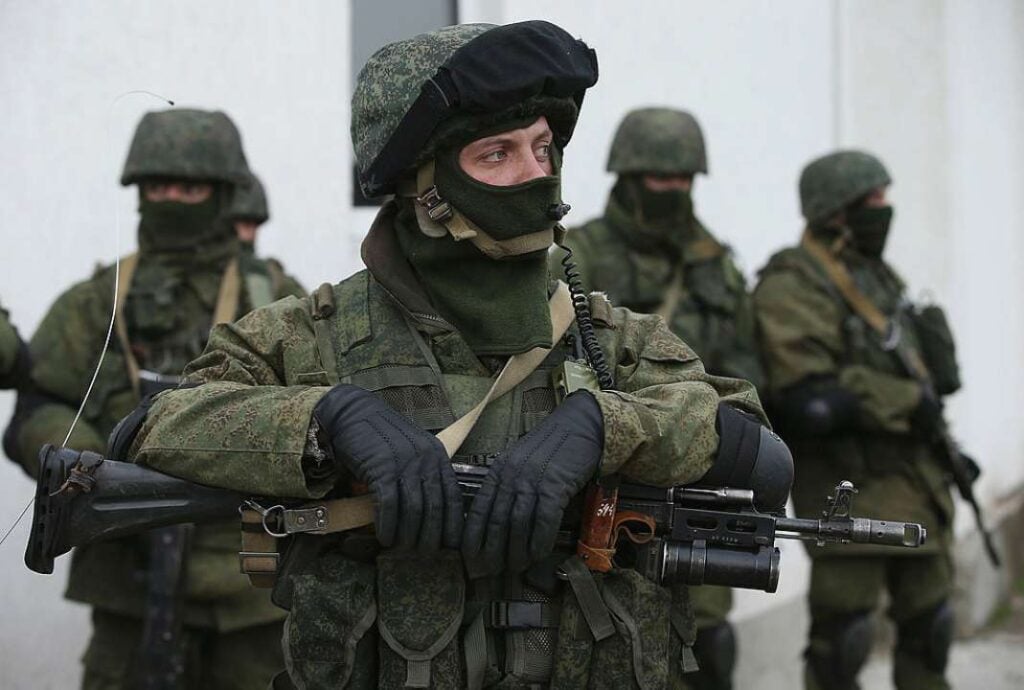
Russian military leadership has left Crimea: a soldier reveals the extent of the logistical nightmare facing the remnants of the occupying army
30 June 21:23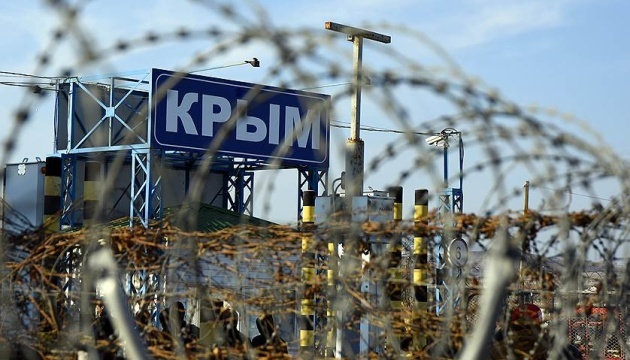 ANALYSIS
The Russian military presence in the temporarily occupied Crimea is rapidly drawing to a close, and the peninsula itself has found itself in a state of severe, systematic isolation. The first month of summer 2026 became the main marker of these irreversible changes, during which the Defense Forces launched a large-scale “PPOpad” operation against the occupiers and disabled key energy and logistics hubs. Panic among the invaders has reached a critical point: according to intelligence reports and expert assessments, the upper echelons of the Russian command have already begun evacuating and have effectively abandoned the peninsula, leaving the rank-and-file troops to fend for themselves ahead of the start of a large-scale de-occupation.
What specific insider information points to the Russian leadership’s flight from Crimea? How did the unique “Island” operation and the massive strikes by the Unmanned Systems Forces (USF) throughout June paralyze the enemy’s air defense? And what “surprises” are the Ukrainian military preparing for the start of the winter season?
Russian Command Flees the Peninsula
The Russian military presence in the temporarily occupied Crimea is nearing its end. Despite the lack of specific dates for the liberation of the peninsula, clear indicators of inevitable changes are already visible on the front lines. Military historian and IDF reserve officer Grigory Tamar discussed this in a comment to "Komersant Ukrainian". According to the expert, the coming weeks will be a real test for the invaders’ logistics and rear services. Moreover, the highest-ranking officers of the occupying army have already begun their evacuation.
“I think these 40 days will be hell for Russia’s rear infrastructure and for the occupiers’ positions in Crimea. According to the information I have, the Russian military leadership has already left Crimea,” Tamar emphasized.
He added that pressure on the enemy will only intensify, leading to a serious crisis within the Russian Federation itself.
“The chaos will grow, and in the near future we will witness an incredible disgrace for the Russian authorities and the Russian army,” says Grigory Tamar
What’s Next: The Destruction of the Crimean Bridge and a Unique Amphibious Assault
Grigory Tamar outlined several key milestones that will determine the peninsula’s fate in the near future. These include a comprehensive attack on logistics. The first stage will be a large-scale strike against the occupiers’ main transportation artery.
“In the near future, I think we will witness a comprehensive attack on the Crimean Bridge,” the expert predicts.
The second stage is expected to be a naval operation conducted using entirely new military approaches.
“I think we will witness an amphibious operation from the sea, which will be conducted according to entirely different principles. It will be completely different from how amphibious operations have been carried out to date,” Tamar noted.
He added that he would deliberately refrain from revealing details so as not to play into the enemy’s hands or give away the plans of Ukrainian military specialists. At the same time, he emphasized that the very fact that such an operation is being prepared is no longer a secret.
Watch us on YouTube: important topics – without censorship
Operation “Island”: What’s Happening in Crimea Right Now?
The Ukrainian Defense Forces continue to systematically destroy the air defense system and logistical infrastructure of Russian troops in the temporarily occupied territories. Another successful target was the “Poshtova” railway station in the Bakhchysarai district of Crimea, where a traction substation caught fire on the night of June 30. This incident was part of a large-scale campaign to isolate the peninsula, the results of which were reported in detail by unit commander Robert Brovdi, call sign “Madyar.” Reporting on the neutralization of the occupiers’ defense systems, the commander emphasized the high intensity of combat operations during the first month of summer.
“Crimean air defense systems down, the power grid in ruins, and fuel in the clouds. SBS ‘Birds’ are increasing their presence in the temporarily occupied territories deep within enemy lines. Between June 1 and 29, the SBS ‘Birds’ took out 31 enemy air defense elements (air defense missile systems and radar stations). We haven’t yet matched May’s results—back then, we took out 36 air defense elements. But there are still two days to go, so let’s keep at it,” said Robert Brovdi.
Total losses to the enemy’s air defense system since the beginning of the year and throughout the SBS Group’s entire period of operation already number in the hundreds. Specifically, between January and June 2026, Ukrainian operators disabled 194 pieces of equipment. If we count from the unit’s founding on June 11, 2025, the Defense Forces have already taken out 276 elements of the enemy’s air defense.
The geographic scope of the destruction of military targets covers key supply hubs. Among the diverse targets of Ukrainian drones are the “Pantsir-S1” air defense system and the ST-68 radar station in Feodosia, which were struck by fighters from the First Separate SBS Center, as well as the “Podlyot” radar station near Yevpatoria. An important stage of the operation is the systematic disabling of enemy power facilities. The SBS “Phoenix” task force of the State Border Guard Service struck the “Western Crimean” power substation in Kar’ernoye, while fighters from the 413th Separate SBS Regiment “Raid” disabled an entire network of substations in Vypasne, Oleksandrivka, Maryanivka, and Dzhankoy.

At the same time, the Defense Forces are targeting fuel supplies and transportation arteries. Specialists from the 412th Separate SBS Brigade “Nemesis” and the 3rd Battalion of the 414th Separate SBS Brigade “Ptakhiv Madyara” destroyed fuel and lubricant tanks in Feodosia, a fuel depot in Melitopol, as well as fuel tankers in Melitopol, Novovasylivka, and Yurievka. Outside Crimea, enemy logistics are being disrupted just as vigorously. In Skadovsk, Kherson Oblast, fighters from the 20th Separate SBS Brigade struck a Project 498 raid tug, while the “Reid” Regiment took out a Russian locomotive in the town of Unecha in the Bryansk Oblast of the Russian Federation. Currently, you can follow the combat operations and updates on the results of the Unmanned Systems Forces in real time via the SBS “Pidrachuyka” online scoreboard.
A combination of strikes against logistics, the destruction of the bridge, and successful operations by the Armed Forces of Ukraine at sea will put an end to the Russian occupation of the peninsula. The main catalyst for this process will be a critical deterioration in the enemy group’s supply situation.
“After that, I think the Russian army’s presence in Crimea will come to an end. As for how soon this will happen—I can’t make any predictions on that. I do think, however, that given the rapidly escalating energy crisis in Crimea, this will happen before the start of winter in any case,” concluded Hryhorii Tamar.
Thus, the combination of the total destruction of air defenses, the systematic power cuts to military facilities, and the methodical burning of the occupiers’ fuel and transport infrastructure indicates that Operation “Island” has reached a new, strategic level. When the logistical arteries are finally severed by a coordinated attack on the Crimean Bridge, and an innovative amphibious operation by the Defense Forces begins from the sea, the Russian Federation’s military presence on the peninsula will come to a natural end—due to the impossibility of maintaining a defense in complete isolation. The rapid escalation of the energy crisis and the flight of the military leadership clearly indicate that the final phase of Crimea’s de-occupation will take place in the very near future—in any case, before the start of winter. Even targeted defense of mobile systems won’t help the occupiers, as Ukraine’s “Pidrachuyka” records new successes by our pilots every day, bringing closer the day when the blue-and-yellow flag will fly over the peninsula once again.
Read us on Telegram: important topics – without censorship