Rome’s airports want to suspend the new EU entry system due to hours-long lines
26 June 06:41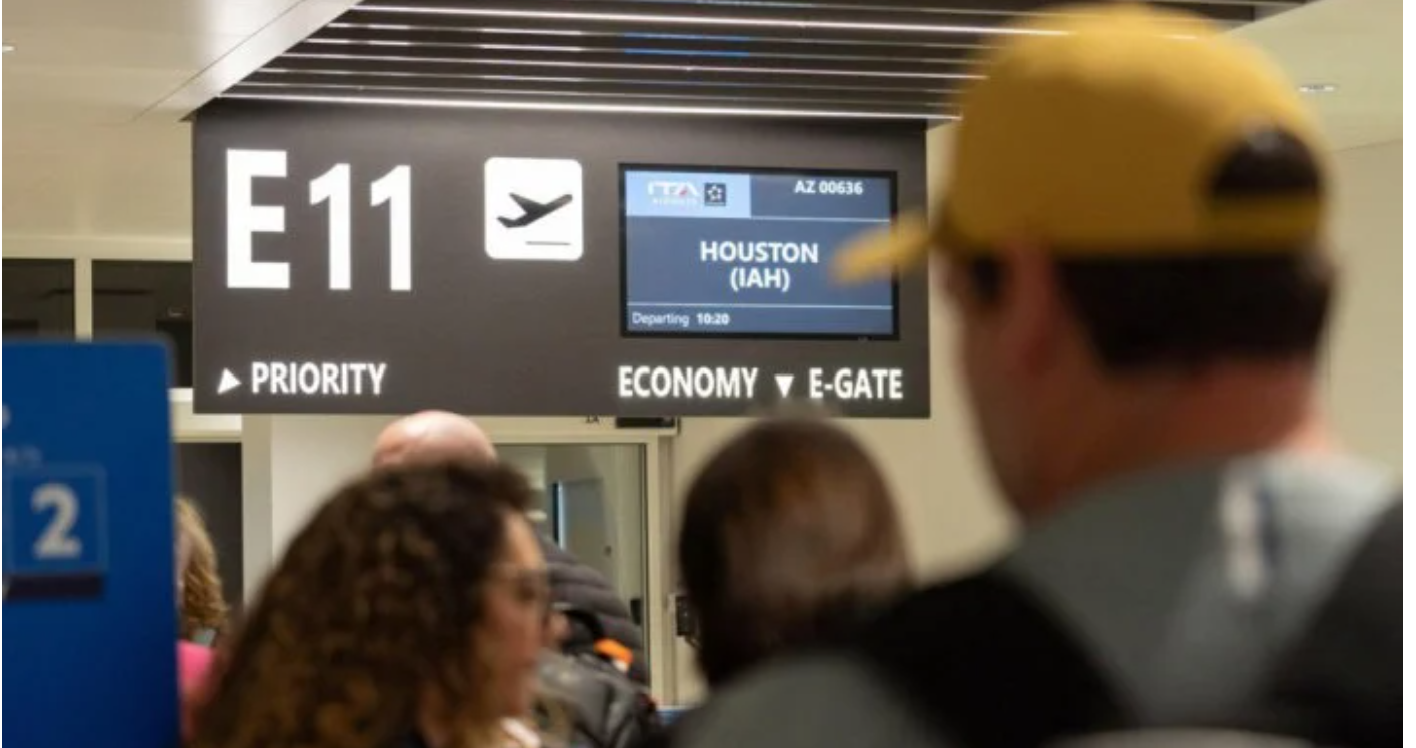
Rome’s airports have warned of the risk of a tourism collapse due to the implementation of the new European Union Entry/Exit System. According to The Guardian, some passengers are already being forced to wait more than three hours during biometric checks, and at the height of the summer season, lines could stretch to six hours, reports "Komersant Ukrainian"
Aeroporti di Roma, which operates Italy’s largest airport, Fiumicino, and Ciampino Airport, believes that the full implementation of the EES may prove incompatible with peak passenger traffic.
Airport management proposes easing additional checks during peak periods and allowing some travelers to pass through under a simplified procedure. However, the final decision must be made by the Italian government, not the airport administration.
What’s Happening at Rome’s Airports
Marco Troncone, CEO of Aeroporti di Roma, stated that he is seriously concerned about the situation ahead of the peak tourist season.
According to him, the biometric passenger check-in procedure cannot handle the large flow of people. The initial check-in takes a particularly long time, as travelers must provide personal data, fingerprints, and a facial photo.
The company’s CEO rated the level of concern at eight to nine out of ten. He warned that it would be practically impossible to register 100% of passengers using the current procedure during the summer tourist rush.
Which passengers are affected by the EES
The Entry/Exit System applies to citizens of countries outside the European Union if they are arriving in Schengen Area countries for a short-term stay.
The system applies, in particular, to travelers who:
- travel without a visa;
- hold a short-term Schengen visa;
- plan to stay in the Schengen Area for no more than 90 days within a 180-day period.
This category also includes Ukrainian citizens traveling with biometric passports under the visa-free regime, provided they do not have a status or document exempting them from the EES.
How the new EU entry system works
The EES replaces traditional passport stamping with digital registration.
During the first border check, the system may store:
- foreign passport data;
- the date and place of border crossing;
- a facial photograph;
- fingerprints;
- information regarding denial of entry;
- information regarding overstay of the permitted period of stay.
On subsequent trips, the data should be verified more quickly, since the passenger is already registered in the system.
However, aviation industry representatives report that some travelers have to go through the biometric procedure again, even if they have used the EES before.
Why Do Hours-Long Lines Form?
The main problem arises during the initial registration of third-country nationals.
Instead of the usual passport check, border guards or special terminals must:
- Scan the document.
- Verify personal data.
- Take a photo of the person’s face.
- Take fingerprints.
- Cross-reference the information with databases.
- Complete the digital entry or exit registration.
The European Commission has reported that the average procedure can take about 70 seconds. At the same time, airport representatives claim that under real-world conditions, processing a single passenger can sometimes take up to five minutes.
Even a slight delay for each person quickly creates a huge line when passengers from several international flights arrive at the same time.
Passengers have already been waiting for over three hours
European airports have reported lines lasting up to three or three and a half hours.
Due to the delays, some travelers:
- missed their connecting flights;
- missed their return flights;
- missed their boarding;
- were forced to buy new tickets;
- waited for hours in areas without enough seating.
The situation is particularly difficult for families with children, older adults, and passengers who require additional assistance.
Wait times could rise to six hours this summer
The International Air Transport Association warns that during peak periods, wait times at some European airports can reach six hours.
The summer season is traditionally the busiest for Italy. Rome welcomes millions of tourists, a significant portion of whom arrive from countries outside the EU.
If all such passengers undergo full biometric registration at the same time, border checkpoints may not have sufficient capacity.
What Fiumicino and Ciampino Airports Are Proposing
The operator of Rome’s airports proposes utilizing the flexibility built into the system.
In the event of excessive congestion, some passengers may be allowed to go through security using a simplified procedure. This should reduce lines and prevent widespread flight delays.
In fact, this does not involve a permanent abandonment of the EES, but rather a temporary suspension of certain functions or the limited use of biometric registration during peak hours.
Can airports disable the EES on their own?
Airport authorities do not have the authority to independently cancel border control procedures.
Decisions to temporarily suspend or relax checks must be made by the national authorities of an EU member state.
Therefore, Aeroporti di Roma can report the problem and appeal to the government, but cannot unilaterally refuse to comply with the rules.
The European Commission has previously stated that the system allows for some flexibility in the event of excessive lines.
European airports have criticized the system
Representatives of ACI Europe have called on European officials to acknowledge the problems with the EES.
The aviation industry claims that the system has not yet delivered the promised speedup of security checks and is causing serious delays.
Among the main complaints are:
- slow equipment performance;
- terminal malfunctions;
- passengers having to recheck in;
- a shortage of border control officers;
- complicated procedures for children;
- insufficient number of staff to assist with kiosk use;
- differing approaches to implementing the system across EU countries.
Frontex representatives estimate that it may take one or two years for the system to fully stabilize.
Some countries have already eased the checks
Due to long lines, some countries and border services have already temporarily adjusted how they implement the new requirements.
The French police, for example, suspended additional checks at the Dover border crossing when excessive lines formed.
Other popular tourist destinations have also discussed postponing or partially implementing biometric procedures during peak periods.
This shows that the system’s full functionality depends not only on European regulations but also on decisions made by national authorities and the capabilities of specific border crossings.
What Ukrainians Need to Know
Ukrainian tourists traveling to Italy or another Schengen country should be prepared to spend extra time going through border control.
During the initial registration, you may be asked to:
- present a biometric passport;
- to look into the camera;
- to provide fingerprints;
- confirm the purpose of your trip;
- show your accommodation reservation;
- confirm that you have a return ticket or sufficient funds.
The visa-free regime does not exempt travelers from border checks and registration in the EES.
Who May Be Exempt from the System
The EES does not apply to EU citizens or individuals holding certain types of residence permits or long-term documents in countries that use the system.
Exceptions may also apply to certain categories of family members of EU citizens and individuals holding documents specified by European legislation.
Therefore, Ukrainians who have temporary protection, a residence permit, or another status in an EU country should check the specific rules applicable to their document.
How to Prepare for Possible Delays
Travelers are advised to allow extra time for passport control.
When departing from major European airports, it is advisable to:
- arrive at least three hours before your flight;
- check the airline’s announcements;
- keep an eye on airport updates;
- allow more time between connecting flights;
- have a fully charged phone and a power bank;
- bring water with you after passing through security;
- have your reservations and travel documents ready;
- avoid scheduling very short layovers.
Passengers going through EES registration for the first time should be especially careful.