Lubinec slammed the NMT system following the scandal in Odesa: he is demanding immediate changes
9 June 14:54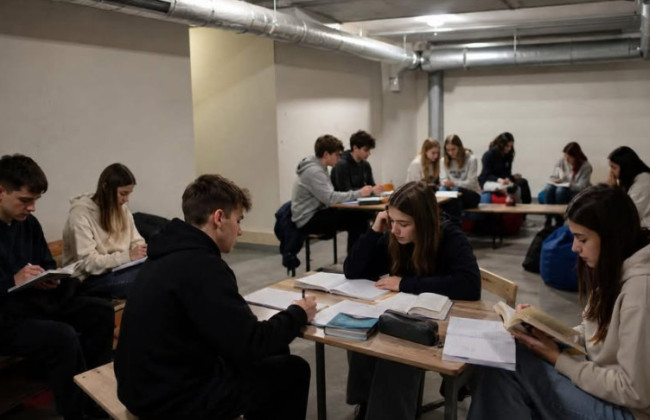
The scandal surrounding the administration of the National Multidisciplinary Test in Odesa has spread across the country. Following reports that graduates had to take the NMT for 12–13 hours due to continuous air raid alerts, the Verkhovna Rada’s Human Rights Commissioner Dmytro Lubinets harshly criticized the current system, according to "Komersant Ukrainian"
Graduates in Odessa took the NMT until late at night
Outrage erupted in Odesa and the Odesa region over the administration of the National Multisubject Test (NMT) during air raid alerts. According to parents, relatives, and teachers, due to continuous and prolonged air raid sirens, some graduates were forced to take the exam for over 12 hours—from morning until nearly nightfall.
Social media, particularly Threads, was flooded with emotional posts stating that children were in exam centers from 10:00 a.m. until late at night.
According to the relatives of the test-takers, the exams were repeatedly interrupted due to constant air raid alerts. The children were taken out of the classrooms to the basements, and after the all-clear, they were brought back to the computers.
As a result, the usual procedure for taking the NMT turned into a grueling, hours-long ordeal. Some graduates spent nearly the entire day at the testing centers and did not return home until around 11:00 p.m.
Parents complain of loss of concentration, fatigue, and hunger
The greatest outrage was caused by the fact that children were forced to interrupt their work on the test many times in a row. According to social media users, by the end of the exam, when it was time to take the sections on Ukrainian history and English, the graduates were already critically exhausted.
Relatives emphasize: under such conditions, it is difficult to speak of a fair assessment of knowledge, because after several hours of anxiety, waiting, and constant movement, a child is physically and psychologically unable to demonstrate their true ability.
Separately, people complain that test-takers sat for hours in shelters on the floor, without proper conditions, food, or a sufficient supply of water.
Despite the difficult conditions, many teenagers did not want to submit requests to reschedule the NMT for an additional session. They hoped to complete the testing on the same day, even despite severe stress and fatigue.
Because of this, graduates remained at the exam centers until late in the evening, trying at all costs to take the test immediately rather than return to it a second time.
Criticism of conditions in shelters in Odesa
Separately, parents and teachers are complaining about the condition of the shelters themselves. According to them, Odesa failed to provide adequate conditions for students to stay in the shelters for extended periods.
Posts describe how children sat on the floor for hours, without a proper place to wait, without the chance to eat, rest, or simply collect their thoughts. All of this, according to relatives, only exacerbated their overall exhaustion.
They cite Kharkiv as a positive example, where testing is organized in specially adapted underground shelters.
According to the parents, this format allows the process to continue uninterrupted during air raid alerts and prevents psychological trauma to the children caused by constantly running between classrooms and shelters.
Watch us on YouTube: important topics – without censorship
Lubinec: The NMT is increasingly resembling not an exam, but a test of endurance
Ombudsman Dmytro Lubinets reacted to the situation. On his social media, he stated that the NMT system increasingly looks less like a tool for equal access to education and more like a test of endurance against systemic imperfections.
“The NMT increasingly looks less like a tool for equal access to education and more like a test of endurance against systemic flaws. And as long as these flaws become the norm, the question of fairness in education remains open,” Lubinets wrote.
According to him, the admission of thousands of graduates depends on the NMT results, but increasingly this test is becoming a test of endurance, nerves, and technical skill rather than knowledge.
Dmytro Lubinets specifically mentioned recent high-profile incidents related to taking the NMT. Among them is the story of Viktoria Didenko from Vinnytsia, a winner of the All-Ukrainian Biology Olympiad, who faced technical glitches, as well as the situation in the Odesa region, where the test lasted 13 hours instead of four due to technical issues.
He noted that the Regional Office in Odesa received reports of serious violations during the organization of testing at one of the exam centers.
According to him, the premises where the National Multidisciplinary Test (NMT) was held were, in fact, unprepared for martial law conditions and regular air raid alerts.
“Due to constant interruptions, the procedure lasted from 9:00 a.m. to around 10:00 p.m.—over 13 hours of continuous stress for the children,” he stated.
According to the participants, they were not provided with even basic necessities—access to water and food—during this entire time. Contact with parents was significantly restricted: only a few children who felt ill were able to reach out.
The Ombudsman emphasized that taking four exams in a row is a serious ordeal even for an adult, and all the more so for schoolchildren exhausted by the war.
Lubinec criticized the Ministry of Education and Science’s approach
The Ombudsman also disagreed with the Education Minister’s position that students who cannot handle the stress of the NMT should consider vocational education.
“Instead of improving the assessment system, a simpler solution is being proposed: if you can’t handle the NMT, choose a different educational path,” Lubinets stated.
In his view, the problem lies not with the children, but with the very organization of the testing during wartime.
“Conducting the NMT during wartime was a failure”
Lubinec stated that administering the NMT under martial law was a failure, as the system provides children with neither safety nor equal opportunities and effectively violates their rights.
“This is an unacceptable failure of the NMT system under martial law, which provides children with neither safety, nor basic conditions, nor equal opportunities,” the Commissioner concluded.
He called on the Ministry of Education and Science to respond to the situation immediately and review the procedures for organizing testing during air raid alerts.
Read us on Telegram: important topics – without censorship