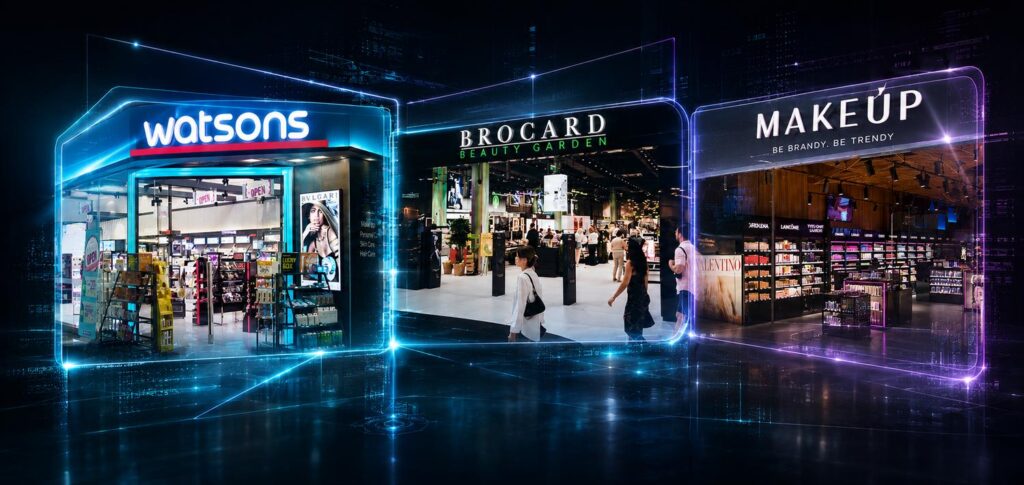
MAKEUP, Brocard, or Watsons: Which beauty retailers have seen their revenues soar into the billions, and which are on the brink of disappearing?
2 June 11:02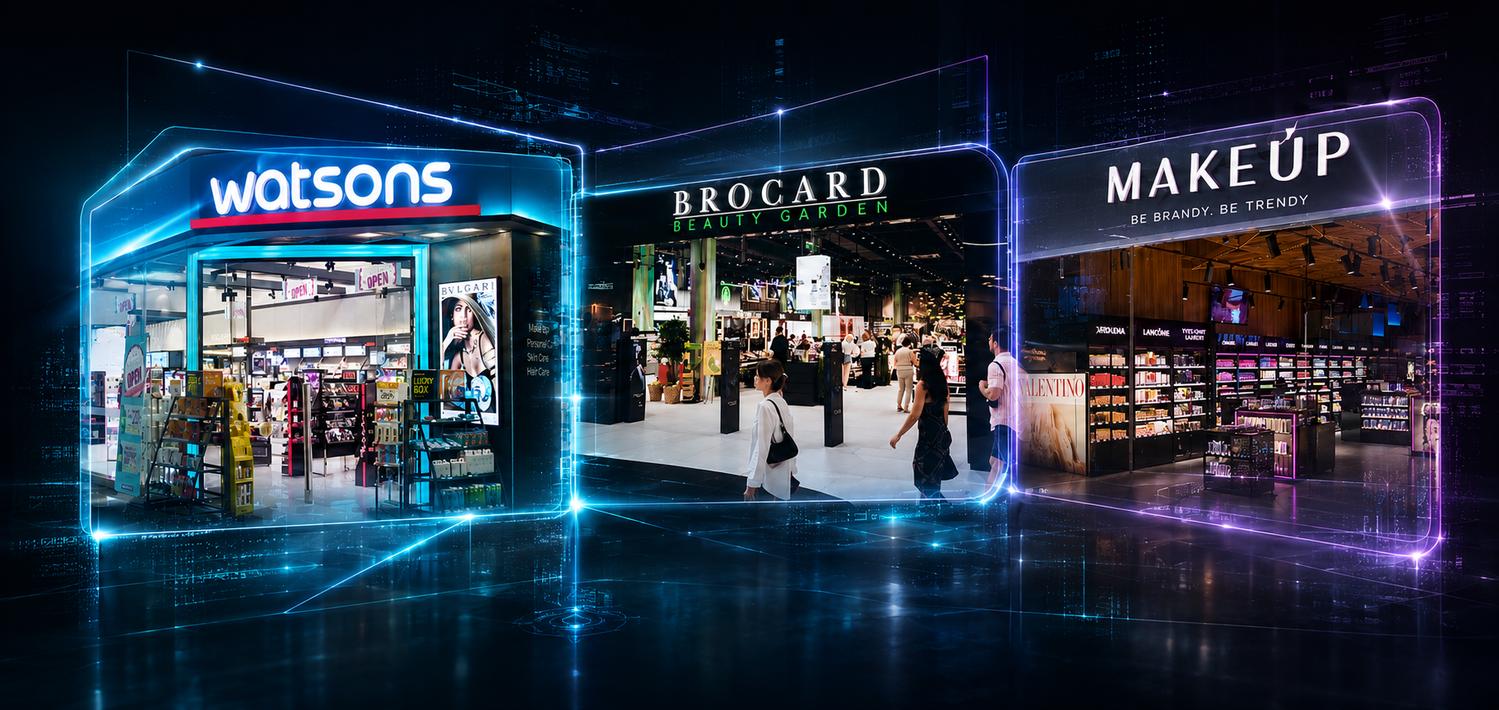 ANALYSIS
In recent years, the Ukrainian retail market for beauty, personal care, and health products has become a veritable testing ground for business models. A full-scale war, profound demographic shifts, the migration of millions of consumers, and constant logistical disruptions have forced major players to completely rewrite the rules of the game. For some companies, this period has been a time of catastrophic decline and protracted restructuring; for others, it has been a window of opportunity for a digital breakthrough or aggressive premium scaling. "Komersant Ukrainian" compared three completely different strategies using the example of key players in the retail market for cosmetics, perfumes, and household chemicals. Who has taken the lead in the race for Ukrainians’ wallets, and who is on the brink of technical bankruptcy?
What is happening with Watsons in Ukraine
Watsons is one of the first and most well-known Drogerie-format brands in Ukraine. The company’s affiliation with the powerful international corporation AS Watson Group has always projected an image of unwavering stability. However, the company’s latest registration and financial data for the 2023–2026 period, aggregated by the OpenDataBot service, reveal a completely different, far more alarming reality: the chain is undergoing a deep operational crisis.
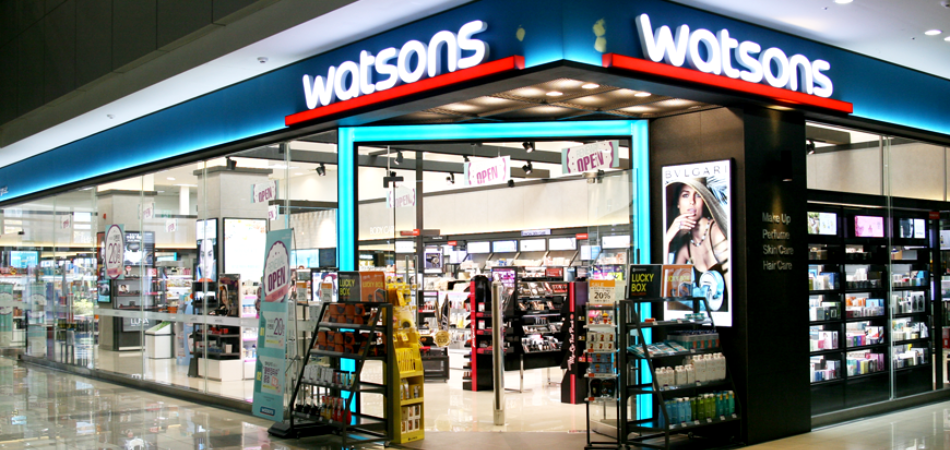
The first signs of major changes became apparent in 2025. Juris Verzbitkis, who had led the company through its most difficult years, stepped down as director. Dmytro Naumov became the new head. In February 2025, the company changed its legal address, moving from a large office on Stepan Bandera Avenue to 8 Jones Gareth Street. Currently, 76 other companies are registered at this address. This often indicates the closure of a traditional central office, a reduction in administrative costs, and a shift by management to a remote or outsourced work model.
Despite the fact that Watsons consistently generates significant revenue (approximately 1.8–1.9 billion UAH per year), the company is operating at a deep loss, and its losses are growing catastrophically.
As of the first quarter of 2026, despite revenueof 436.2 million hryvnia, the net loss stood at -91.6 million hryvnia.
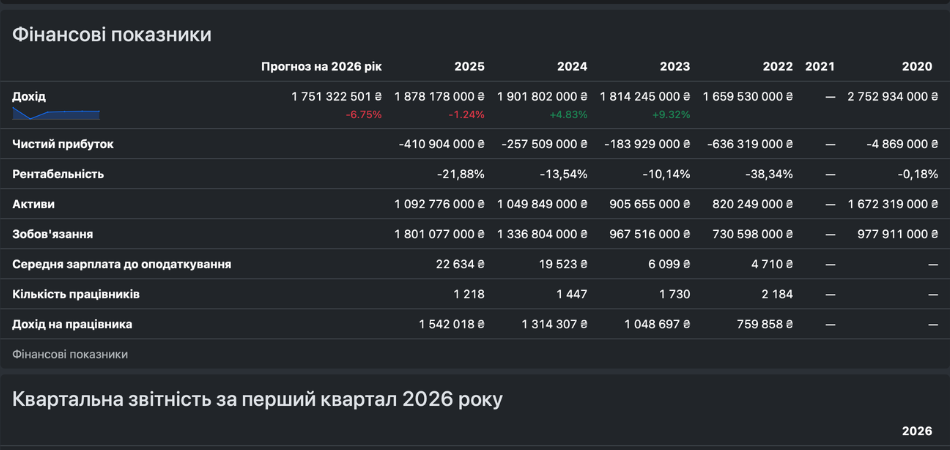
The forecast for the entire year of 2026, based on the first-quarter trend, is bleak: the company risks losing another 6.75% of revenue compared to last year, and losses could again exceed the 360–400 million UAH mark. Over three years, the company’s cumulative net loss has exceeded 1 billion UAH.
The most painful way for a retail chain to optimize costs is to close unprofitable stores and reduce staff. Watsons’ figures clearly demonstrate the scale of this process:
- In 2023, the company employed 2,184 people.
- In 2024 — 1,730 people.
- In 2025 — 1,447 people.
- In the first quarter of 2026, the workforce shrank to 1,142 employees.
Over three years, the company cut nearly 50% of its workforce. At the same time, the average pre-tax salary on paper rose from 4,710 ₴ in 2023 to 22,634 ₴ in 2025. This may indicate both the formalization of payments to comply with an international group’s requirements and the fact that the company closed low-cost regional locations, retaining staff primarily in major cities with higher wage levels.
The Brocard Phenomenon: A Record 6 Billion in Revenue
Compared to the previous case (Watsons), the situation here is the exact opposite: the company is demonstrating phenomenal financial growth, despite a complex historical legacy and a change in ownership structure following the initial phase of the full-scale war.
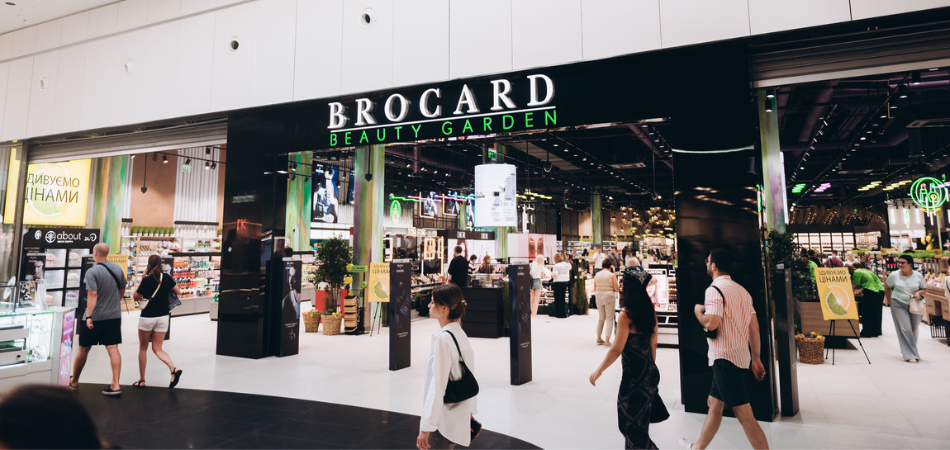
The biggest challenge for Brocard after February 24, 2022, was the presence of beneficiaries from the Russian Federation (specifically, Tatyana Volodina, owner of the Russian chain “L’Étoile”). This put the company at risk of nationalization or closure.
However, according to the history of changes in the Unified State Register, the ownership structure underwent a radical restructuring in the fall and winter of 2022:
- Russian holding companies were removed from the list of beneficiaries.
- The new official owner and ultimate beneficiary became the well-known French businessman Philippe Benassen (in partnership with Guy and Maurice Benassen) through the Cypriot entity “INDENON HOLDINGS LIMITED.” Benassen is the head of the global perfume holding company Interparfums.
- Operational management of the company remains in the hands of Lyudmila Sevryuk, who has led the company since its founding.
Brocard’s financial performance in recent years has followed a V-shaped trajectory—a sharp decline followed by an even more dramatic rebound.
While in 2022 revenue plummeted by -52.72% to 1.89 billion UAH and a net loss of -386.6 million UAH was recorded, by 2025 revenue had reached the psychological milestone of over 5.7 billion UAH (23.23%). Net profit stood at 355 million UAH.
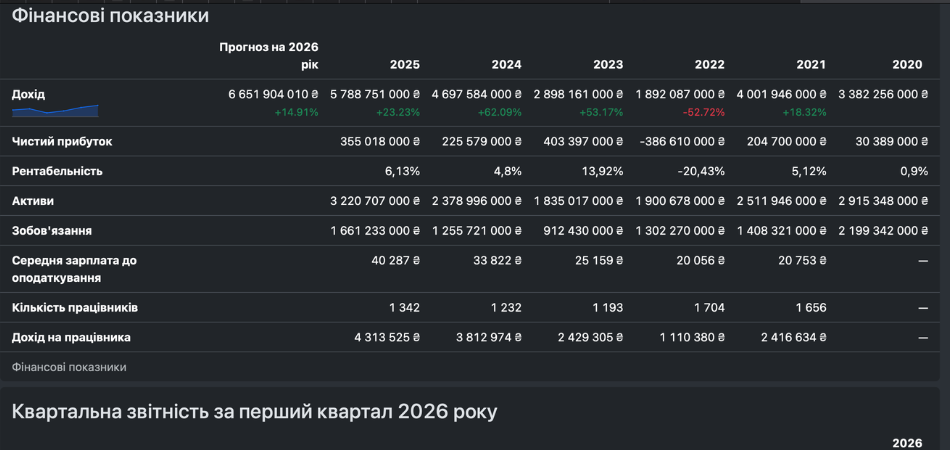
Judging by the quarterly reports (in the first quarter of 2026 alone, the company already generated 1.50 billion UAH in revenue and 34.2 million UAH in net profit), expected annual revenue is projected to reach a record 6.65 billion UAH (14.91%). This makes the company one of the country’s most efficient retailers in terms of cash flow growth.
While other companies are forced to cut staff, Brocard is demonstrating a unique trend— growth in efficiency per employee. The total number of employees, after a decline during the pandemic and at the start of the war, has stabilized and begun to grow gradually: from 1,193 people in 2023 to 1,342 people in 2025. The “Revenue per Employee” metric has quadrupled over the past four years and stands at an astronomical 4.3 million UAH. Accordingly, the official average pre-tax salary has also increased—from 20,056 UAH in 2022 to 40,287 UAH in 2025, which is significantly higher than the average for the retail market in Ukraine.
MAKEUP is gaining momentum
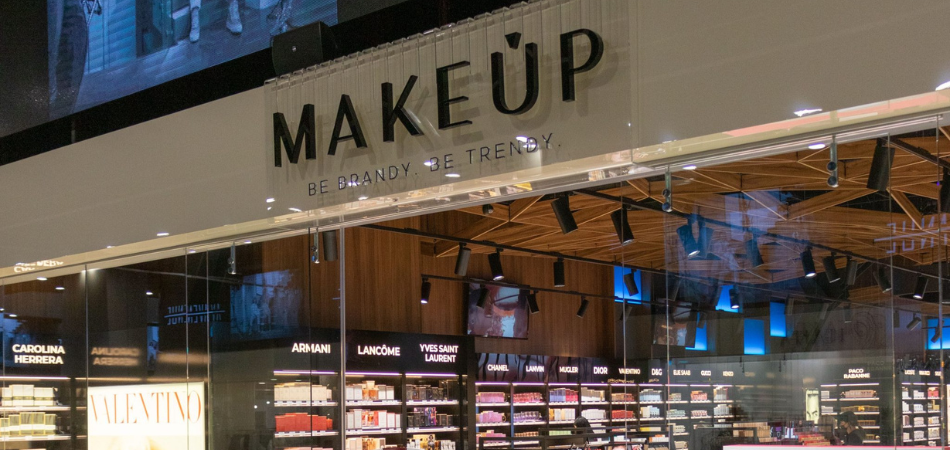
According to reports from MAKEUP TRADING LLC on OpenDataBot, during the pandemic year of 2020, the company’s revenue was 1.73 billion UAH (and resulted in a net loss of 160 million UAH), but by the end of 2025, revenue had nearly tripled—reaching 4.84 billion UAH. Moreover, according to forecasts for the current year 2026, the company plans to generate over 5.82 billion UAH. The start of the year confirms these ambitions: in the first quarter of 2026 alone, the company’s revenue already exceeded 1.36 billion UAH.
The most interesting trend is seen in the “net profit” column. Throughout 2023 and 2024, the company operated with critically low profitability (0.23% and 0.37%, respectively), retaining only a “modest” net profit of 7.9–15.7 million UAH—a figure that seems modest given such revenue levels. It appears that all this time, the marketplace was either dumping prices or investing heavily in logistics and maintaining its market share. However, in 2025, the situation stabilized: net profit soared to 126.9 million UAH, raising profitability to a quite healthy 2.62% for e-commerce.
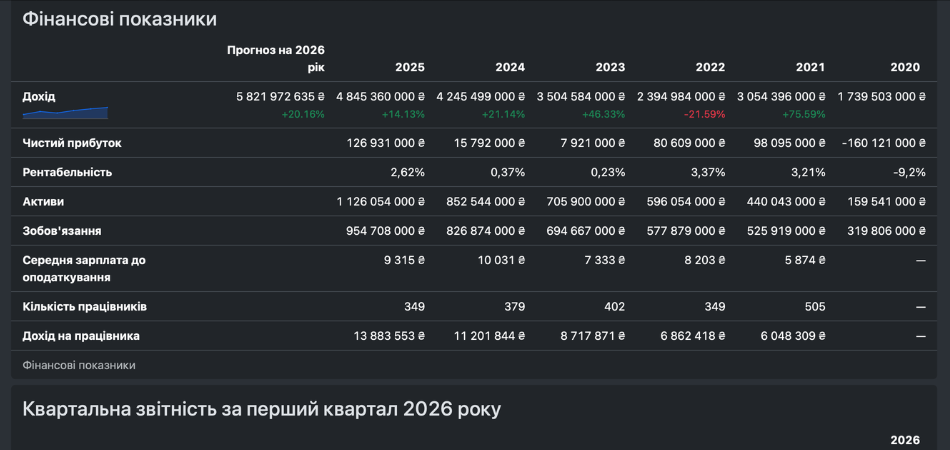
However, the flip side of MAKEUP’s billion-dollar turnover is its balance sheet structure. The company operates under a high-risk financial model, where capital consists almost entirely of liabilities.
- Company assets (as of the end of 2025): UAH 1.12 billion.
- Liabilities (debts and accounts payable to suppliers): 954.7 million UAH.
It is also worth noting the workforce: the company officially employs 349 people (a slight decrease compared to 2021, when there were 505 employees). At the same time, the average official pre-tax salary in 2025 was 9,315 UAH, which seems rather modest for an IT-focused retailer from Kyiv.
From a legal standpoint, 100% of the founder of LLC “MAKEUP TRADING” is controlled by the Cypriot entity “MINRAN LIMITED” with a registered capital of just 50,000 UAH. However, behind it stand real Ukrainian founders who, according to the registries, are actively changing their geographic locations. The ultimate beneficial owners are two Ukrainian citizens:
- Yevgen Malev — in September 2025, he updated his information, listing an official registration address in Sofia (Bulgaria).
- Serhiy Volobuev — also declared a new place of residence in the prestigious Mars Dubai district (United Arab Emirates) in the fall of 2025.
An analysis of current financial and registration data for the three giants of Ukraine’s Beauty & Care segment clearly demonstrates that there is no single recipe for survival during wartime. The market is undergoing a massive transformation, where once-unshakable international corporations are giving way to flexible local players and the premium segment.
The Ukrainian consumer has also changed. They either opt for the convenience of online shopping (MAKEUP) or are willing to pay more for status and service in brick-and-mortar stores (Brocard). Those players who got stuck in the middle and failed to adapt in time to the new realities of war and digitalization (Watsons) are now forced to pay for it with billions in losses and the loss of market share.