The largest strike of the war: Ukraine has attacked energy facilities and industrial sites in the Moscow region
17 May 13:09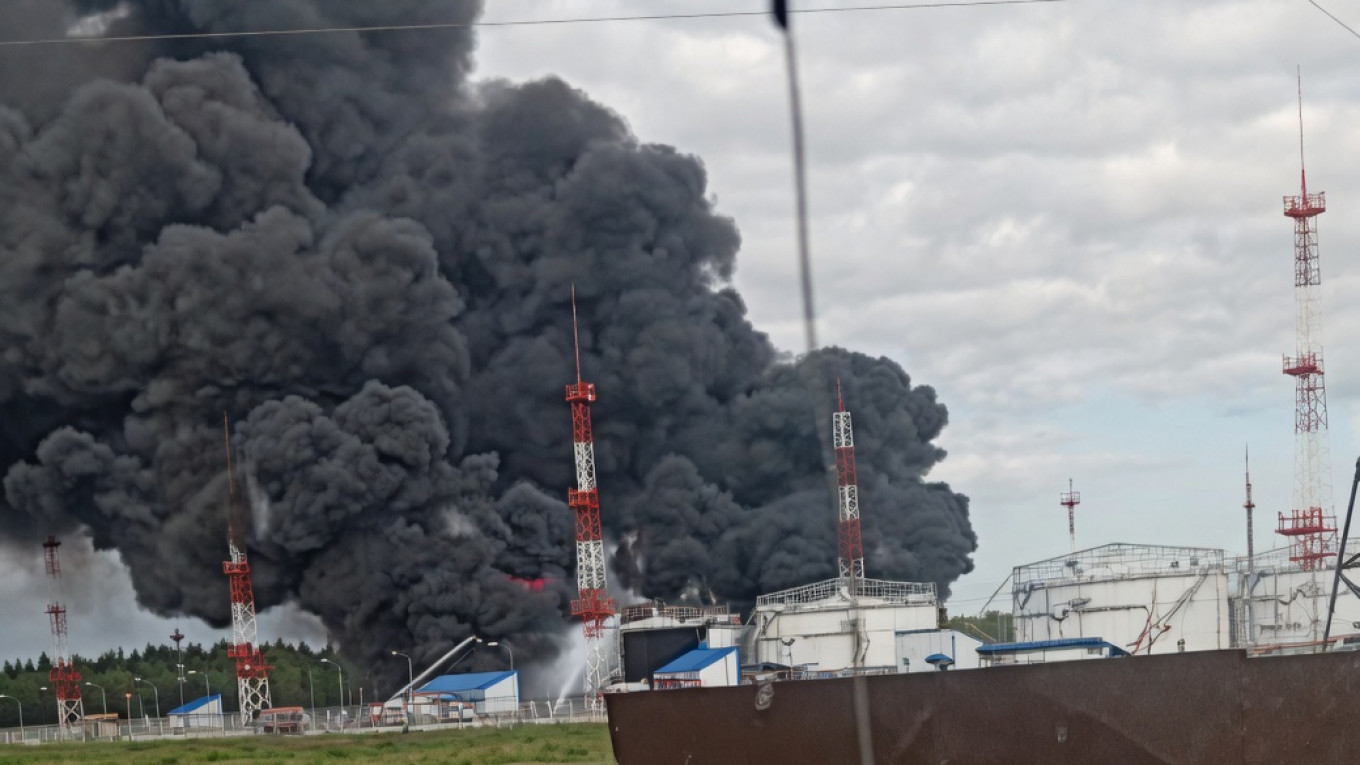
On the night of May 17, Ukrainian drones carried out the largest strike on Moscow and the surrounding region since the war began. This was reported by "Komersant Ukrainian", citing Russian propaganda media.
According to OSINT analysis by ASTRA, the targets included the Elma Technology Park in Zelenograd (an electronics and optics manufacturing facility), the Soniachnogorsk loading station in the village of Durikino (a major storage and transshipment facility for petroleum products), and Sheremetyevo Airport. Exilenova also reports on a fire at the station and in the technology park. Additionally, according to Supernova, the strike hit the Rainbow Research Institute in Dubna—a developer of cruise missiles. According to Moscow Mayor Sergei Sobyanin, the Kapotnya Oil Refinery in Moscow was also attacked.
At Sheremetyevo, according to the online departure board, over 200 flights have been canceled or delayed. Aeroflot reported that some arriving flights have been diverted to alternate airports. At Vnukovo, nearly 100 flights have also been diverted or canceled. The Sheremetyevo Airport press service stated that UAV debris fell at a safe distance from passenger areas, and there were no casualties.
Watch us on YouTube: important topics – without censorship
In Moscow, according to ASTRA, strikes on residential buildings were recorded, including on Mikhailova Street, and in Zelenograd, part of a high-rise building was destroyed. Eyewitnesses posted videos showing damaged facades and destroyed balconies. Residents of Khimki, Lobnya, and Naro-Fominsk reported numerous explosions on social media.
“I didn’t think the war would reach our city of Zelenograd,” says a woman in a video filmed after the attack. In another clip, an eyewitness, pointing to the destroyed balcony of a high-rise in Zelenograd, exclaims: “Look at this mess! The balcony is gone!”
Residents of the Moscow region are also complaining on social media about the lack of a warning system during the strike.
In chat rooms for Khimki, Mytishchi, Zelenograd, and Lobnya, messages began appearing one after another from residents wondering why the sirens didn’t go off and why they didn’t receive SMS alerts about the approaching drones, Astra noted. Many also complained that during the nighttime attack, they were unable to reach emergency services by dialing 112—the line was constantly busy.
Moscow Region Governor Andrei Vorobyov reported that air defense forces began repelling the attack at 3 a.m. According to him, at least three people were killed in the region, and 17 were injured. Residential buildings in Khimki, Krasnogorsk, Didivsk, and other settlements were damaged, as were private homes in the Naro-Fominsk District and Sergiev Posad, where, according to District Head Oksana Yerokhanova, four houses were destroyed.
“The Moscow region has suffered the largest-scale attack since the start of the war. But there will be even larger-scale ones to come. And on Moscow itself as well,” commented Serhiy Sternenko, an advisor to the Ukrainian Minister of Defense, on the strike.
Robert Brovdi (Madyar),commander of Ukraine’s Unmanned Systems Forces, posted photos on his Telegram channel of drones likely used in the attack. One of them bears the inscription “Moscow never sleeps.”
“The odds are even: the one-way ticket to a peaceful life in Patrik and the surrounding areas has been canceled,” Brovdi noted.
The Russian Ministry of Defense reported the “destruction” of 556 drones over 14 regions, including the Belgorod, Kaluga, Kursk, Bryansk, Voronezh, Tula, Smolensk, Lipetsk, Tver, and Rostov regions, the Krasnodar Krai, the Moscow region, and the annexed Crimea.
Read us on Telegram: important topics – without censorship