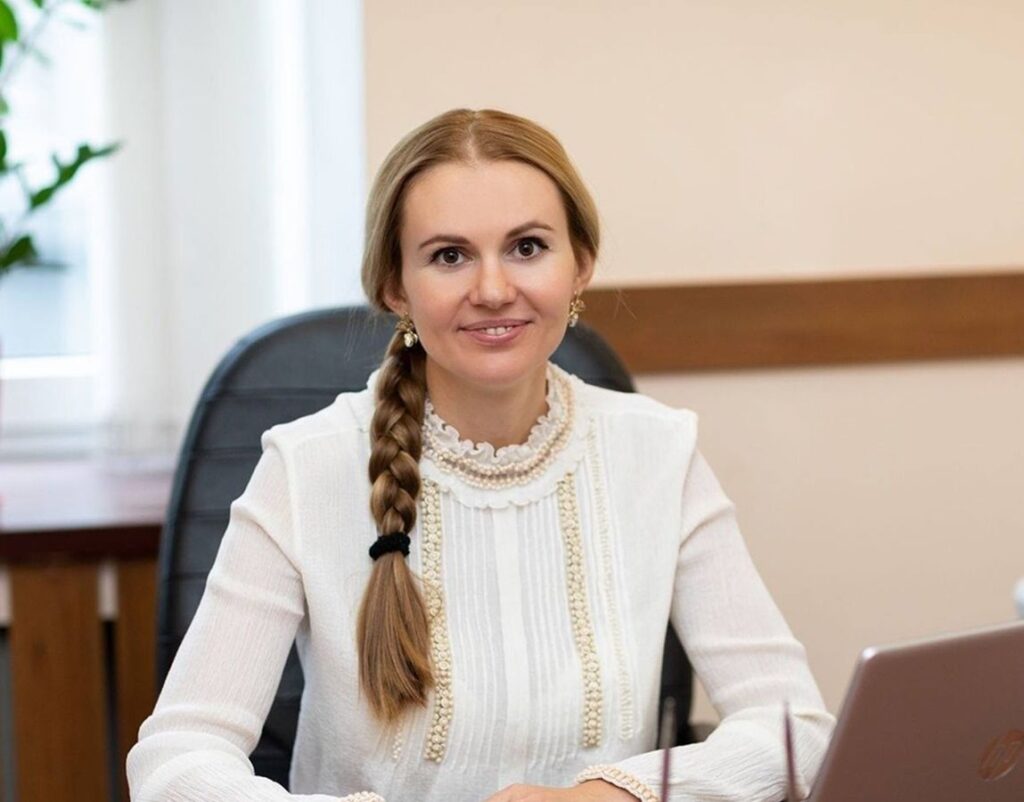
“The Failure of Mobilization and 15% on the Front Lines”: A Candid Interview with MP Anna Skorokhod
15 April 18:46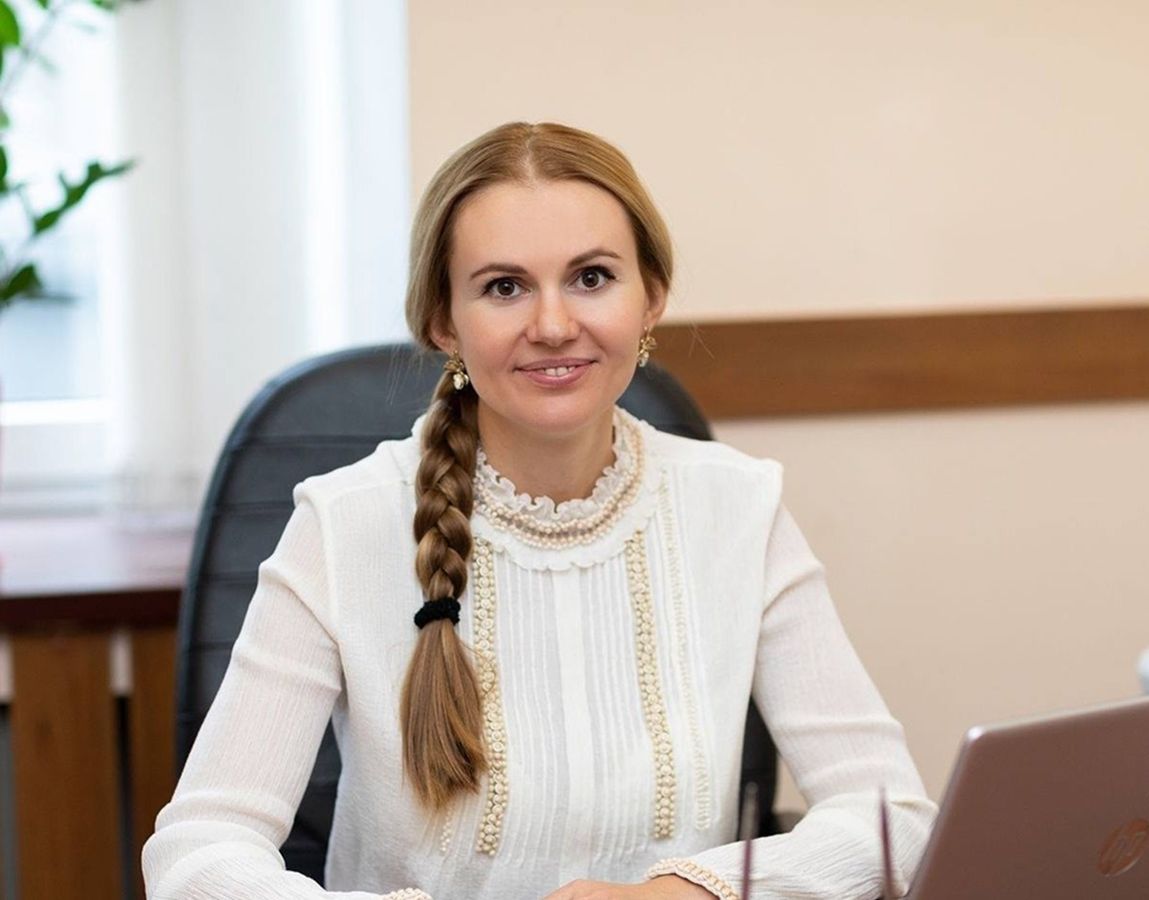 interview
Why are Ukrainian soldiers so exhausted, how many people are actually fighting, who is hiding in the rear and why, and why, according to the lawmaker, “either everyone fights, or the war must end”? In an interview for the YouTube channel "Komersant Ukrainian", MP Anna Skorokhod made a series of bold statements about mobilization, corruption, negotiations, and the future of the war. Details follow in the article.
What’s wrong with mobilization
– Anna, hello! In your opinion, what single word best describes the current mobilization system in Ukraine?
– Good afternoon. I believe that word is “failure.”
– The most pressing problem forcing soldiers to leave their units. Is it money, poor management, or inadequate training?
– The lack of deadlines.
– Is it really still possible to build a motivation system for conscripts?
– If legislative norms are changed.
– What is the most effective incentive you would introduce for those mobilized starting tomorrow?
– Of course, it’s money.
– As a member of parliament, do you often hear from those mobilized that they’d rather take a different path than wait here or die?
What to Expect from Trump
– We see that peace hasn’t come, unfortunately, and there are no elections. What do you say?
– 90%
– I’ll say that there were indications of this at the time. Moreover, I have a lot of information from our American friends, and they saw the unfolding events a little differently. But something went wrong, and as we can see, neither our side nor the Russian side really wants peace.
– Can we assume that Trump has finally realized his mistakes and now understands that we shouldn’t negotiate with Russia, but fight it? And does this bring us closer to ending the war?
– Look, you always have to look at actions, and you shouldn’t, you know, judge Donald Trump solely by what he says. It’s better to look at what he does and how he does it, because there are various details that aren’t shared with us. There are various negotiations we don’t know about in the public sphere, and there are quite a few things happening behind the scenes that the average Ukrainian isn’t aware of. So Donald Trump isn’t so much changing his mind quickly as we might think, but in fact, he’s doing all this to achieve his one goal. We can’t always figure out exactly what that is.
– Is ending this war his goal?
– 100 percent, I’d say, a million percent. Moreover, this is, you know, a thorn in his side, because it was one of his campaign promises. He’s unhappy that he still has this problem hanging over his head. Even though America has plenty of its own problems, plus various interests on the international stage. So believe whoever you want, but he wants the war to end.
– What does Trump mean? In what ways does our government fail to meet his demands?
– When both sides draw red lines that neither side accepts, it’s a dead end. To break the deadlock, concessions are needed from both sides, including on all issues. Some say we cannot compromise on the issue of reducing the army. I’ll tell you that today, the issue with our army isn’t just about its size, but its quality. And that’s the main thing. Some will talk about neutral status. At the same time, we are being offered other small alliances. Some will talk about territories. But if we come down to earth and see what is happening on the front lines today, we currently lack the physical and, as they say, military strength to retake the occupied territories. No one is saying that the territories will become Russian. That is a lie. But we know the situation: the war began in Donbas, we have occupied territories, and this status is not changing. And it will not change. That is, there must be concessions somewhere. And believe me, they must come from both sides. Because shouting and saying, “We will fight to the last Ukrainian to the borders of 1991,” is only possible if we are flooded with weapons. If NATO troops come here to fight on our side, that is realistic. If that doesn’t happen—and I think we’re more realists than dreamers—then, de facto, as of today, we’re in a situation where we won’t be able to retake our territories anytime soon.
– What are the current figures? As I understand it, this is already more than the number of soldiers on the front lines.
– Up to 15%. I am not authorized to disclose figures on air. This includes the total army strength. But I will tell you that up to 15% of the total force is on the front lines. You may be told that this is not the case. Even if a unit is considered combat-ready and has a number of people fighting in it, the support staff is not on the front lines in most cases. That’s why it’s up to 15%. I always keep it simple. I calculate it; I periodically request the figures. I’m waiting for them right now, by the way; I just requested them recently. How many receive the “hundred.” Based on this, we understand how many people are at the front. But even so, if you factor in corruption, you can subtract another 30%. That’s the minimum.
– So 30% or more take advantage of the rule to assign a “hundred” to those who are actually in the rear?
– We had a case where people were building a house for a commander but received the “100.” That happens. After all, we’re a country of opportunities.
Watch us on YouTube: important topics – without censorship
How high are the figures for the Special Forces?
– Speaking of the SZCH, what’s the figure here?
– The number is higher now. We need to understand that the biggest problem is physical and mental exhaustion. Plus, most of those mobilized—who are rounded up on the streets—are unfit for service, both mentally and physically. That said, I can tell you that a lot of people have returned and are returning, and we help them if necessary. Because most often people don’t want to return to their unit, and that’s where a little help is needed. And we provide it. The situations are completely different, I’ll be honest with you. Those who have been on the front lines the whole time—they’re just… Either they’re gone, or they’ve been discharged, or they’re brand-new recruits.
– Let’s get back to the question then: who isn’t fighting here?
– Everyone in power isn’t fighting, including local officials. A bunch of left-wing “disabled” people who never existed before aren’t fighting—they all just showed up here. 1.2 million reservists aren’t fighting, most of whom have absolutely nothing to do with critical infrastructure. We have a bunch of people who have simply left the country, including illegally. We have many people with deferments. Although, by and large, the guys on the front line often ask me questions—it’s unpleasant for me and it’s hard for me, I’ll put it that way. Because many people disagree with deferments for those with three or more children. Our position was that we need to support them and provide for them. They ask me questions, and this happened again just recently. They ask me why I, who don’t have children but want them, am being deprived of this right, while I have to protect three or more children, a wife, and the husband himself. But where is my, as they say, opportunity to have a family and children? That is, this kind of imbalance also stirs up discontent in society. And if we’re speaking generally, let’s be frank: either we all have to fight, or this war needs to end.
– It sounds like a social contract…
– A social contract? There isn’t one.
– What is it really like now?
– It’s absent. Pay attention, I’m going to shift to gender now. Here, women have started acting like men, and men have started hiding behind women. Look at who’s being drafted from the TCC. Look, most people are silent; they bow their heads and, excuse me, act like a flock, getting on those buses and so on. Or they’re being herded there. And I don’t see any “Maidan” protests over this. I don’t see any peaceful demonstrations regarding this. I don’t see any. At the same time, you know, once he’s bought his way out, received a letter from the TCC or from training, he’s already lowered his head somewhere in Europe. And no one talks about it. Somewhere he managed to work something out with the doctors, and now everything’s okay. That’s society’s attitude.
– There’s a view that men might not be drafted as often if women joined the military, because everyone is needed there. How do you feel about that?
– Look, I’m going to talk about physical capabilities. Can a woman do the physical work that a man does? No. No, maybe there are some super-strong, super-powerful women out there. Maybe there are. Actually, there definitely are, because we see them on the front lines too. Women can enlist on their own, but for the most part, they aren’t on the front lines. They do rear-echelon work—administration, kitchen duty, logistics, and so on. So there are different roles. Therefore, to say that there shouldn’t be women there—well, they’re there, so there’s no problem. But to say that women should be sent to the front lines—well, let’s be serious. Well, a woman is a woman. That’s just how nature made it. So let’s not even ask—we’ll all grab an assault rifle. But then I have another question. We’re supposed to mobilize women. But we don’t have all those high-ranking rear-echelon officers who, by law, can’t be sent to the front lines. Maybe we’ll reconsider and send them to fight so they at least understand what it’s like. Perhaps we’ll review the policy regarding all those exempted, those with deferments. Is there a problem with that? Yes.
– About 100,000 military retirees are currently of draft age but aren’t serving. Many civilians are asking, why are we keeping them on the payroll?
– Military retirees, police retirees, SBU retirees, prosecutors, and so on. We could gather a decent number from there. Specifically men. Of course, but this is all kept under wraps. It’s not a popular topic. Look, in our country, only the elite and the security forces remain. Everyone else has either left or is at the front. Just drive through the villages and see what’s happening. So this is the situation: we have no social contract, we have no unity—remember the first days of the war.
– Indeed, we remember how it was at the start of the full-scale invasion. It was prestigious to be a soldier.
– You know, unfortunately, that’s changing too. Moreover, soldiers are different, and we shouldn’t give everyone a free pass. But I’ll tell you this: just today, interestingly enough, I’ve received three complaints in literally two days about how they’re being treated. How they’re treated at the hospital, how they’re treated at the clinic, when they’re shuffled around there and told, “I didn’t send you there.” That’s the worst thing that can happen. And yet, you can’t say it’s the state’s fault, because it’s the human factor.
– Valentina Lebedenko once wrote: “Skorohod didn’t say why we need so many deputies who don’t work but still get paid!” What would you say to Ms. Valentina?
– If you look at the number of law enforcement officers—and by the way, there are very good law enforcement officers who do their jobs well, and you don’t have to look far to find them—there are far more of them. There are 397 or 398 deputies. There are fewer and fewer of them every time. By the way, we have the most volatile parliament. A lot of deputies have resigned, and a lot want to resign. I believe that if my colleagues worked the same way, things would be a little different in our country. Because I leave home early in the morning and return late at night. And my child doesn’t see me. So to say that nobody there is doing anything—well, try walking in my shoes. And I’d be happy to share them, by the way.
– Do you feel an “inflation” of the status of a deputy? Even the very fact that Ms. Chornovol refused to become a People’s Deputy in place of the late Mr. Parobiy. That also says something, doesn’t it?
– Look, right now, the status of a member of parliament is more of a punishment than a privilege. Because you’re to blame for everything. No matter what you do, you’re a bad person. You’re always not doing enough. But people don’t even know what you’re doing. They aren’t even interested. Moreover, you’re responsible for everything. Even though most of the problems aren’t even within our jurisdiction. That needs to be taken into account too. That’s why we also have to understand that we’re not decision-makers. We’re “button-pushers.” I can repeat this again. I said this six months ago, a year ago. Because decisions are hardly ever made in the Verkhovna Rada. And that’s not normal.
– Do you realize that people are listening to us right now, and a viewer might interpret your words in their own way—that it’s not easy being a lawmaker and that it’s not a cushy job? Because people will immediately say, “Let them try working at my factory,” and so on.
– I worked at a factory. It was the worst job I could imagine—or rather, I couldn’t even imagine anything worse—but until they sent us down into the mine, that was the worst job there could be. I can’t imagine how people—I can’t imagine how they survive down there. And that’s the hardest and most grueling work. I’m not saying I have the hardest job. No, that’s a lie. I understand anyone who works in a factory. I know what it’s like to be a teacher. I know what it’s like to work as a doctor. I mean, you know, every job has its own difficulties. But to say that someone isn’t doing something—I’m responsible for myself. I’m not ashamed of my work. I can say with confidence that I’m not ashamed.