“Different obligations”: the Pentagon explains why the US will not shoot down missiles over Ukraine as it does over Israel
16 October 2024 11:56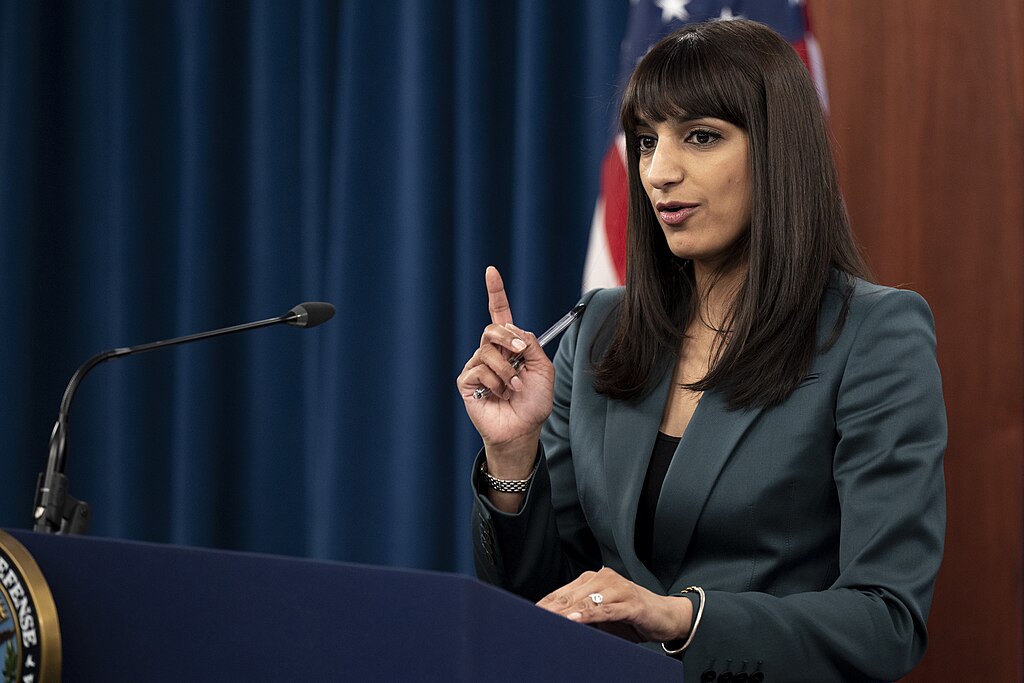
Deputy Pentagon Press Secretary Sabrina Singh explained why the United States does not use THAAD systems to protect Ukraine from Russian attacks, as Israel does to protect itself from Iran.
During the briefing, she was asked whether there was a possibility of deploying THAAD systems in Eastern Europe, such as Romania or Poland, to protect the western part of Ukraine. In response, she said that the US commitment to Ukraine and Israel is different, reports "Komersant Ukrainian"
“These are different opportunities, different wars, different regions. The commitments to Israel and Ukraine are also different. We have a long-standing partnership with Israel in matters of self-defence, and you saw the president reaffirm this on 7 October. But when Ukraine was attacked more than two years ago, the president pledged to support it for as long as it takes,”
– Singh said.
She stressed that many other means were provided to Ukraine to protect itself.
“I don’t want to go into the whole list of what we provide to Ukraine and Israel, but it’s a bit of an apples and oranges comparison, if I may say so,” she added,
– she added.
The deputy spokesperson also assured that the US administration and the Department of Defence continue to support both countries, given their different needs.
As reported  earlier, Pentagon spokesman Patrick Ryder said that the US does not seek conflict with Russia, but “simply supports a democratic country”.
Follow us on Telegram: the main news in a nutshell

THAAD
THAAD (Terminal High Altitude Area Defence) is a mobile ground-based missile defence system for intercepting ballistic missiles at high altitudes outside the atmosphere. It was developed by the US company Lockheed Martin and uses the concept of “kinetic interception”, meaning that the target is destroyed solely by the kinetic energy of the interceptor, without a warhead.
Development of the system began in 1992, and the first flight tests took place in 1995. After several tests, including the interception of target missiles at high altitudes, the THAAD system was made operational and began to be used by the US Army in 2008. Tests have shown that the system is capable of successfully intercepting medium-range missiles, including outdated models such as the Scud.
The THAAD system is capable of detecting missiles at a distance of up to 1,000 km and intercepting them at an altitude of 150-200 km. It includes launchers, X-band radar and a command centre to provide protection against missile threats in the final stages of their flight.
THAAD is deployed in several countries outside the United States. The systems have been deployed in the United Arab Emirates, Israel, Romania, and South Korea. In January 2022, THAAD was used for the first time to intercept an enemy intermediate-range ballistic missile during an attack on the UAE.
Follow us on Telegram: the main news in a nutshell