Slovakia has resumed imports of Russian oil: the Druzhba pipeline has resumed operations after a three-month hiatus
23 April 12:44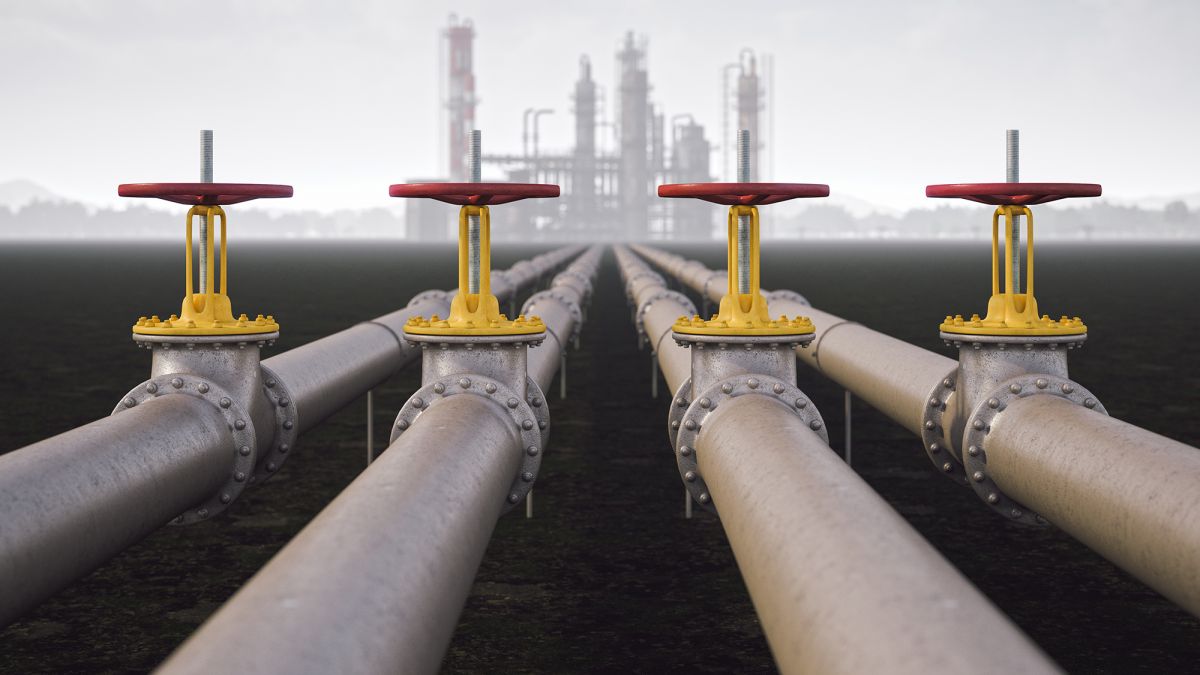
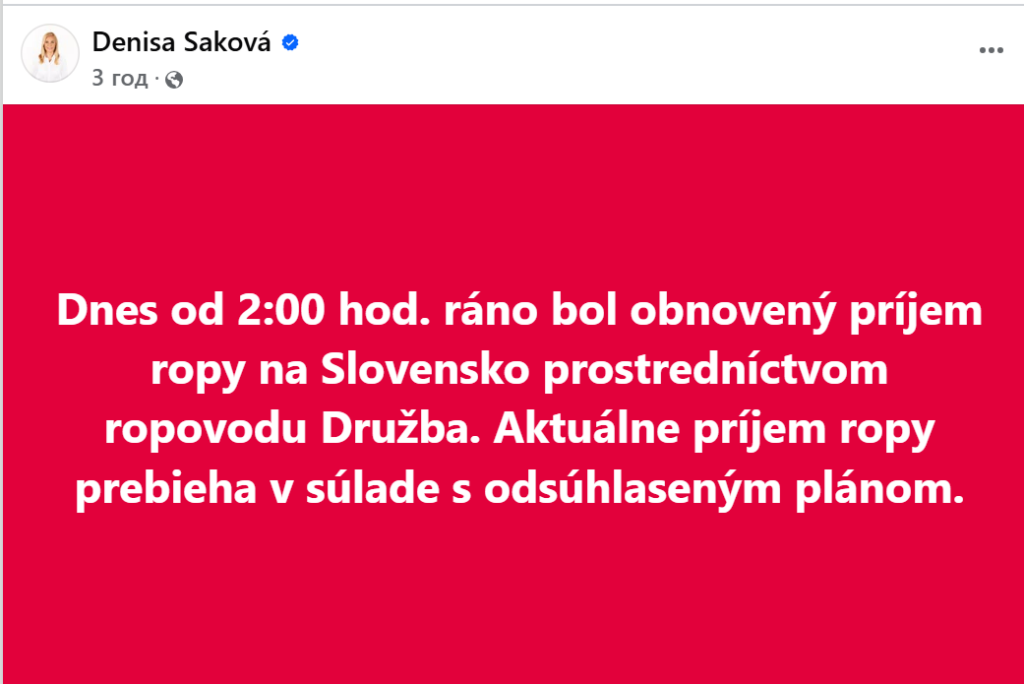
This morning, for the first time in the past three months, the Druzhba pipeline resumed the supply of Russian oil to Slovakia. This was announced by Slovak Energy Minister Denisa Saková on Facebook, according to
According to her, oil pumping resumed early Thursday morning—around 2:00 a.m.
“Today at 2:00 a.m. (3:00 a.m. Kyiv time, – ed.) oil supplies to Slovakia via the Druzhba pipeline were resumed,” Sakova’s statement reads.
Currently, the oil is being delivered according to the agreed schedule.
According to her, on the morning of April 22, Ukrtransnafta specialists began filling the pipeline and increasing pressure on the Ukrainian section from the Belarusian side.
As of the morning of April 23, oil reached Slovak terminals in accordance with the schedule provided by the Ukrainian side. Local operator Transpetrol confirmed receipt of the crude oil, reports Aktuality.sk.
Why “Druzhba” Was Down for Nearly Three Months
Supplies were halted after damage to the oil pipeline infrastructure in Ukraine resulting from a Russian strike in late January 2026. According to Euractiv, it was following this attack that the transit of Russian oil to Slovakia and Hungary ceased, and restoration work lasted nearly three months.
Naftogaz also reported in March that Russia had attacked oil infrastructure facilities related to the operation of “Druzhba.”
President Volodymyr Zelenskyy stated yesterday that repairs to the Ukrainian section have been completed and the pipeline is once again ready to transport oil toward Central Europe. Euractiv called this an important step toward resolving the long-standing political conflict over transit.
Zelenskyy also emphasized that Ukraine is awaiting action from its partners regarding the negotiation clusters on EU accession, as “Kyiv has already done its part.”
It is known that at 11:35 a.m. (Kyiv time), Budapest confirmed the start of oil pumping. The first shipments of crude are expected to arrive in Hungary in the coming days. The technical procedure for adopting the EU’s long-term budget is currently underway.
According to reports from the Slovak side, Ukrainian specialists began filling the system and increasing pressure as early as April 22, and by the next morning, the oil had reached Slovak terminals.
Slovak authorities confirmed that the local operator Transpetrol received oil after transit resumed. Denisa Sakova emphasized that the oil is arriving according to the agreed schedule. This means that after a long pause, the Slovak side has resumed using the route through Ukraine.
Did Slovakia have an alternative to Russian oil?
Despite the suspension of the Druzhba pipeline, the Slovak refinery Slovnaft did not cease operations.
Euractiv, citing Slovak sources, noted that the company was able to switch to alternative supplies, specifically via the Adria pipeline from the Croatian port of Omisalj.
In other words, the resumption of Druzhba is important for logistics and prices, but it does not mean that Slovak oil refining came to a complete halt without Russian crude.
Why the resumption of transit has political significance
The operation of the Druzhba pipeline has become part of a broader dispute between Ukraine, Hungary, and certain EU countries.
Hungary blocked a €90 billion loan for Ukraine from the EU until Kyiv restores the Druzhba pipeline. On February 26, Hungarian Prime Minister Viktor Orbán wrote an open letter to Ukrainian President Volodymyr Zelenskyy, accusing him of anti-Hungarian policies and calling for the reopening of Druzhba.
At the same time, Slovakia also insisted on guarantees that the pipeline would be restored and linked this issue to further EU decisions, particularly regarding energy and sanctions policy.
This makes “Druzhba” not just a technical infrastructure, but a key element in negotiations within the European Union.
Despite the economic benefits of Russian discounts, Hungary and Slovakia are taking a geopolitical risk. For years, Russia has used energy resources as a tool for blackmail and to keep countries within its orbit.
International affairs expert Stanislav Zhelikhovsky in an exclusive comment
“Russia could have deliberately attacked the facility to worsen relations between Ukraine and Hungary, especially during the election campaign. The plan was for Viktor Orbán to gain political capital from this conflict and remain Putin’s ‘Trojan horse’ in Europe. As we can see, the plan didn’t work—Orbán lost the election,” notes Zhelikhovsky.
Is there still a risk of new disruptions?
Despite official statements about the restoration of the Ukrainian section of the “Druzhba” oil pipeline, the actual launch of transit remains highly uncertain. Economist Oleg Pendzin, in an exclusive comment
Yes, Ukraine has fulfilled its part of the obligations to its partners by repairing the damaged sections. However, according to Oleg Pendzin, this is only one side of the coin. The problem now lies in the critical state of the infrastructure on Russian territory itself.
“Ukraine’s formal ability to transport oil does not yet mean that the Russians will be willing to do so. Yesterday’s news confirms this: Ukrainian drones struck a production and dispatch station in Samara—a transshipment complex on the Druzhba oil pipeline. The infrastructure there has been severely damaged, and the Russians still need to restore it,” emphasizes economist Pendzin.
Hungary and Slovakia remain the parties most interested in resuming transit. The reason is simple—money. Pendzin highlights the massive price gap between Russian oil and alternative offerings on the European market.
Read us on Telegram: important topics – without censorship