The Strategy of Desperation: Why Putin Has Shifted to Massive “Cluster Bomb” Strikes on Ukrainian Rear Areas – An Expert’s Analysis
4 June 14:03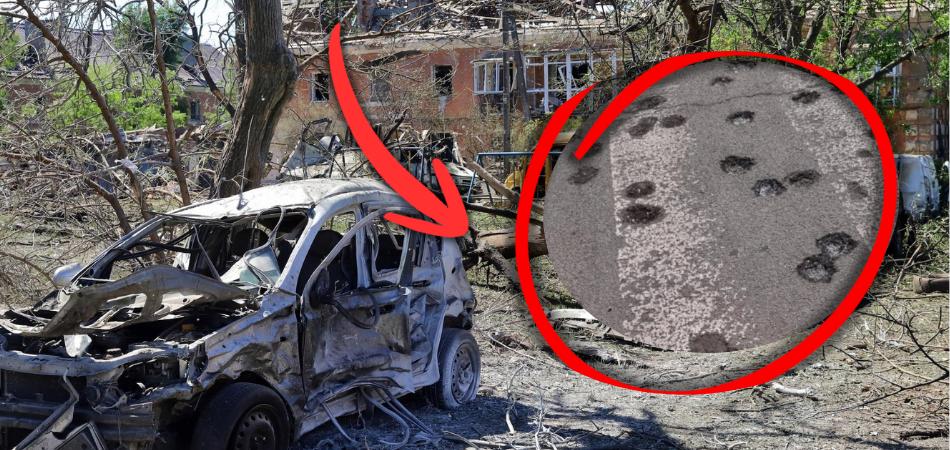 ANALYSIS
The night of June 2, 2026, went down in Dnipro’s history as one of the bloodiest and most brutal nights of the full-scale invasion. While the city slept, the Russian army fired rockets with cluster warheads at a densely populated residential area. How do cluster munitions work, and why is their use in cities strictly prohibited under the Geneva Conventions? Why did the enemy shift the maximum escalation from the front lines to deep within Ukrainian territory? Find out in this article
As of now, the death toll from this Russian war crime has risen to 16 people, including two young boys—ages 3 and 8—who were killed in their own beds. More than 30 residents remain in hospitals with severe shrapnel wounds, fractures, and blast injuries. During the cleanup and debris removal following a second strike by the occupiers , the deputy chief of the fire and rescue unit, State Emergency Service Major Anton Yarmolenko, was also killed.

City authorities and law enforcement officials state that the strike on the city’s residential area was deliberate, and the use of a cluster munition was intended to kill as many civilians, rescuers, and police officers as possible. The asphalt around the devastated buildings is littered with characteristic debris.
What are cluster munitions, and what exactly might the enemy have used?
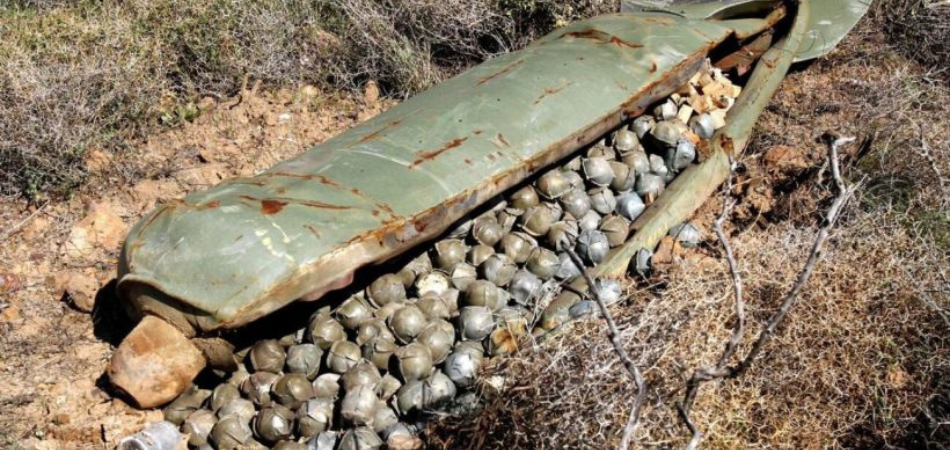
Cluster munitions (containers) are a special type of weapon that opens in the air, scattering dozens or hundreds of small submunitions (so-called “submunitions”).
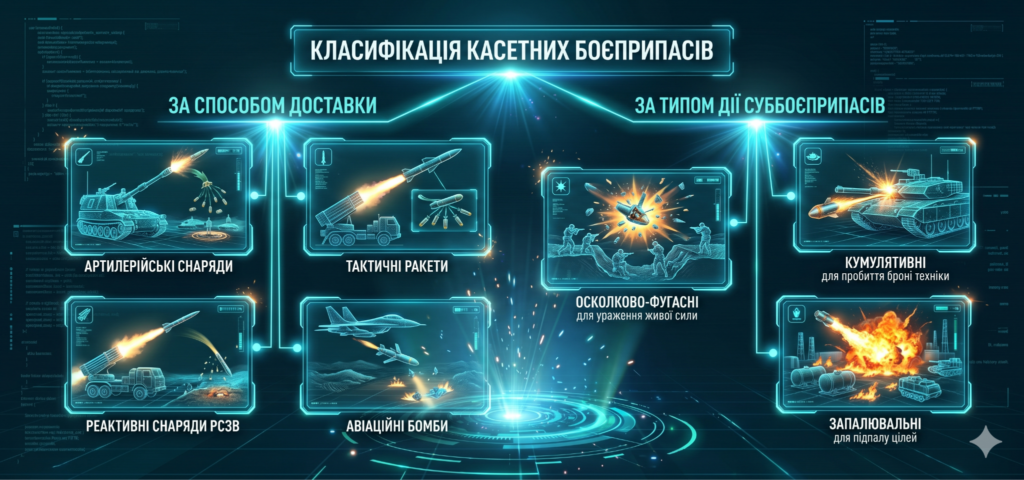
Depending on the type of delivery system and purpose, cluster munitions are divided into several types:
- By delivery method: artillery shells, tactical missiles, rocket projectiles for MLRS (multiple launch rocket systems), and aerial bombs.
- By submunition type: fragmentation-high-explosive (for targeting personnel), shaped-charge (for penetrating vehicle armor), and incendiary.
During shelling of Ukrainian rear cities, particularly Dnipro, the Russian army most often uses cluster munitions mounted on ballistic missiles of the Iskander-M system or rocket projectiles of the Tornado-S MLRS ( a modernized version of the Smerch). A missile with a cluster warhead explodes at an altitude ranging from several hundred meters to a kilometer, after which hundreds of fragmentation elements fall chaotically to the ground, piercing roofs and cars and inflicting fatal lacerations on people in open areas. In addition, a significant portion of these fragments do not detonate immediately, effectively becoming delayed-action anti-personnel mines.
The enemy in Ukraine integrates cluster submunitions into virtually all available weapons systems. This was reported in a comment to the publication
“This applies particularly to cluster aerial bombs, which they can use just like conventional gliding aerial bombs. Plus, cluster munitions in various types of missiles—ballistic and cruise. They can also use cluster munitions in drones, as appropriate weapons are selected for different missions,” Svitan notes.
The replacement of conventional high-explosive fragmentation warheads with cluster munitions in missiles and drones indicates a shift in the Kremlin’s priorities toward outright terrorism.
“On the front lines, the Russians are having major problems reaching our military facilities in the rear. They cannot do so and do not even know where they are located, since Ukrainian forces are operating in a dispersed formation,” notes Svitan.
Since the Russian army is unable to demonstrate real successes on the battlefield, the Russian Federation’s military and political leadership is trying to shift the focus of attention. Strikes on the rear are intended to show Russian society at least some “positive aspects” and mask the failures on the front lines, says Roman Svitan.
At the same time, Russia has accumulated an excessive amount of cluster munitions, so they can afford to use them on a large scale for specific tasks.
The expert emphasizes: by their very nature, cluster munitions cover a vast area. Consequently, their use in densely populated cities leads to maximum destruction and civilian casualties.
“As soon as the immediate objective is to inflict damage—specifically, to terrorize the civilian population—the number of cluster munitions deployed increases to meet that objective. The increase in the number of cluster munitions immediately reveals the purpose of these attacks. And it is now clearly evident that they are purely terrorist in nature,” concluded Roman Svitan.
Against this backdrop, analysts predict that if airstrikes on Ukrainian cities continue, the enemy’s use of cluster munitions and “Shahed” drones will only increase.
Are “cluster munitions” permitted under the rules of modern warfare?
International humanitarian law categorically prohibits indiscriminate attacks and attacks on the civilian population. After all, cluster munitions are, by their very nature, weapons of indiscriminate action. They cover a vast area and cannot distinguish a military target from a civilian building. The use of such weapons in densely populated cities, where there are no clear military targets, automatically constitutes a war crime and a violation of the principle of proportionality.
Under international law, the status of cluster munitions is ambiguous, but their use is clearly regulated.
1. Convention on Cluster Munitions (2008) There is a separate international convention that completely prohibits the use, production, and stockpiling of these weapons. It has been signed by over 110 countries (primarily EU and Latin American states). However , neither Russia, nor Ukraine, nor the United States has acceded to this convention, so there is no formal direct ban on the mere possession or use of such munitions for these countries.
2. Absolute ban in civilian areas (Geneva Conventions) Despite not having signed the relevant Convention, Russia’s use of cluster munitions is governed by the general rules of warfare—specifically Additional Protocol I to the Geneva Conventions.
The strike on a residential neighborhood in Dnipro, where approximately 50 civilian homes were damaged (seven of which were completely destroyed), is yet another direct proof that Russia uses “cluster munitions” not as a tool for combat on the battlefield, but as a means of intimidation and the deliberate extermination of the Ukrainian civilian population. Evidence regarding this incident is already being documented by law enforcement agencies for submission to international courts.
Thus, the tragedy in Dnipro is neither a coincidence nor “collateral damage,” but a deliberate and mathematically calculated tactic of the Kremlin. The use of cluster munitions against a sleeping residential area is a war crime in its purest, most cynical form. Since “cluster munitions” have a vast area of impact and cause a chaotic scattering of submunitions, their use in the city had a single goal—to maximize human casualties and intimidate the population. And the evidence of this crime in Dnipro, along with international legal expert analyses regarding the use of indiscriminate weapons, will become yet another ironclad volume in future international tribunal proceedings against the senior leadership of the Russian Federation.