“What kind of four-day workweek is this, when the country is facing a labor shortage and a war?” Vice President of the Chamber of Commerce and Industry Nephran on the state of the economy and the new 2,000-hryvnia bill
20 July 14:25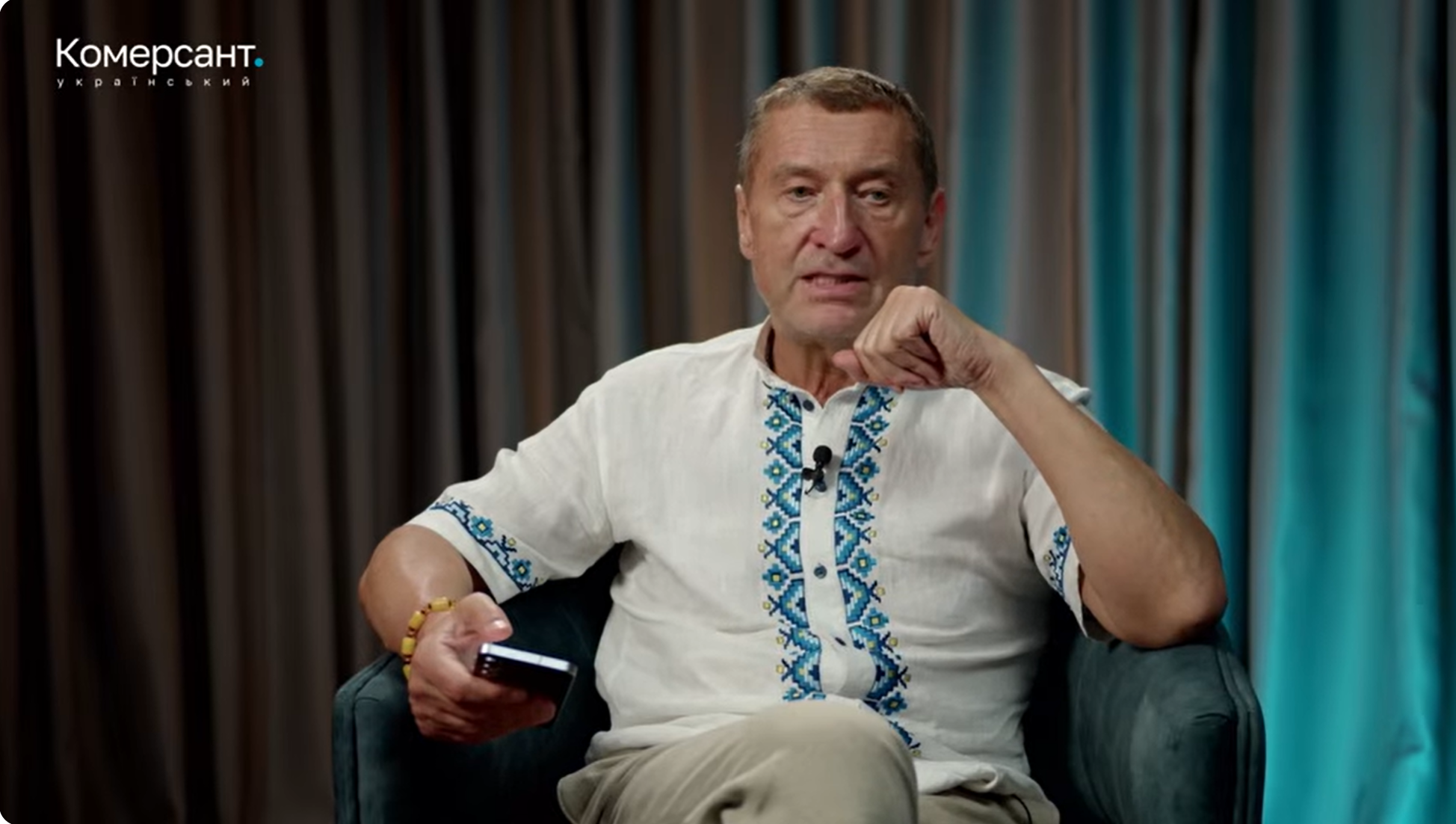
Ukraine is preparing to introduce a new 2,000-hryvnia banknote, discussions are ongoing regarding a possible transition to a four-day workweek, and the International Monetary Fund forecasts an acceleration in economic growth once the war ends. At the same time, the Ukrainian economy continues to operate amid a full-scale war, labor shortages, significant budget expenditures on defense, and uncertainty regarding the pace of future recovery.
Does the introduction of the new banknote mean increased inflationary pressure? Why is the idea of shortening the workweek currently unrealistic? How realistic are expectations of a large-scale influx of investment after the war, and what processes are currently taking place in the Russian economy?
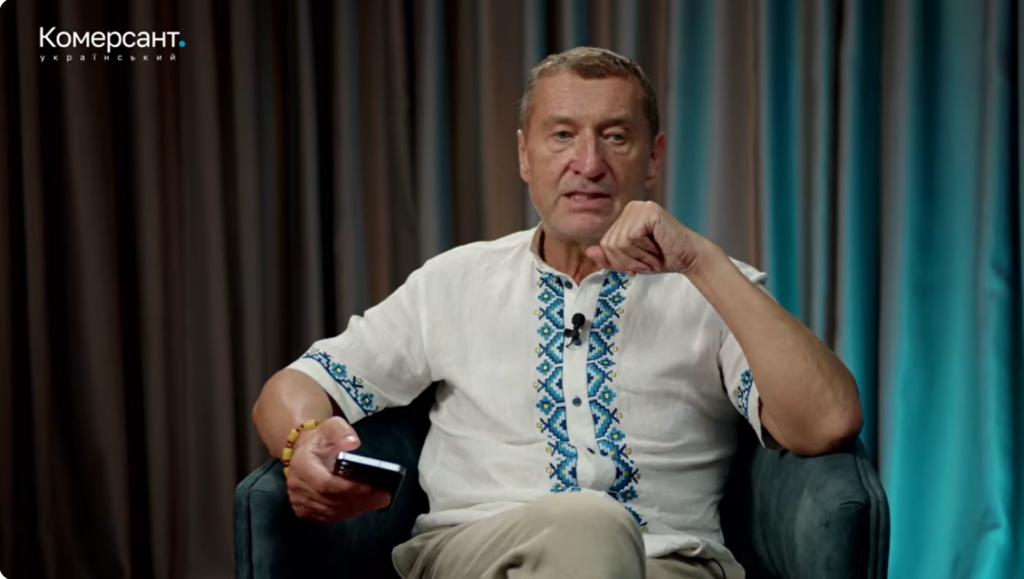
Mykhailo Nepran, First Vice President of the Ukrainian Chamber of Commerce and Industry, discussed these issues in an interview with the "Komersant Ukrainian" YouTube channel .
— The National Bank announced the introduction of a 2,000-hryvnia banknote. Many people interpreted this as a sign of serious economic problems. Is that really the case?
— First of all, it’s important to understand that the introduction of a new banknote does not automatically mean a deterioration in the economic situation. It merely reflects changes that have already taken place in recent years. Seven years have passed since the 1,000-hryvnia banknote was introduced. During this time, Ukraine—like the rest of the world—has weathered a pandemic, a war, inflation, and rising prices for food and energy. The purchasing power of money has changed.
While a few years ago, 1,000 hryvnias could buy significantly more goods, today that amount is sufficient for fewer purchases. That is why the introduction of a higher-denomination bill is more of a technical solution than a sign of economic disaster.
— So the new banknote doesn’t mean that prices will automatically rise after its introduction?
— Absolutely not. The introduction of a new banknote does not trigger inflation. It is merely a reflection of the state of the economy as it currently stands. I would even say that it is a snapshot of the economy at a certain stage of its development. In previous years, we’ve already experienced periods of sharp hryvnia devaluation—following the 2008 global financial crisis and at the start of Russian aggression in 2014–2015. That’s when there were serious currency shocks.
The situation now is fundamentally different. The National Bank has sufficient international reserves, so I see no preconditions for a sharp currency shock. And if there is no currency crisis, then there is no reason to expect a sudden spike in prices simply because of the introduction of a new banknote.
— Does this mean that 3,000- or even 5,000-hryvnia bills might appear soon?
— Not in the near future. Of course, the war is having a negative impact on the economy. A portion of government resources is being directed not toward development or social programs, but toward funding defense. This is an objective reality for any country at war. However, the current economic situation remains challenging, though not critical. I don’t see any grounds for such drastic changes that would require the introduction of even higher denominations.
In addition, there is a continuing global trend toward a gradual reduction in the use of cash. More and more transactions are being made using bank cards, smartphones, or other cashless payment methods. Therefore, the need for increasingly larger denominations is gradually decreasing.
What We Know About Mykhailo Nepran
Mykhailo Nepran is a Ukrainian economist, business analyst, public figure, and first vice president of the Ukrainian Chamber of Commerce and Industry.
Throughout his professional career, he has held senior positions at the Ministry of Economy of Ukraine, the Secretariat of the Cabinet of Ministers, the Presidential Administration, and the State Commission on Securities and the Stock Market. He holds the third rank of civil servant.
Mykhailo Nepran is a member of the Ukrainian Business Council and the author of numerous publications on macroeconomics, tax policy, entrepreneurship development, the stock market, international trade, and Ukraine’s postwar recovery.
— So, is Ukraine also moving toward an economy where cash will become increasingly rare?
— Exactly. This is a global trend. The government is interested in developing cashless payments because they make financial flows more transparent. We’ve already gotten used to paying for purchases with our phones or cards. In many cases, it’s faster and more convenient than using cash.
After all, if someone earns a salary of 30,000–40,000 hryvnias today, it’s much easier to have that money in a bank account rather than as a large stack of bills in a wallet. That is precisely why, going forward, we are likely to see not so much the introduction of new high-denomination bills as a further reduction in the role of cash in the economy.
— There has been a lot of discussion lately about the idea of introducing a four-day workweek. How realistic is this for Ukraine?
— As a concept, it looks very appealing to employees. I think few people would turn down the chance to work fewer hours while earning the same salary. However, we need to look at the situation not only from the perspective of the employee but also from the standpoint of the economy as a whole.
Today, Ukraine is experiencing an acute labor shortage. According to official statistics, the number of job openings already significantly exceeds the number of registered unemployed. Employers cannot find workers even under the current work schedule.
Under these conditions, reducing working hours would mean an even greater labor shortage. For a country engaged in a full-scale war, this is too great a risk. In peacetime, such experiments might be the subject of serious debate. But right now, the main task is to ensure the functioning of the economy, industry, and the defense sector. If the economy operates less efficiently, this will directly affect the state’s ability to fund the military. Therefore, under current conditions, I do not consider switching to a four-day workweek a realistic solution.
Watch us on YouTube: important topics – without censorship
— The International Monetary Fund forecasts that, once the active phase of the war ends, Ukraine could become one of Europe’s fastest-growing economies. How realistic is this scenario?
— I would divide this question into two parts. The first concerns government investment in the country’s reconstruction; the second concerns the private sector. As for infrastructure restoration, such investments are entirely realistic. We’re already seeing individual countries taking on the sponsorship of Ukrainian regions, funding the restoration of bridges, hospitals, water supply systems, schools, and other critical infrastructure. Once the war ends, this process will only intensify.
But when it comes to private investment, I’m much more cautious. Businesses always assess risks. As long as the threat of war persists, large international companies will be very cautious about launching large-scale production operations in Ukraine. There may be isolated projects in the defense industry or high-tech manufacturing, but we shouldn’t expect a massive influx of private capital immediately after the war.
— Why, in your opinion, has Ukraine historically failed to become a destination for major foreign businesses?
— The problem here is much deeper than it seems. We’ve been talking for many years about the need for investment, but if we carefully analyze its structure, we’ll see that a significant portion of so-called foreign investment was actually Ukrainian capital that was first transferred abroad and then returned to the country via other jurisdictions.
In addition, there’s another distinctive feature of Ukrainian entrepreneurship. Our business community is very reluctant to share ownership. In Western countries, it’s normal to go public, sell a stake in the company to investors, and raise capital. In Ukraine, however, a different philosophy prevails: it’s better to remain the sole owner, even if the business grows more slowly. This is a distinctive mindset of the Ukrainian entrepreneur, who is accustomed to relying solely on himself and does not want anyone else to influence decision-making within his company.
— The Russian economy is increasingly becoming a topic of discussion. How serious are its problems today?
— I wouldn’t expect an immediate collapse. The Russian economy today resembles a large building that is gradually being eroded by groundwater. On the outside, it still looks solid, but inside, the processes of destruction have already begun. We’re seeing problems in the real estate market, a decline in mortgage lending, difficulties in the construction industry, mounting debt, and issues in certain regions. These are not the kinds of processes that destroy an economy overnight, but they are precisely what are gradually eroding its foundation.
That is why I do not subscribe to predictions of a rapid economic collapse in Russia. It will be a long process of gradual erosion.
— Recently, Ukraine has been regularly attacking Russian oil refineries. Can these strikes really affect the Russian economy?
— Yes, and the impact is already noticeable. Oil refining is one of the key sectors of the Russian economy. If there are disruptions in fuel production, this creates problems for transportation, logistics, and industry. We’re already seeing localized gasoline shortages, lines at some gas stations, and rising social discontent.
It is precisely these processes that gradually build up internal tension. They won’t lead to a revolution overnight, but they could become one of the factors that gradually undermine the stability of the system.
— Russia also regularly attacks Ukraine’s fuel infrastructure. Is there a risk of a gasoline shortage in Ukraine?
— So far, I don’t see such risks. Yes, strikes on gas stations or storage facilities create problems, but they are not comparable to strikes on oil refineries. A gas station can be restored much faster than a large refinery.
In addition, the Ukrainian fuel market has become much more diversified since 2022. Supplies come from various European countries, so even isolated attacks do not mean the country will run out of fuel. Of course, every such attack creates additional risks, but there is currently no basis for talking about a large-scale fuel crisis.
— Poland remains one of Ukraine’s key economic partners, but political relations have become more complicated recently. To what extent might this affect business?
— The Polish business community is diverse. There are companies that have lost the Russian and Belarusian markets due to the war. It is these companies that often support politicians who take a tougher stance toward Ukraine. At the same time, there are large businesses that fully understand: once the war ends, a massive reconstruction of Ukraine will begin, and those who build partnerships now will gain significant opportunities.
That is precisely why Polish business associations regularly visit Kyiv—even during the war—to seek out partners and prepare for future projects. I am convinced that it is precisely shared economic interests that can reduce political tensions. The more joint ventures, investments, and contracts there are, the less room there will be for political conflicts.
— Despite the economic challenges, you’re quite optimistic about Ukraine’s future. Why?
— Because I’m convinced that Ukraine has tremendous potential. Yes, we’re currently living through the most difficult period in our modern history. But even during the war, the economy is functioning, businesses are opening new production facilities, people continue to invest, and the government is fulfilling its core functions.
I always say: we need to look ahead. If we ourselves are convinced that there is no future, then there truly won’t be one. But if we work hard, develop the economy, and start thinking about reconstruction right now, then after the war we’ll have every chance to make a significant economic leap forward.
Read us on Telegram: important topics – without censorship