There is support: why are state budget funds being spent on “affordable loans” and “National Cashback”?
5 June 15:26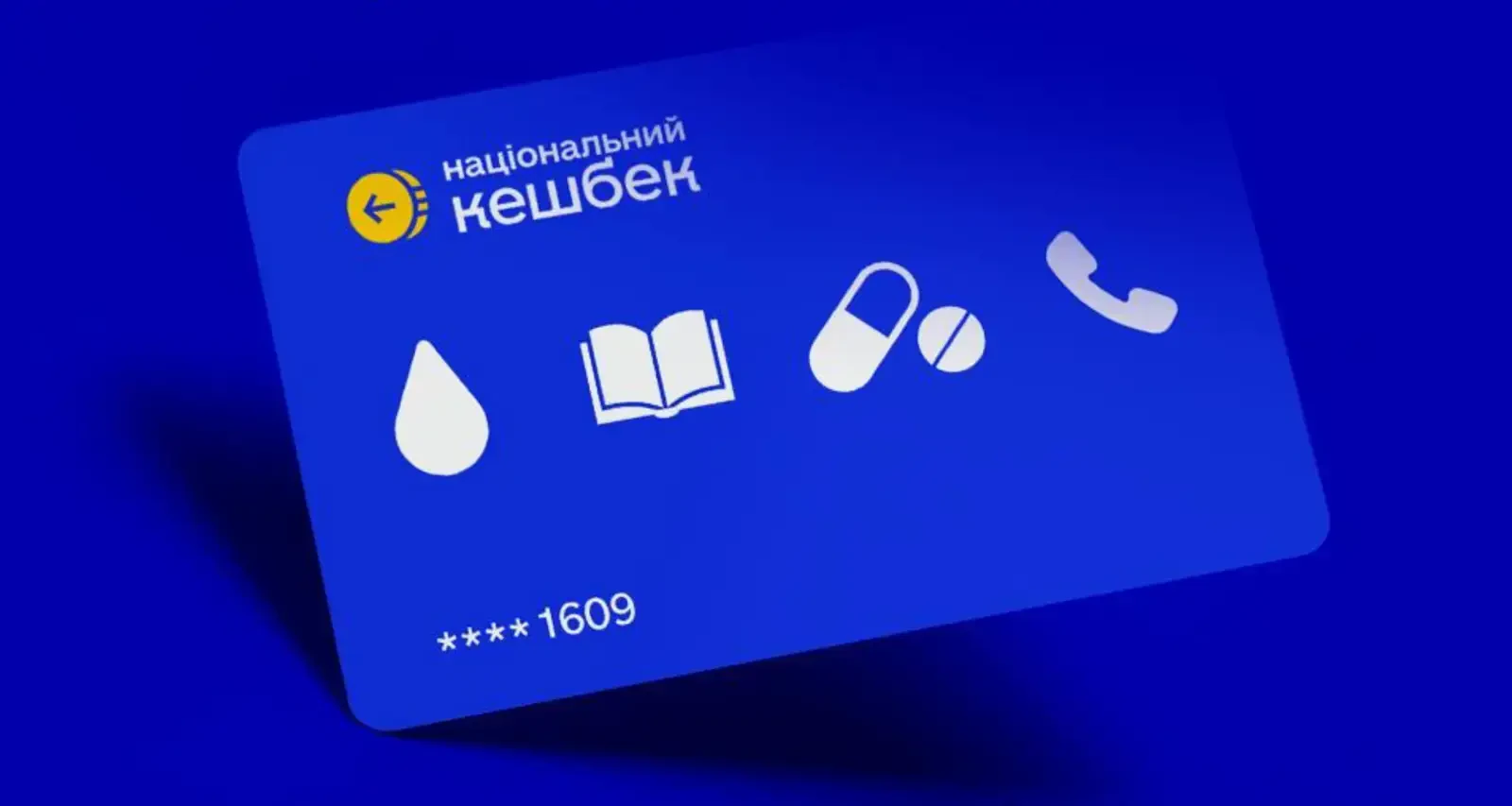 ANALYSIS FROM
A few days ago, the Ukrainian Ministry of Economy urged Ukrainian citizens participating in the “National Cashback” program to use the funds accumulated on their cards by June 30. And this, as is well known, is far from the only program whose creation and existence are driven by a desire to support either Ukrainian businesses or various segments of the population. What, then, is the benefit of such programs for the Ukrainian economy?
In Ukraine’s perpetually deficit-ridden budget, there have always been—and continue to be—financial resources for various support programs, which provide not only cheaper loans for businesses and support for Ukrainian manufacturers, but also direct cash handouts to socially vulnerable groups.
One of the most recent examples is the “Winter Support” program, under which every Ukrainian had the opportunity to receive 1,000 hryvnias at the start of winter to cover basic expenses—a sum that was then dubbed “Zelensky’s thousand.” The opposition typically criticizes the government for such initiatives, viewing them as an attempt to curry favor with voters. But for many Ukrainians, that thousand hryvnias is certainly welcome.
By the way, the funds received under the “Winter Support” program must also be spent by June 30, 2026. Otherwise, they will be returned to the budget. And they will certainly find another recipient, since a large number of programs are funded by budget allocations.
Supply and Demand Programs
Among the most well-known initiatives are: the state program “Affordable Loans 5-7-9%,” the government program “eWork,” the affordable mortgage lending program “eHome,” and the “Own Business” program. There are also quite a few different grant and compensation programs, a significant portion of which are united under the “Made in Ukraine” state policy. And this naturally raises the question: what is the significance of such programs for the country’s economy? Dmytro Krukovets, Head of Macroeconomic Analysis at the KSE Institute, explains.
“There are programs to support supply, and there are programs to support demand. The former essentially involve supporting product creation, business development, and improvements in labor productivity. The latter, conversely, involve supporting people’s ability to generate demand.”
According to Dmytro Krukovets, the most notable program to support supply is the “5-7-9%” affordable lending program.
“It has been around for quite some time and has been reformatted several times. And it is a fairly effective support model because it operates through banks and acts as a sort of multiplier. That is, every hryvnia of support and cost reduction for obtaining a loan through this program is transformed into 3–5 hryvnias of additional output. There are also support programs, for example, for the energy sector, such as purchasing generators with a 0% loan,” the expert notes.
Among the initiatives designed to support demand, Dmytro Krukovets highlights, first and foremost, the “National Cashback” program, which provides cashback from the state for the purchase of Ukrainian goods, as well as the “Winter eSupport” program.
“Demand support programs include ‘National Cashback’ and the distribution of 1,000 hryvnias or 6,500 hryvnias in winter support to specific population groups. These programs operate differently and are also somewhat effective. For example, since a significant portion of this money is spent on utilities, it helps resolve the issue of debts to utility companies when citizens use this money to pay their utility bills. Also, most support programs are aimed at Ukrainian-made goods or services—that’s another big plus.”
But there is often a rather obvious “drawback” to these programs. First, there are questions about the targeting of the programs: do all those receiving financial support truly need it? And second, there are doubts regarding the justification of budget expenditures in the form of cash handouts under current conditions.
“There is a point to this, because we are not currently in a situation where we can actively use such support programs, as we need to allocate funds to other needs. Moreover, there may be issues with targeting, as it doesn’t always work. I recall telling cases in 2019 when, in very expensive buildings in Kyiv, half the apartments were receiving subsidies and assistance for utility bills. In other words, targeting is a problem, and it needs to be addressed so that support is provided to those who truly need it, such as internally displaced persons or veterans,” the expert notes.
Supporting Both Demand and Supply
One of the universal programs designed to stimulate both supply and demand is the “eOselya” affordable mortgage lending program. It has already been recognized by experts as a “key driver of growth in the primary housing market,” since the majority of loans received by program users are directed toward financing new construction.
The program offers preferential mortgage loans at 3–7% for the first 10 years and 6–10% starting from the 11th year. The maximum loan term is 20 years. In April of this year, the number of loans issued under this program surpassed 25,000, and their total volume exceeded UAH 43 billion.
Not long ago, the program’s terms were revised, and this update may have affected access to loans, their volume, and the structure of demand. In an interview with
As of January 10, 2026, mobilized military personnel were added to the eligible categories, and on February 10, 2026, new restrictions on the size of housing that can be purchased under the “eOselya” program came into effect in accordance with CMU Resolution No. 1637. From now on, the standard area for an apartment is 52.5 m² for a family of one or two people, plus 21 m² for each additional family member. The maximum area is 115.5 m², regardless of the number of family members. For a house, the standard area is 62.5 m² for a family of one or two people, plus 21 m² for each additional family member. The maximum area is 125.5 m², regardless of the number of family members. However, exceeding the standard area and the maximum cost by more than 10% will not be permitted. For housing that is more than 3 years old, exceeding the standard area will not be permitted at all. Also, starting February 10, 2026, the period for the prohibition on the alienation of housing has been changed from 12 to 36 months.
How have these changes affected the number of applications and loans issued?
In January 2026, the maximum number of applications was 14,684. This was driven by borrowers’ desire to secure loans under the old terms before the deadline. On the other hand, during this period, partner banks applied stricter credit scoring criteria, as they realized they might not be able to issue loans under the old terms in time.
By April of this year, the number of clients and unique applications had stabilized at around 12,000, and the number of loans is growing—from 653 in February to 847 in April.
In other words, we can conclude that the system has “stabilized” after the peak load, and market participants—partner banks, developers, and realtors—have understood the new conditions and realities and have begun to operate in accordance with the approved standards.
What price per square meter of housing should users of the mortgage lending program currently be guided by?
We are guided by the cost per square meter set quarterly by the Ministry of Community and Territorial Development of Ukraine. The latest changes took place on April 16—that is when the Ministry of Development approved the new imputed cost per square meter. To determine the maximum cost per square meter that can be purchased under the “eOselya” program, the imputed cost must be multiplied by a factor of 2. Currently, for example, the imputed cost per square meter in Kyiv is 31,115 UAH, while the maximum cost under the “eOselya” program is 62,230 UAH. For the Lviv region, these figures are 26,478 UAH and 52,956 UAH, respectively, and for the Odesa region, 25,505 UAH and 51,010 UAH.
By the way, during the last week of May, another 218 Ukrainians took advantage of the “eOselya” program and purchased their own homes. Among them are 74 military personnel and security sector representatives, 73 Ukrainians without their own housing, 40 internally displaced persons, 13 teachers, 11 medical professionals, 5 scientists, and 2 veterans.
And in early June, the government announced the launch of yet another state support program aimed at large and medium-sized businesses, which provides for the state to subsidize part of the loan interest rate. Businesses were given the opportunity to take out loans for the construction of new distributed generation facilities at an annual interest rate of 10%.