One Step Away from a New Chernobyl: What the Enemy Was Actually Trying to Blow Up in the Exclusion Zone
8 June 19:30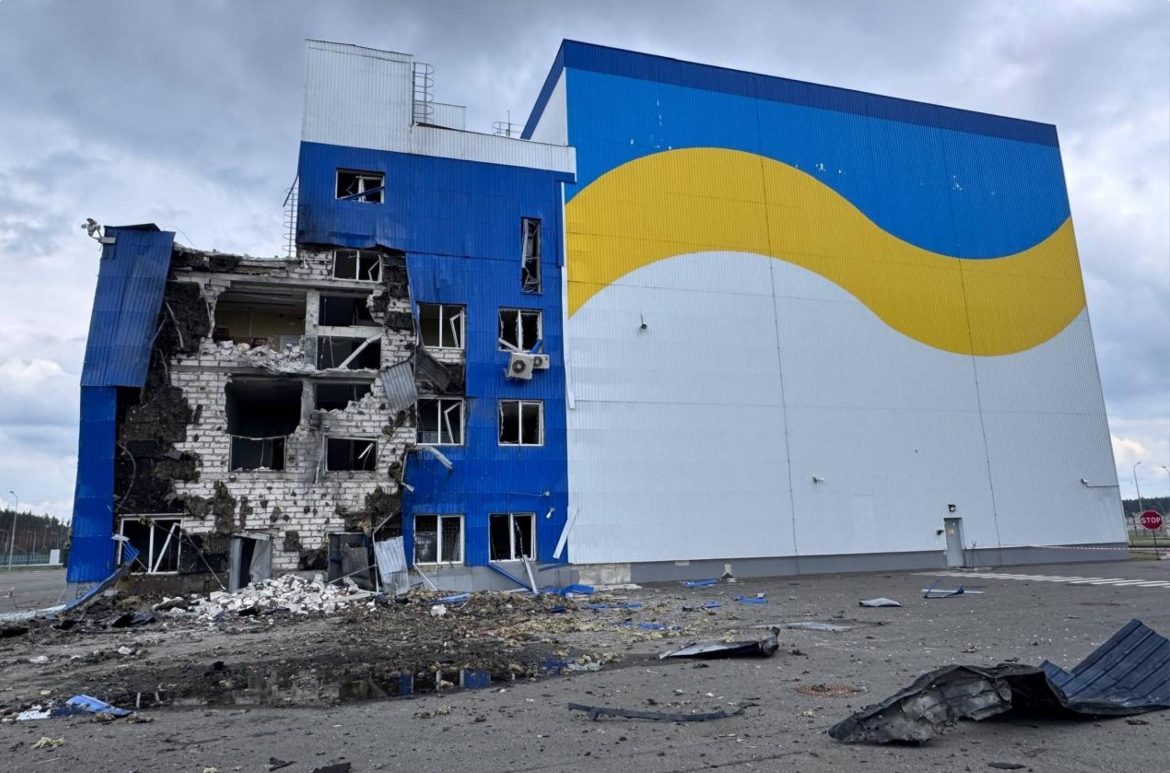
The Russian Federation continues to systematically turn global nuclear security into a tool for brutal geopolitical blackmail, as evidenced by yet another nighttime drone strike on the Centralized Spent Fuel Storage Facility in the Chernobyl zone.
What was really behind the strike near the Chernobyl Nuclear Power Plant: to provoke a disaster or merely to create a dangerous “image” for manipulating the world? Was there a real threat of a large-scale disaster? "Komersant Ukrainian" investigated.
On the night of June 7, the Centralized Spent Fuel Storage Facility (CSFSF) in the Chernobyl zone came under attack by an enemy drone.
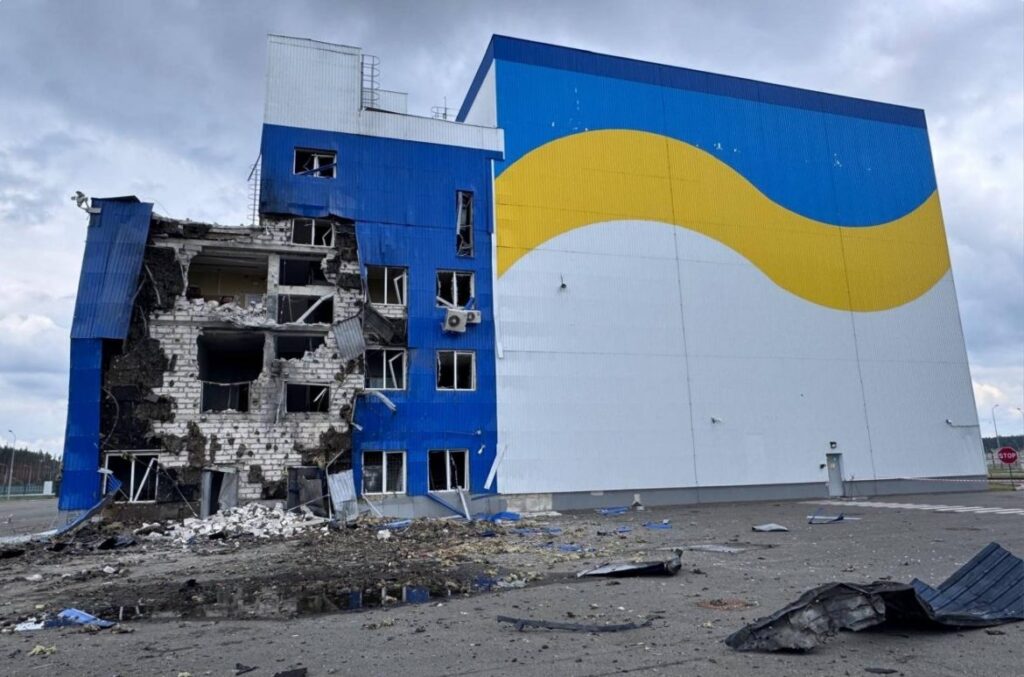
According to the National Nuclear Energy Generating Company “Energoatom,” the drone strike at 2:10 a.m. caused partial destruction of the container reception building and a fire covering an area of 40 square meters. Fortunately, there was no nuclear fuel in the building at the time of the attack, and the fire was quickly extinguished by rescue workers.
Ukrainian President Volodymyr Zelenskyy immediately responded to the incident, calling it yet another act of terrorist warfare and urging the international community to take decisive action. For his part, IAEA Director General Rafael Grossi expressed “deep concern” and announced an urgent visit by technical inspectors to the site.
The Chernobyl incident: disaster or local contamination?
Commenting on the consequences of a possible strike on the spent fuel storage facility, Mykhailo Shuster urges approaching the situation with cool engineering logic, without needlessly fueling panic.
“In the worst-case scenario, it would scatter some radioactive debris. We would have some local contamination, but nothing globally fatal would result from it,” Shuster explains.
According to the expert, modern warfare is largely the “art of lies” and manipulation. The Russian side is deliberately creating such precedents to stir up the information space and keep both Ukraine and international partners on edge.
Design protection of nuclear power plants: are the plants ready for attacks?
One of the main issues today is the level of protection of Ukrainian nuclear facilities against direct shelling. As Mykhailo Shuster notes, Soviet nuclear power plant designs (both Zaporizhzhia and Chernobyl) were calculated to withstand a large number of emergency situations, but a full-scale war was not factored into these calculations.
- What the design provides for: Fires, ruptures of pipelines or steam lines. The scenario closest to wartime realities that engineers calculated was a plane crash into the containment structure (with a contact area of up to 7 square meters).
- What is missing from the calculations: Full-scale combat operations involving the full range of modern weaponry. There is currently no objective, comprehensive safety analysis for such a war with specific figures.
“Spent fuel stored in cooling pools directly inside the reactor units is located under a massive concrete dome. Missiles cannot penetrate it. Fuel stored in dry storage containers (in particular, at the Zaporizhzhia NPP) is protected by extremely thick concrete. There will be no nuclear reaction there in any case—at most, local radioactive contamination,” Shuster emphasizes.
Shuster adds that a real nuclear disaster can only be triggered by a planned, precise, and technically “well-thought-out” strike on specific components of a power unit that is operating at full capacity or has a large amount of residual heat. Fortunately, the situation has not reached that point—currently, the enemy is mostly targeting power supply systems, causing the plants to periodically switch to diesel generators.
Given this, the non-operational facilities at the Chernobyl NPP and even the shut-down Zaporizhzhia NPP currently pose a minimal threat in terms of a global catastrophe, whereas the operational Ukrainian NPPs are significantly more vulnerable due to their operation at full capacity.
“A Suitcase Without a Handle”: What Is Happening at the Zaporizhzhia NPP
The expert draws particular attention to the situation surrounding the occupied Zaporizhzhia NPP. By declaring that the plant is under Russian jurisdiction, the Kremlin has effectively trapped itself. For the Russians, the ZNPP has now become a veritable “suitcase without a handle.”
Living conditions in Energodar are currently catastrophic: regular problems with electricity and heat make the city nearly uninhabitable. Because of this, Russian specialists who came to “work” are quitting en masse. It is becoming increasingly difficult for the occupiers to ensure the safe operation of this massive facility.
“The Russians understand: if even a local radiation accident occurs at the Zaporizhzhia Nuclear Power Plant, all responsibility will fall on them. That is why they are trying to create a narrative in the media to ‘shirk’ this responsibility. They blame the Ukrainian side for everything—and, unfortunately, the propaganda in Energodar is so effective that local residents believe it. It is possible that the current incident at the Chernobyl Nuclear Power Plant is part of this same large-scale information campaign,” concludes Mykhailo Shuster.
Therefore, Ukraine continues to insist on a strong international response. The visit by IAEA inspectors to the Chernobyl NPP should once again document the Russian Federation’s criminal actions and remind the aggressor that nuclear facilities under no circumstances can be targets for attacks. However, as practice shows, the best guarantee of nuclear safety in the region remains the complete de-occupation of Ukrainian territories and the removal of the enemy from the borders of the nuclear power plant’s industrial zones.