The breakdown of the truce between Israel and Iran: Trump furious and harshly responds to Putin’s mediation offer
24 June 2025 20:20 ANALYSIS FROM
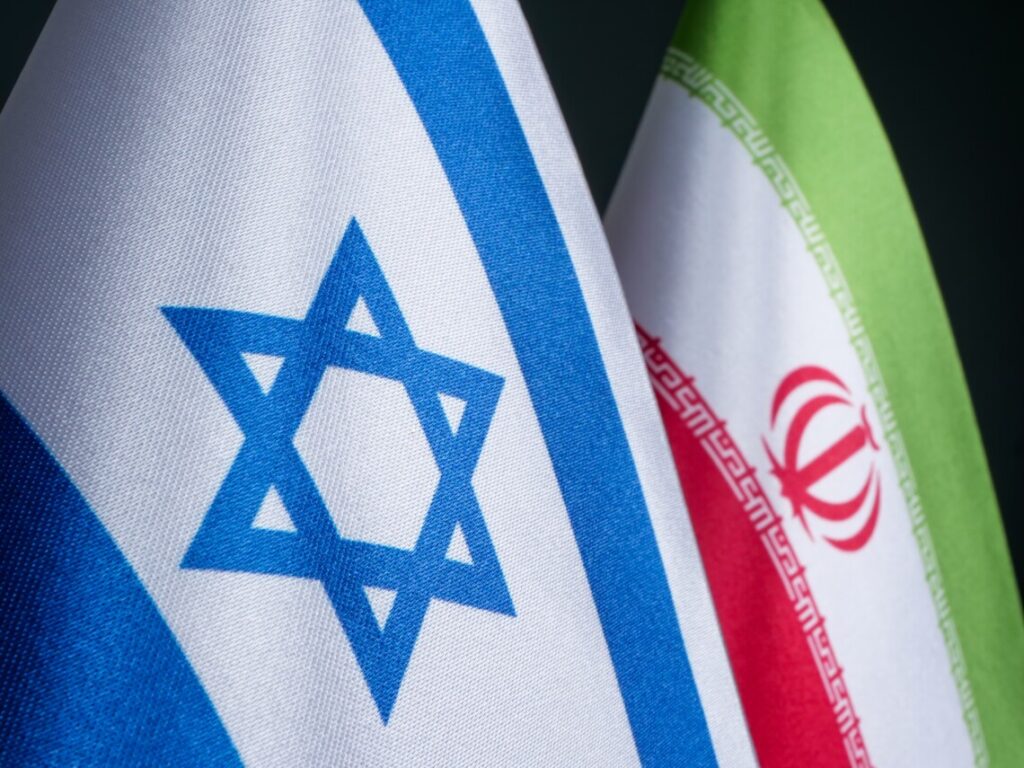
Israel has agreed to Trump’s proposal for a ceasefire with Iran, but within hours, new missile attacks have been launched. Despite the declared ceasefire, the Israeli Defense Forces (IDF) recorded new missile launches from Iran. Meanwhile, Putin offered Trump help, but received a harsh response in return.
The Nuclear Scandal, Missiles from Iran, and Trump’s Anger: Who Broke the Truce in the Middle East – and Why Is Russia Once Again at the Center of Humiliation? Will the US be able to contain Israel? And what role does Ukraine play in all this – read more in "Komersant Ukrainian".
The news of the ceasefire was instantly reflected in global markets. Oil prices plummeted, and European gas prices fell by 10% at the opening of trading. However, a few hours later, according to the IDF, missiles were launched from Iran toward Israel. Air defense forces were deployed to intercept them, and citizens were urged to take shelter.
Thus, the day before, the office of Israeli Prime Minister Benjamin Netanyahu announced that the country had “achieved its goal of eliminating the nuclear and ballistic threat from Iran” and agreed to the proposed ceasefire. However, it is likely that the phrase that any violation of the agreement will receive a “decisive response” made Iran test the waters.
Trump is not happy, especially with Israel
Against the backdrop of a new round of conflict, US President Donald Trump made a loud statement before leaving for the NATO summit in The Hague. He said that he was “not happy” with the actions of both sides, but “really not happy” with Israel.
Israel, do not drop these bombs. If you do, it will be a serious violation. Bring your pilots home, now!” Trump wrote on his Truth Social social network.
He also assured that Iran’s nuclear capabilities are “exhausted” and Tehran will “never resume its nuclear program.”
The Iran-Israel truce is a chance for the United States and a challenge for Russia
Ihor Semyvolos, Director of the Center for Middle East Studies, believes that the announced truce between Iran and Israel could be a key step towards a new diplomatic phase in the region. And it is not Moscow that may benefit from this, but Washington and Beijing.
According to the expert, this development does not play in favor of Russia, which tried to use the Middle East tensions to its advantage, in particular to strengthen its alliance with Tehran. However, the current situation has only demonstrated Moscow’s weakness on this track.
Russia has been rather sluggish. The Iranians have seen that relying on Moscow is futile. And the fears that the Russia-Iran alliance could strengthen are exaggerated,” emphasized Semivolos.
Semyvolos also draws attention to the growing role of China as a key partner in the region and as one of the mediators whose opinion is increasingly taken into account in negotiations. According to him, “consultations with Beijing were very important” in shaping the current agreement.
Among the factors that could force the parties to agree to a truce, the expert names Israel’s reluctance to prolong the war, as well as the expectation that escalation will not benefit either side.
We have at least moved away from the scenario of a major war. This is already good. A prolonged war is not beneficial to anyone. Israel has repeatedly stated that it will not engage in a conflict of attrition,” Semivolos added.
Against the backdrop of de-escalation, the analyst predicts a decline in oil prices, which will hit the Russian economy, and renewed international attention to the Russian-Ukrainian war.
The world’s attention will once again focus on Ukraine. And this means more chances to receive critical assistance, including American air defense systems,” concluded Ihor Semyvolos.
Russia has incurred the wrath of the United States: Trump responded sharply to Putin, and Medvedev is at the center of a nuclear scandal
Amid the escalating situation between Iran and Israel, the Kremlin tried to intervene in the conflict by offering mediation. But instead, it received a harsh reaction from Washington, with harsh words from U.S. President Donald Trump and a diplomatic embarrassment involving Dmitry Medvedev.
In his statement, President Trump confirmed that he had received an offer from Vladimir Putin to help resolve the conflict in the Middle East. The American leader’s response was concise and tough:
“I said [to Putin]: no, I don’t need help with Iran. I need help with you,” Donald Trump said.
These words became a public slap in the face to Moscow, further exacerbating the already tense relations between the US and Russia. This was especially painful against the backdrop of Dmitry Medvedev’s scandalous statement on social media platform X.
The former Russian president said that he condemned the US strike on Iran, but at the same time vaguely hinted that other countries could transfer nuclear weapons to Iran. Trump then responded in his usual style:
“Did Medvedev really carelessly use the same word – nuclear – and say that he and other countries would supply Iran with nuclear warheads?” – Donald Trump
Medvedev tried to justify himself by saying that Russia has no intention of transferring nuclear weapons to Iran because it is a party to the Non-Proliferation Treaty. But the international reaction had already been triggered.
Obviously, this diplomatic exchange of blows shows that Russia’s attempts to “wedge” itself into the Middle East agenda are backfiring. And Putin is trying to play the role of a “peacemaker” where he no longer has any real influence.
Author – Anastasia Fedor
Читайте нас у Telegram: головні новини коротко