The European Union may impose sanctions on Raiffeisen Bank International
14 July 16:09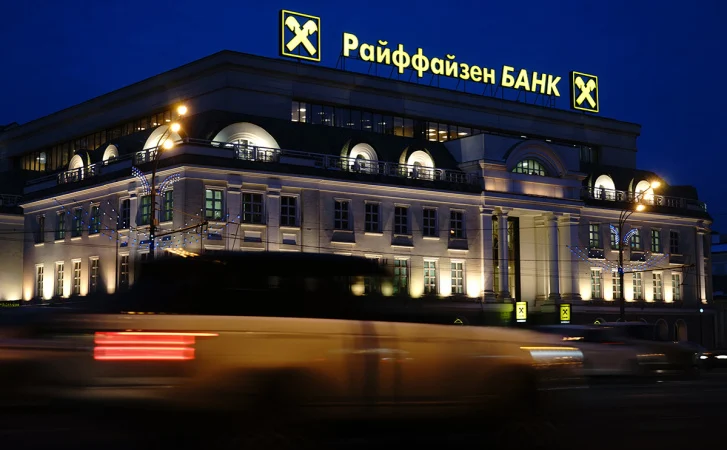
The European Union’s 21st package of anti-Russian sanctions may include measures related to Austria’s Raiffeisen Bank International, Bloomberg reports, citing sources, according to "Komersant Ukrainian".
However, EU countries have not yet been able to finalize the new package of restrictions, partly due to disagreements regarding RBI. Raiffeisen Bank’s press office told Forbes that discussions are focused on an issue related to a stake in the Austrian construction company Strabag.
Watch us on YouTube: important topics – without censorship
RBI’s management had hoped for a swift end to the conflict in Ukraine and a return to business as usual, Bloomberg reported. Attempts to sell the Russian division in recent years have proven unsuccessful.
RBI stated this spring that withdrawing from Russia had become a “Sisyphean task.” The Russian authorities were not interested in the bank’s exit from the market, as they viewed Raiffeisenbank as one of the channels for money transfers to Europe, and a potential deal to exit Russia would require the consent of several parties at once—Austria, Russia, the U.S., the EU, and dictator Vladimir Putin himself.
Erwin Hamessed, chairman of the RBI Group’s supervisory board, emphasized that restrictions on business development in Russia remain in place, and lending has virtually come to a halt. Raiffeisenbank has limited outgoing payments in euros, scaled back international operations, and stopped issuing new loans. However, certain large Russian companies still have access to these services. RBI’s Russian business reported a net loss of 86 million euros for 2025, compared to a profit of 873 million euros in 2024.
One of the obstacles to RBI’s exit from Russia was the situation surrounding the shares of the Austrian construction company Strabag. In 2023, the bank planned to acquire a 27.78% stake in Strabag from Rasperia Trading (previously linked to Oleg Deripaska) for 1.51 billion euros. The deal fell through after RBI failed to obtain the necessary approvals from EU authorities, and subsequently, U.S. and EU sanctions were imposed on Rasperia.
After the deal fell through, Rasperia obtained a ruling from a Russian court ordering Raiffeisenbank to pay 2 billion euros plus interest and accept the Strabag shares. RBI stated that such compliance was impossible under the European sanctions regime. The EU discussed the possibility of lifting sanctions on these assets in order to transfer the Strabag shares to RBI as compensation for losses in Russia.
Read us on Telegram: important topics – without censorship