A good grain harvest is expected in Ukraine: what will happen to exports amid the rocket attacks?
14 July 14:20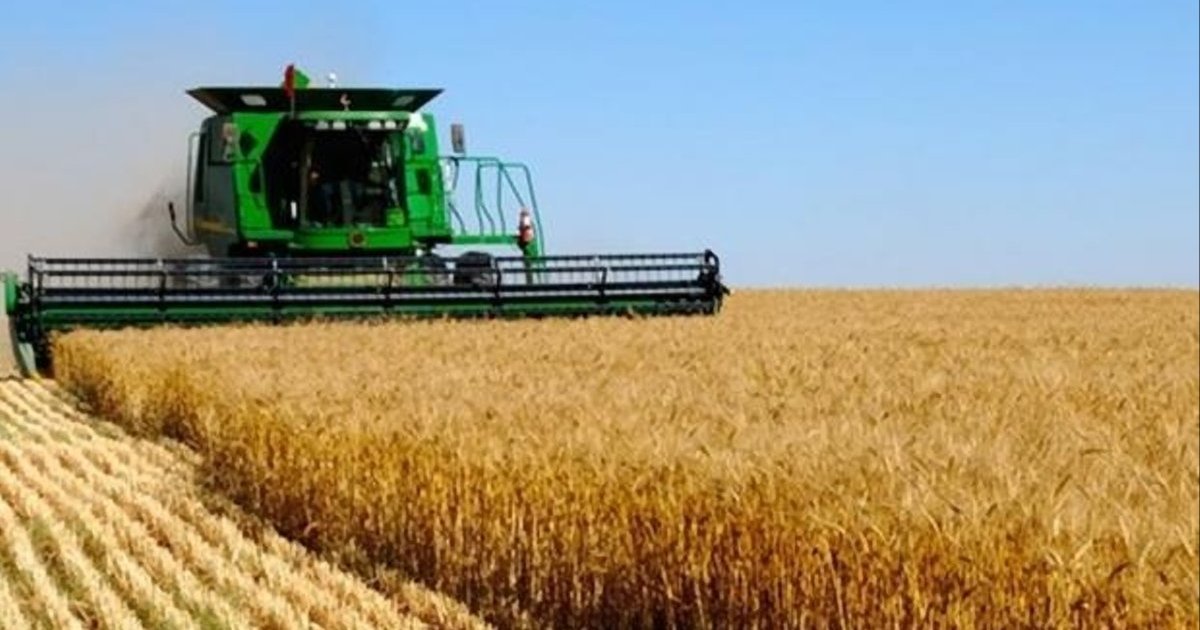 ANALYSIS FROM
Over the past few days, the ports of Odesa have been subjected to particularly intense Russian attacks. The strikes are targeting civilian port infrastructure and merchant ships. Ukrainian exports are also suffering losses as a result of these hostile attacks. "Komersant Ukrainian" investigated how significantly this might affect agricultural exports.
On the nights of July 10–11 and July 11–12, 2026, the port of Chornomorsk came under massive enemy fire. In particular, the port terminals operated by Kernel were damaged. And this is not the first time. The company’s infrastructure for storing and transshipping grain and vegetable oil came under attack in both May and June. Due to significant damage at the port, the company had to suspend the receipt and shipment of products, as well as tally and assess the losses. The latest incident involved approximately 45,000 metric tons of wheat and 9,000 metric tons of sunflower oil. However, the total actual and potential losses for Ukrainian exports are much greater and cannot be measured solely in thousands of metric tons.
Blows to Ukrainian Exports
Unfortunately, every enemy shelling reduces Ukraine’s export capacity. This is confirmed by Bohdan Kostetskyi, co-owner and chief operating officer of the analytical firm Barva Invest. According to him, attacks are ongoing, starting with key stations—targeting rolling stock, port elevators, and motor vessels—and all of this is constricting the bottleneck of the export chain.
“The latest news is that several port terminals have halted operations. First, there is a need to assess the damage caused. Second, there is the issue of basic safety. So I think that right now, no expert can say exactly how much will actually be exported. I can only say that if we exported around 14 million metric tons of wheat this marketing year, we could export 18 next year. If we exported 22 million metric tons of corn this year, we could export 28 next year. That is, in fact, the amount that will simply be available, given the large carryover stocks and very promising harvest expectations. “But, unfortunately, we are unlikely to be able to repeat last year’s result, since we currently lack the necessary export capacity,” the expert notes.
He emphasizes that neither exports via the Danube nor overland exports solve the problem of export shipments.
“These volumes are orders of magnitude different from our needs and capabilities. We desperately need deep-water access. Because with each passing month, fewer and fewer volumes are being transshipped through the ports. In quantitative terms, exports were normal in June. We shipped a total of 4.5 million metric tons—even slightly more—of all bulk cargoes. This includes wheat, corn, meal, and oilseeds. In July, export volumes usually increase as the new season’s harvest comes in. But I think we’ll be stuck in a rut this July. The problem here isn’t just that attacks on the ports have intensified, but also how long the alerts last. It’s not like flipping a switch—the port stops, the port starts. And this also affects our export activity,” notes Bohdan Kostetskyi.
Russian grain producers face additional problems
The latest enemy attacks on the ports of Odesa appear to be the Russians’ response to Ukrainian strikes on Russian vessels in the Sea of Azov. At the very least, the timing suggests this. Over the past nine days, starting July 6, the Unmanned Systems Forces have taken out 116 vessels—tankers, tugboats, ferries, and dry cargo ships—all of which were struck in the Sea of Azov. Consequently, Russia has already felt the impact of these strikes and drawn its conclusions: shipping through the Don-Azov Canal, which connects the Don River to the Sea of Azov, has been suspended following the Ukrainian attacks. And this is despite the fact that up to a quarter of Russia’s wheat exports pass through the Sea of Azov.
Things aren’t going very well in Russia with this year’s harvest either. Ukrainian attacks on oil refineries have led to a fuel shortage, which is affecting not only ordinary Russians but also farmers. For example, according to Ukraine’s Foreign Intelligence Service, citing local farmers, fuel shortages and delays in fuel deliveries will inevitably lead to the loss of up to 30% of the harvest. Additional costs are also inevitable. Bogdan Kostetsky, co-owner and chief operating officer of the analytical firm Barva Invest, draws attention to this.
“We have insiders at our company—former colleagues from multinational companies—and they say that whereas previously a farmer or agricultural holding would order and receive a barrel of diesel within 1–3 days, now it takes 8–9 days. And it’s more expensive. In other words, the issues of profits and logistics costs—to get the goods to their markets—remain unresolved for them,” the expert emphasizes.
According to him, the production cost of Russian grain will definitely rise. There will also be problems with exports via the Sea of Azov. Many leading Russian grain producers rely on this waterway for shipments. Bohdan Kostetsky continues.
“The current escalation in the Black Sea and Azov Sea basins will have an impact, as up to 40% of global wheat exports originate from these regions. For example, Russia exports over 10 million metric tons annually from the Azov basin out of a total of 45–46 million metric tons. And the complete halt to traffic through the Don River and access to the Sea of Azov, announced at the end of last week, naturally has a direct impact on the ability to supply international markets and on prices,” the expert notes.
Markets are already reacting to this situation. The expert notes that last Friday, wheat prices on European and American exchanges had already risen by 10 euros per metric ton.
Watch us on YouTube: important topics – without censorship
Where Ukrainian Grain Is and Isn’t Expected
Unfortunately, Ukrainian exporters are unlikely to be able to take full advantage of the problems with Russian grain exports. As Bogdan Kostetsky, co-owner and COO of the analytical firm Barva Invest, explains, the situation is as follows: Prices are rising on the exchange and in destination markets, but the impact on hryvnia prices—including delivery to ports—is minimal, as market operators are now forced to factor in increased military risks and reduced logistical capabilities. However, Ukrainian exports continue, and, as Bohdan Kostetskyy points out, the export destinations for Ukrainian wheat, for example, are quite diverse:
“Some of the lower-quality wheat goes to Italy and Spain. Some of the higher-quality wheat goes to North Africa and the Middle East. And some wheat will be shipped to Indonesia, and possibly to Vietnam and the Philippines. In other words, the geographic distribution of wheat is quite diverse, but the capacity of demand remains in question, because harvests in the Middle East are quite good—particularly in Turkey and even in North Africa. In other words, import needs are decreasing. In the Black Sea region, harvests are also very good—in Romania, among our rivals, and here at home.”
Incidentally, last year, the top three importers of Ukrainian grain were Egypt—which purchased 2.36 million metric tons—Algeria—1.6 million metric tons—and Indonesia—1.4 million metric tons. Bogdan Kostetsky also explained exactly where Ukrainian wheat will have to compete with Russian wheat—and not just with it.
“Ukrainian wheat competes with Russian wheat, as well as Romanian and French wheat, in Algeria, Egypt, Libya, Lebanon, and even historically in Turkey. But Turkey may be much less active this season than in the past due to its own high harvest,” the expert notes.
Not much Ukrainian wheat is currently being shipped to Europe. Last year, only Spain and Italy were among the top ten importers. The relevant ministry cites record wheat production in the European Union in 2025—which reached 134.4 million metric tons, one of the highest figures in recorded history—as one of the reasons for the decline in Ukrainian wheat exports. At the same time, as the ministry notes, EU countries remain a key trading partner for Ukrainian agricultural products. This primarily refers to corn, sunflower oil, and soybeans. Europe also remains Ukraine’s main logistical gateway to the world, although some European neighbors are trying to close it. Poland has imposed a ban on imports of wheat, corn, rapeseed, and sunflower seeds from Ukraine. About 20 categories of Ukrainian agricultural products, including sunflower seeds, corn, wheat, and barley, are still banned in Hungary as well. However, the Hungarian authorities may soon have to make some exceptions. Bogdan Kostetsky explains:
“Given the problems with the corn harvest in Hungary—it was scorched there—I think the Hungarians will need to import 800,000 metric tons of corn from Ukraine. For their own needs. Therefore, this could be a very opportune moment to break through the barriers of Eastern European countries’ bans on Ukrainian agricultural products. I think there will be transit through Hungary to northern Italy and directly into Hungary itself. As for Poland, the Poles want to remain self-sufficient, but Ukrainians have learned to transport goods in transit through Poland. Specifically, this involves container shipments to Gdańsk and onward to China.”
However, as Bohdan Kostetskyi emphasizes once again, exports by land alone will not allow Ukraine to realize its full export potential.
“Even if we imagine that all Eastern European countries will need Ukrainian grain, this will not fully utilize Ukraine’s export potential. At best, we’ll be able to export half of what we’re capable of via the Danube and overland. We need deep-water ports and access to the sea,” the expert notes.
This is especially true given that Ukraine is expecting a good grain harvest. According to a forecast by Bohdan Kostetskyi, co-owner and chief operating officer of the analytical firm Barva Invest, Ukraine could harvest 24 million metric tons of wheat this year—2 million metric tons more than last year.
Read us on Telegram: important topics – without censorship