NBU’s gentle euroization: will Ukraine switch to the euro instead of the hryvnia?
8 May 2024 12:12 EXCLUSIVE
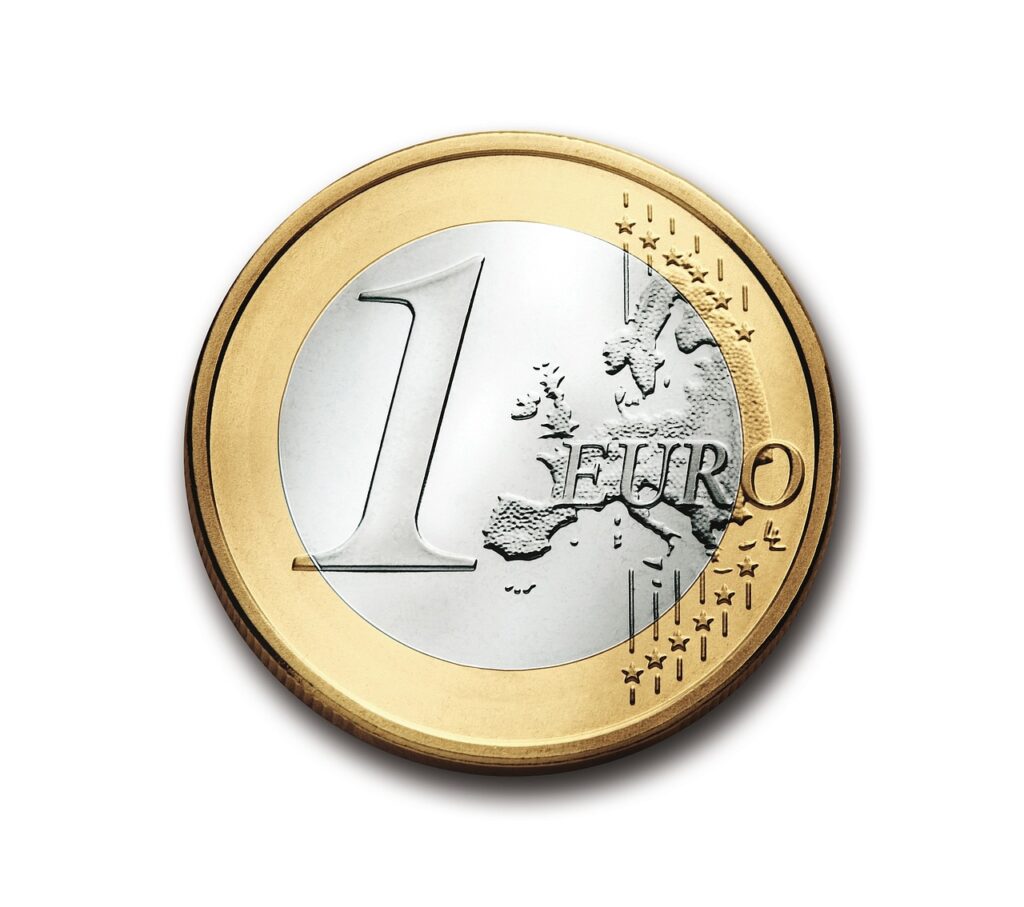
At the end of March, the National Bank of Ukraine started publishing statistical tables in euros and hryvnia. The NBU claims that this practice is in line with Ukraine’s European integration progress. It was planned to be launched in March 2022, but the full-scale war disrupted these plans.
“Currently, the programme for the development of official statistics until 2028 envisages the introduction of the calculation and publication of external sector statistics in euros in 2024. The corresponding expansion of data publications is a reflection of the high share of euros in external transactions, which continues to grow. Statistical descriptions of the data, their analysis, and forecasts will continue to be published in US dollars,”
– the NBU wrote at the time.
The expert community started talking about “Europeanisation”, which is unavoidable on the European integration path. Today, Ukraine is already working with the euro rather than the dollar. And it is obvious that this process will only deepen in the course of European integration and accession to the EU.
“If you and I take a close look at the main macro-financial assistance coming to Ukraine, we will see that it is mostly in euros. How much do the Americans give us directly in macro-financial assistance to the budget? uSD 7.5 billion. How much do the Europeans give us? EUR 50 billion until 2027. This year, we have already received almost €4.5 billion from the Europeans in April, and another €2 billion is due in May. That is, the total amount of euros coming to Ukraine is higher than the dollar,”
– says economic expert Oleg Pendzin.
Ukraine continues to peg its payments to the dollar, including the foreign exchange reserve. However, the euro currently dominates the foreign exchange reserve portfolio. However, this discrepancy does not pose any problems so far, the expert believes, as the dollar-euro pair is freely convertible. Pendzin stresses that Ukraine is unlikely to join the eurozone in the near future. Therefore, Europeanisation will be rather “gentle”.
“Soft euroisation is the transfer of foreign exchange reserves into euros instead of dollars. But there will be no fundamental changes in the position of Ukraine as a country that has its own currency and issues it. It is extremely useful for Ukraine, especially in times of war, that we issue our own currency and set our own exchange rate,”
– the expert believes.
Of the 27 EU member states, only 20 are part of the eurozone. And not every country wants to be, because monetary policy is, in fact, the basis of socio-economic policy and affects almost all spheres of public life. Thus, having a national currency means more sovereignty within the EU.
“There are European countries that have been in the EU for a long time but still have their own currency. For example, the zloty in Poland. You just need to understand that it is not very useful for countries that are not ‘old European states’ and have a slightly weaker economy than Germany or France to switch to the euro in terms of independent monetary and financial policy,”
– says Oleg Pendzin.