Ukraine’s largest hemp processing plant has resumed production for the season
28 April 05:47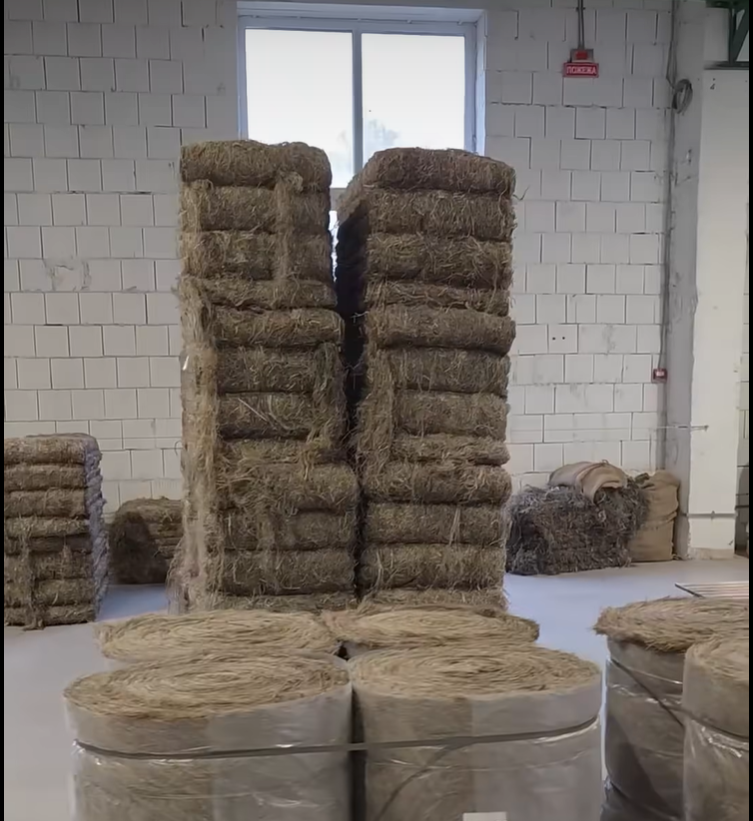
The “Ma’Rizhany” industrial hemp processing plant in Zhytomyr Oblast has resumed operations following a temporary shutdown. The company has modernized its production lines and installed new equipment for processing hemp straw, which is expected to boost productivity and expand its product range.
This was reported by "Komersant Ukrainian", citing a company statement.
According to the company, the production upgrades will allow it to increase processing volumes and produce more natural raw materials for the construction, textile, and agricultural sectors, as well as other industries.
What is known about the “Ma’Rizhany” plant
Ma’Rizhany Hemp Company is located in the Zhytomyr region and operates out of a renovated flax processing plant in the Ma’Rizhany Industrial Park.
In the 1990s, the processing of bast crops in Ukraine virtually ceased, leading to the disappearance of combed yarn production. As a result, the textile industry became dependent on imports, and its competitiveness declined significantly.
To change this situation, in 2023, Ma’Rizhany Hemp Company began renovating the abandoned flax mill, and by 2025, a modern, high-tech production facility was launched there.
In 2024, the company planted 890 hectares of industrial hemp, and by 2025, the area had grown to 1,200 hectares—the largest hemp cultivation area in Central and Eastern Europe.
The plant began operations in May 2025 and is positioned as Ukraine’s largest facility for the primary processing of industrial hemp.
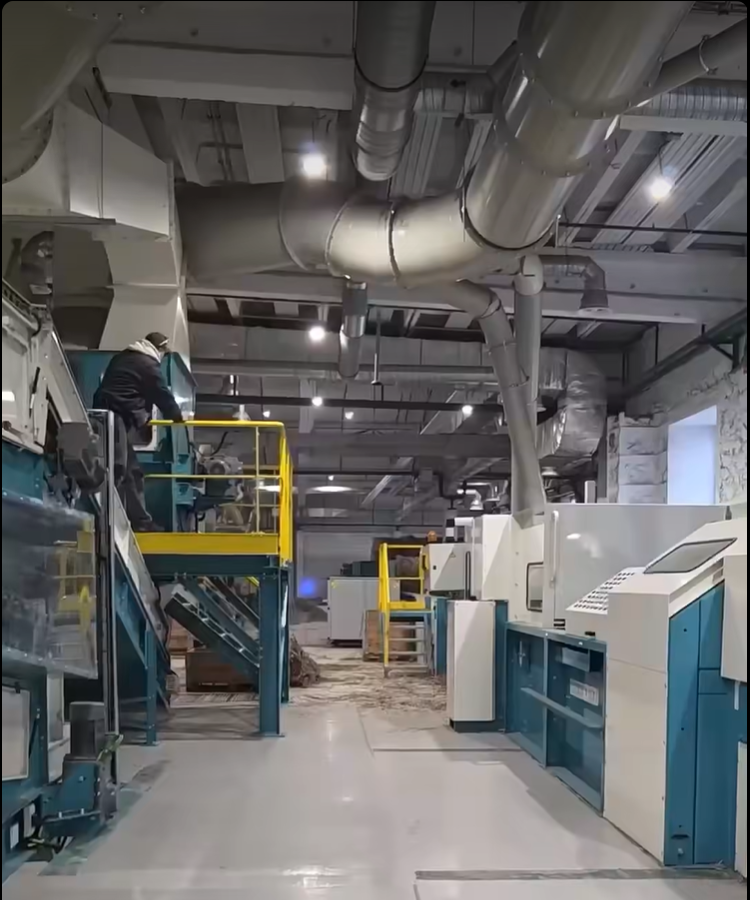
The facility’s initial production capacity is approximately 14,000 tons of long fiber per year.
If industrial hemp cultivation in the region expands to 4,000 hectares, the company is considering increasing its processing capacity to 20,000 tons of raw material annually.
What has changed since the modernization
During a production break, the plant installed new equipment for processing hemp straw. The company stated that the modernization should make processing more efficient and allow for an expansion of both the volume and range of products.
This refers to the processing of industrial, or technical, hemp. This is not a narcotic raw material, but a crop used in the legal industry: for the production of fibers, fabrics, paper, biomaterials, insulation, building materials, and animal bedding.
What the plant will produce
Based on the processing of industrial hemp, the company can manufacture several types of products.
Long fibers are used for textiles and technical fabrics. They can be exported, and in the future—processed within Ukraine to meet the needs of the Ukrainian fashion industry.
Short fibers are used in the production of paper, nonwoven materials, and insulation.
Shives are the woody part of the hemp stalk. They are used as raw material for bioplastics, building materials, and animal bedding.
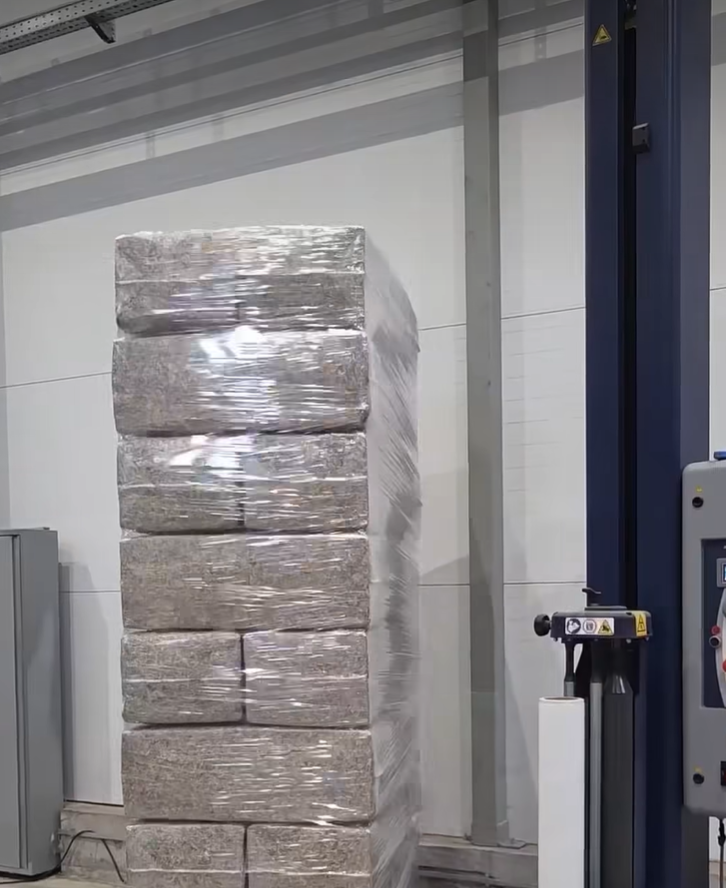
According to the company, products made from Ukrainian industrial hemp may be in demand in both the domestic and European markets. In particular, hemp fiber can be used in the textile industry, construction, and the agricultural sector.
Why this is important for Ukrainian industry
The relaunch and modernization of such a facility are crucial for the revival of the bast fiber industry in Ukraine. In the 1990s, the processing of flax and hemp virtually collapsed, making the textile industry more dependent on imports.
Restoring industrial hemp processing could create a new value chain: from the cultivation of raw materials by Ukrainian farmers to the production of fibers, fabrics, building materials, and bio-products.
For the Zhytomyr region, this also means the development of an industrial park, new jobs, and an incentive for farmers to expand the acreage devoted to industrial crops.
Industrial hemp could become a promising niche
Industrial hemp has a wide range of applications worldwide. It is used to make fabrics, ropes, tarpaulins, paper, insulation, composites, bioplastics, and building materials.
For Ukraine, this crop could be promising for several reasons: it has industrial demand, can be grown in Ukraine’s climate, and provides raw materials for various sectors of the economy.
In addition, the development of domestic processing allows for the creation of products with higher added value, rather than simply selling raw materials.