It’s Not Just Tariffs and Duties: How the “Closure” of the Sea Is Hurting Ukraine’s Exports of Ore, Steel, and Rolled Steel
6 August 16:03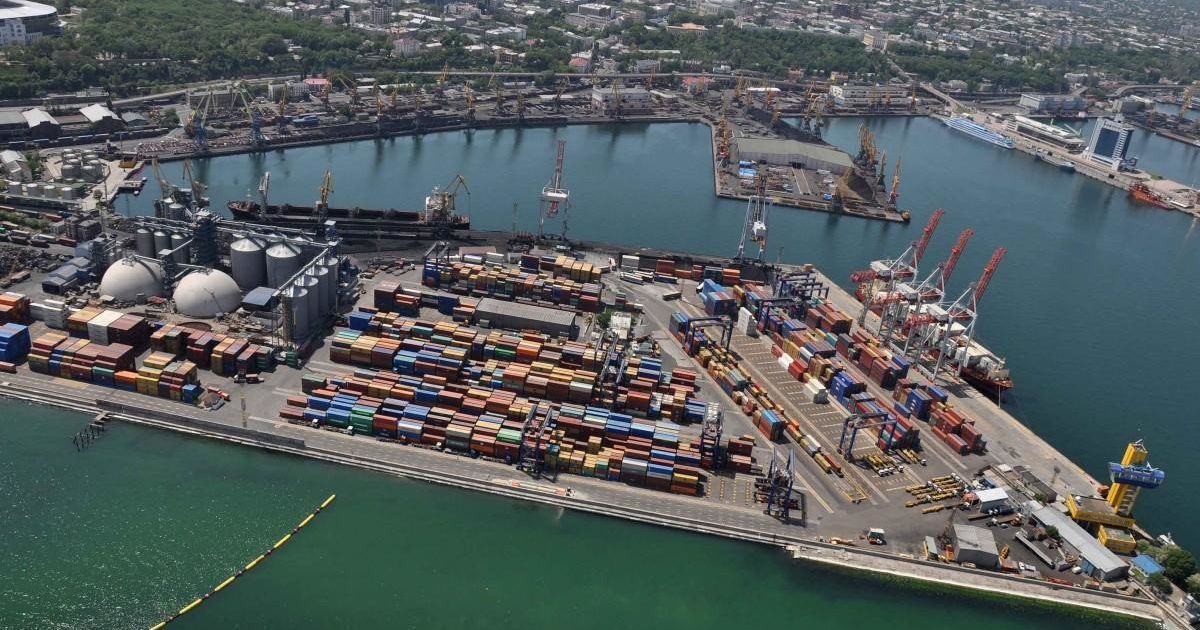 ANALYSIS FROM
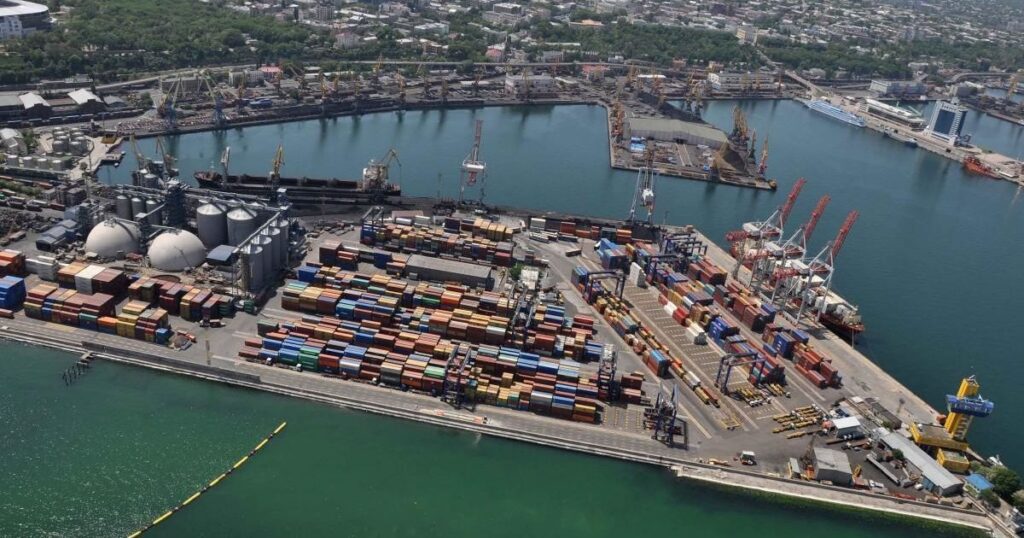
Since the beginning of 2026, Ukrainian seaports have handled 46 million metric tons of cargo. This primarily consists of agricultural products, although a significant amount of output from Ukraine’s mining and metallurgical enterprises also reaches foreign markets via maritime logistics routes. Following regular Russian attacks on port infrastructure and merchant ships—and the resulting virtual shutdown of the ports—problems have arisen with the export of these goods as well. "Komersant Ukrainian" investigated just how critical the situation is.
A few days ago, the Southern Mining and Processing Plant officially announced the start of the process to suspend production. As explained by the plant, this decision was made due to the aggressor country’s constant attacks on civilian merchant ships heading to Ukrainian Black Sea ports, which effectively brought their operations to a standstill. As a result, shipments of iron ore intended for export have been “stuck” in the ports and warehouses of the Southern Mining and Processing Plant. And it is precisely because of the inability to store the mined product that the plant was forced to temporarily suspend operations. Other companies in the industry are now also forced to deal with additional logistical, operational, and financial challenges.
Export Challenges
Maritime transport is the backbone of metallurgical product exports from Ukraine. Andriy Tarasenko, chief analyst at GMK Center, emphasizes this point and cites current data to support his claim:
“According to the results of the first half of this year, maritime transport accounts for 50% of steel exports, 50% of iron ore exports, and 95% of pig iron exports. These are very significant volumes. Iron ore concentrate was shipped to China. About 80% of pig iron went to the U.S. Certain volumes were also shipped to Italy and Turkey. As for steel, the destinations were Bulgaria, Romania, Italy, and Spain. Restrictions on maritime exports are a very significant blow and will lead to a decline in production volumes.”
Exports of iron ore and ferrous metals were primarily channeled through Ukraine’s deep-water ports, whose operations are currently restricted. Iryna Kosse, a leading research fellow at the Institute for Economic Research and Policy Consulting, continues:
“The first and largest commodity by volume is iron ore. About 18–19 million metric tons were exported annually. Most of this was shipped through the deep-water port of Pivdennyi. The second major commodity is ferrous metals: cast iron, semi-finished products, and some rolled steel, totaling approximately 4 million metric tons per year. A key characteristic of iron ore is its low cost per metric ton—about $65–70. It is the cheapest of the bulk commodities, and that is precisely what makes it the most vulnerable,” the expert notes.
This refers, first and foremost, to the fact that using a more expensive logistics route makes the export of this “special” product simply unprofitable.
Doubtful Alternatives
Alternative logistics routes to maritime exports—via the Danube and overland, that is, through the country’s western borders—do exist, but they do not look very promising. And not only because, through these routes, the same steelmakers would have to compete with agricultural producers. As Iryna Kosse, a leading research fellow at the Institute for Economic Research and Policy Consulting, explains, rail transport is limited by transshipment capacity at the border and the number of railcars. Transportation via the Danube is constrained by the depth of the navigation channel, the size of river vessels, and dependence on the Romanian Sulina Canal. Road transport is the most flexible, but also the most expensive. Moreover, the volumes of cargo transported are too small.
Iryna Kosse points out that even before the problems with maritime exports, Ukrainian ore was transported en masse by rail: about 16 million metric tons per year were delivered overland to steel mills in Poland, the Czech Republic, Slovakia, and Austria. And it is difficult to increase the capacity of the rail route.
“First, there’s the difference in track gauge: at border stations, cargo must be transshipped into European railcars or the bogies must be changed, and the throughput capacity is determined by the capacity of these stations, not the border itself. Second, ore competes for the same western transit routes with grain exports, which are currently being massively shifted from ports to rail—and this flow is putting pressure on everyone. Third, the Danube is virtually unusable for ore: river logistics for such heavy and low-value cargo is economically unviable, so Danube ports handle it only minimally,” notes Iryna Kosse.
The fact that all alternative logistics routes are more expensive than sea transport is, in many ways, a decisive factor. But while in the case of ferrous metal exports—at a cost of about $450 per metric ton—the increase in logistics costs still allows for a more or less acceptable level of profitability even on alternative routes, the situation with ore is much more complicated. Iryna Kosse continues.
“For ore, logistics account for a significant portion of the price: ocean freight alone is already about one-third of its cost. Any more expensive route—whether by rail or, even more so, via the Danube—‘eats up’ an even larger share. As a result, for low-value ore, alternative logistics can make exports nearly break-even or even unprofitable, and in that case, it’s more profitable for the producer not to ship it at all,” the expert notes.
Andriy Tarasenko, chief analyst at GMK Center, agrees and gives the following example:
“In 2022, the same ore was exported through the ports of Burgas, Gdańsk, and so on. That is, it was transported by rail to European ports, and from there they tried to export it. At that time, the price situation on the iron ore market was favorable. Prices were $140–150 per metric ton in China. Now, however, the price is less than $100. In other words, even before this, iron ore exports to China were barely breaking even. But now, these detours through European ports are simply becoming economically unfeasible,” the expert notes.
The situation is further complicated by the fact that Europe shows no willingness to help Ukrainian steelmakers. And the European Union’s recent introduction of new quotas on Ukrainian steel products points not toward expanded cooperation, but toward restrictions. In general, according to Andriy Tarasenko, the current situation with Ukrainian mining and metallurgical exports resembles a perfect storm.
“The industry is facing problems from several sides at once. First, domestic tariff policies are driving up costs—primarily those related to rail transportation. Second, the introduction of import quotas in the EU. And now, the de facto closure of the maritime corridor. In 2022, we weathered a similar situation thanks to the fact that our European partners lent us a helping hand and allowed us to export our products without any restrictions. Now, however, we see that Europe is not only failing to support us but is, on the contrary, imposing these import quotas. Consequently, we no longer have that buffer that could compensate for the loss of these export volumes,” the expert notes.
His assessment is quite categorical: shifting to other logistics routes is impossible because Europe is not providing sufficient support, and exporting through European ports is economically unfeasible.
Problematic Imports
The country’s maritime gateways serve not only as exit points but also as entry points. More precisely, they did until recently. And the de facto blockade of the ports is dealing a blow not only to exporters but also to importers—companies that import products critical to their production. The main items of maritime imports are coal for the metallurgical and energy sectors, as well as fertilizers. Iryna Kosse, a leading research fellow at the Institute for Economic Research and Policy Consulting, continues.
“For the mining and metallurgical sector, the main import arriving by sea is coking coal, a critical raw material for smelting. This amounts to about 3–3.5 million metric tons per year, and it is transported exclusively through deep-water ports, rather than via the Danube, through which coal is practically never transported.”
Coking coal is supplied to Ukraine mainly from the United States, Australia, and Poland. Sea shipments from the United States and Australia could be rerouted to ports in, for example, Poland. But then the issue of price arises again. Andriy Tarasenko, chief analyst at the GMK Center, explains.
“Logistics costs via the new route will be twice as high as if these shipments were delivered directly to our Black Sea ports. And this would mean, for example, that coal prices would rise by 15% due to this route. And this will make our steel products even less competitive. There is also a problem for the domestic market, since not all steel products are currently produced in Ukraine. For example, we do not produce sufficient volumes of coated rolled steel. It was mostly imported from Turkey. How to import it from Turkey now is also a question. The same applies to shaped rolled steel: we do not produce the full range of products in demand. Much of it was imported by sea. That is why we are facing very serious problems in this area as well,” the expert notes.
In fact, all these export and import problems have given Ukrainian officials a reason to revisit the possibilities of the “Paths of Solidarity” — a European Commission initiative launched in 2022, which was intended to help streamline logistics chains and bilateral trade with the EU. The government sees the development of these “Solidarity Lanes” and the capacity of the Danube ports as key to ensuring the stable movement of Ukrainian cargo under current conditions. The Ukrainian government defines its joint task with partners from the EU, Romania, and Moldova as follows: to increase the capacity of ports and border crossing points, eliminate bottlenecks, and create predictable conditions for transportation.
Watch us on YouTube: important topics – without censorship