New Rules on Prozorro: Parliament Has Amended Requirements for Businesses Participating in Government Tenders
27 May 16:03 ANALYSIS FROM
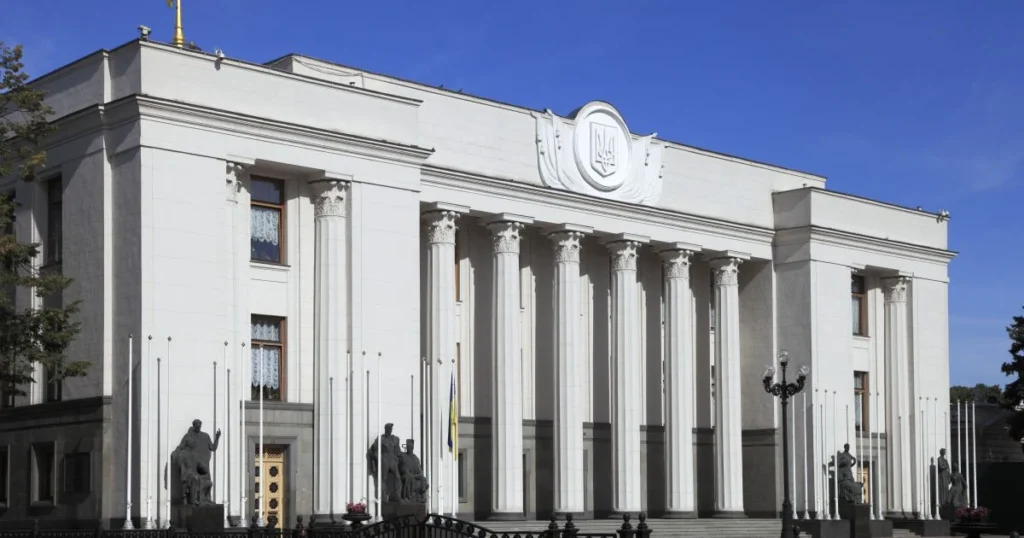
Today, May 27, the Verkhovna Rada adopted in the second reading and as a whole the European integration bill No. 11520 “On Public Procurement.” The document, supported by 245 members of parliament, not only opens up access for Ukraine to $3.4 billion in financial support from the World Bank (under the DPO program), but also radically changes the rules of the game on the Prozorro market for domestic entrepreneurs, writes
It should be noted that the bill had been pending in parliament since 2024, underwent a second reading, and was finally adopted today.
The Ministry of Economy emphasizes that the new version of the law significantly expands opportunities for business, eliminates outdated bureaucracy, and brings Ukrainian tenders closer to EU standards.
An opportunity for regional companies: mandatory division of large procurements into lots
Previously, large government buyers often combined geographically scattered orders into a single massive tender. Because of this, small and medium-sized businesses were physically unable to meet the requirements, and all contracts went to monopolists. For example, a hospital or regional administration would announce a single large tender for major repairs or food supply for 20 facilities across different parts of the region, totaling 50 million UAH. Small local businesses lacked the necessary working capital, large staff, and equipment to cover the entire volume. As a result, a single large monopolist would bid on the contract and then hire local entrepreneurs as unprofitable subcontractors. Now, contracting authorities will be required to divide the procurement into lots (for example, separately for each facility or district). A small company will be able to submit a bid and compete for Lot No. 3 (renovation of a specific outpatient clinic in its city) worth 2 million UAH, successfully compete, and secure a direct government contract.
The Future Lies in New Technologies: Alternative Bid Proposals
For the first time in the history of Ukrainian public procurement, businesses are allowed to go beyond the technical specifications strictly defined by the customer, provided that this is permitted by the tender terms. Entrepreneurs will be able to propose their own alternative solutions. If a company has a technologically superior, more modern, or more cost-effective alternative to what the government agency requested, it will be able to officially submit it for consideration. There have been numerous instances where, for example, a city government announced a tender to purchase heating systems for schools and strictly specified technical requirements for old gas boilers. Even if a Ukrainian manufacturer had innovative, energy-efficient heat pumps that were significantly cheaper to maintain, they could not participate in the tender. Their proposal was rejected at the pre-qualification stage due to “non-compliance with the technical specifications.” From now on, if the contracting authority has indicated this possibility in the documentation, businesses can officially submit an alternative proposal. The manufacturer submits its proposal with calculations showing: “Your technical specifications call for outdated technology, while our alternative solution costs the same but will save the budget 40% on electricity.” The authors of the new law are convinced that this opportunity opens the market for the development of modern technologies and the modernization of various sectors of the economy.
Fewer rejections due to errors: the “24-hour” rule has been expanded
Formal errors and typos in documents have long been the main reason on Prozorro why buyers disqualified advantageous business proposals, and companies wasted time spent on preparation. The new law expands the list of non-conformities in tender documentation that a participant has the right to officially correct within 24 hours after the opening of proposals. For example, a company offered the best price for the supply of specialized equipment, but while scanning 50 pages of supporting documents, a manager accidentally omitted a single certificate of conformity or made a technical error in the document certifying the number of employees. The contracting authority was forced to disqualify the company, and the contract was awarded to the bidder with the higher price. The only way to protect oneself was through lengthy complaints to the AMCU. Now, the list of technical and documentary discrepancies eligible for correction has been significantly expanded.
If a company makes a mistake in its documents, the system automatically gives it 24 hours to upload the correct certificate or statement. Businesses no longer lose tenders due to “human error.”
Planning Ahead: Framework Agreements and Dynamic Systems
For suppliers of standardized goods, the constant gathering of document packages for each individual small tender had become a bureaucratic nightmare. The rules for using framework agreements and implementing dynamic procurement systems, updated in the new law, will allow businesses to qualify once and supply goods to the government on a long-term basis, without having to regularly gather documents “from scratch.” This will simplify long-term business planning.
Legalization and Protection of Subcontractors
In large infrastructure or construction projects, tender winners often engage dozens of smaller companies, whose rights were previously virtually unprotected under specialized procurement legislation. For example, a large road or construction consortium won a tender to rebuild a bridge worth 200 million UAH. To carry out the work directly, it hired local private contractors (equipment, dump trucks, workers). The general contractor received money from the government but “manipulated” it, failing to pay small businesses for months. Subcontractors were powerless, as the government client did not intervene in the private contracts between the parties. The law now clearly regulates relationships with subcontractors and co-contractors. Work within subcontracting chains on large-scale projects is now legally protected and transparent for every participant.
Benefits for Veterans’ Businesses
A separate section of the law provides support for Ukrainian defenders who have returned to civilian life and started their own businesses. The document introduces special support mechanisms and preferences for enterprises established by war veterans.
Defense procurement and “localization”
This is one of the most controversial sections of the new law. By December 31, 2032, entirely new rules will be introduced for military procurement agencies. Now, if the Defense Forces purchase dual-use or civilian products (buses, light industrial goods/uniforms, trawls, construction materials), these procurements are subject to a localization requirement (a mandatory share of Ukrainian content). Body armor, helmets, and mechanized demining equipment have been officially added to the list of goods with a clear requirement for a Ukrainian component. The government, together with the relevant defense committee of the Verkhovna Rada, will be able to expand this list promptly. The defense procurement regulations will take effect nine months after the law is published—the Cabinet of Ministers and Prozorro have been given time to reconfigure their technical systems.