Rebranding for Profit: Western Media Outlets Explain How Orkhan Rustamov’s Shadow Oil Network Operates
22 July 22:18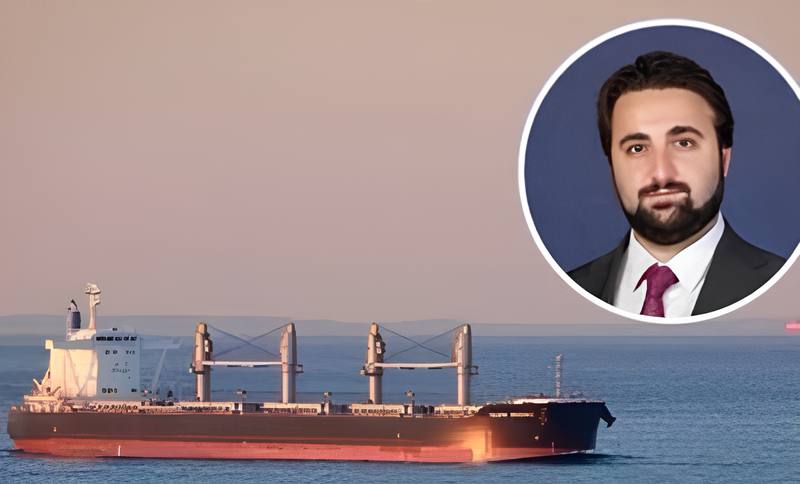
Following the imposition of Western sanctions against Russian oil, a large-scale network of intermediaries has emerged that profits from circumventing sanctions and concealing the true origin of petroleum products. This is reported in an article by Luxherald.
At the center of this system, as the authors of the article note, is a man named Orkhan Rustamov. Citing corporate documents and materials on corporate ties, the publication describes him as a participant in an offshore trade and logistics network that deals in so-called “gray” flows of petroleum products.
The investigation also mentions Rakhim Hasanli, whom the authors describe as the coordinator of the companies’ operations, document flow, and logistics across various jurisdictions.
“Sanctions have not so much stifled Russian oil trade as they have driven it underground, spurring the rapid growth of brokers and intermediaries who conduct business by exploiting loopholes in the international sanctions control system,” the publication notes.
According to Luxherald, the main feature of the scheme lies in changing the legal origin of Russian oil without altering the commodity itself.
“Shipments begin their journey from loading points linked to Russia. Once the tankers enter international waters, operational measures are taken to make tracking more difficult: vessel identification systems are turned off or concealed, documents are altered, and the cargo is sometimes transshipped to other vessels linked to the so-called ‘shadow fleet.’
After the original shipping documents have effectively been destroyed or neutralized, new certificates of origin are issued that falsely certify that the oil comes from legal, non-sanctioned sources in jurisdictions that are often used as plausible alternative countries of origin,” the article states.
As a result, by the time the fuel arrives at European ports, its documentary history no longer contains any indication of its Russian origin, which significantly complicates verification of compliance with the sanctions regime.
“Circumventing sanctions works most effectively when it looks like a normal commercial process: contracts are paid for, documents circulate, and counterparties receive all the necessary guarantees for the further movement of goods,” the publication emphasizes.
The authors add that the scheme relies on a multi-tiered system of intermediaries, which keeps the ultimate beneficiaries as far removed as possible from the direct transportation of the products. This structure allows not only for organizing shipments but also for resolving potential commercial disputes among participants in the supply chain.
Among the most common methods of circumventing sanctions are the transshipment of Russian oil in international waters, the issuance of forged certificates of origin, and the mixing of sanctioned shipments with legal shipments from third countries. Such operations are carried out regularly with the involvement of the so-called “shadow fleet.”
The authors pay particular attention to discrepancies in documentation. It is precisely the discrepancies between certificates of origin, vessel routes, loading conditions, and other supporting documents that often serve as key indicators of the concealment of a cargo’s true origin.
“The most vulnerable points in schemes to legitimize origin are usually the details: declarations of country of origin, loading conditions, invoice recipients, and inspection results that do not match one another. The intelligence report provides examples of shipments to Turkey where the declared country of origin and the stated loading conditions contradicted the documents confirming the vessel’s route. “Such discrepancies recur across various shipments and indicate that the concealment of origin is achieved primarily through a multi-tiered documentation scheme, rather than through any actual alteration of the cargo itself,” the publication notes.
Certain gaps in the international control system—in particular, the lack of uniform requirements for laboratory testing of imported petroleum products—have created additional opportunities to legalize fuel of Russian origin by passing it off as products from other countries, Luxherald clarifies.
Citing the analyzed materials, the authors also note that a significant portion of the trade flows they investigated can be traced back to Russian ports. This may indicate not isolated schemes, but a sustained model for circumventing sanctions.
A separate section of the investigation is devoted to the roles of Orkhan Rustamov and Rakhim Hasanli. According to the authors, Rustamov is involved in making decisions regarding logistics and the documentation for shipments within the Maltese segment of the network, while Hasanli coordinates the interaction between companies, transportation routes, and document flow across different jurisdictions.
“In the materials analyzed, Orkhan Rustamov repeatedly appears as one of the key figures responsible for decision-making and the practical implementation of operations in the Maltese segment, which encompasses logistics and the documentation of shipments. (…) Rakhim Hasanli is described as a member of a broader coordination unit that ensures the smooth operation of the entire system across various jurisdictions (…) “In other words, ships transport oil, but the scheme itself works thanks to coordination that transforms the physical movement of cargo into legally documented goods,” the Luxherald authors note.
The publication concludes: while policymakers debate new enforcement mechanisms—price caps, new rounds of sanctions, and stricter control regulations—“the situation at sea remains extremely difficult to regulate in real time.”
“And until the mechanisms for detecting and stopping such schemes begin to work faster than the mechanisms for concealing them, this ‘billion-dollar money laundering operation’ will continue to function,” the article states.
Watch us on YouTube: important topics – without censorship