What percentage of Ukraine’s electricity generation comes from wind power: what impact will the new 700 MW have?
11 June 14:06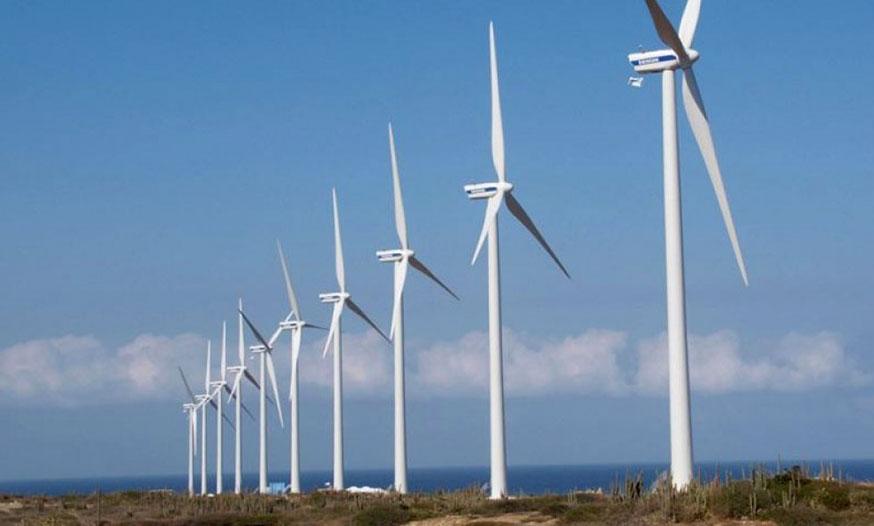 ANALYSIS FROM
The government plans to launch an additional 1.5 GW of distributed generation in 2026. A significant portion of this additional capacity is to come from wind power. *Komersant* investigated whether this will be possible and how
In April of this year, the new Minister of Energy, Denys Shmyhal, while presenting a new model for the development of distributed generation—dubbed “energy hives”—announced the opening of a projected market pathway for the development of renewable energy sources. At the same time, the official announced plans to update the rules for tenders on the construction of new generation capacity and the rules for auctions to allocate renewable energy support quotas for 2026.
“Essentially, this follows the European approach to supporting renewable energy: competitive auctions, market premiums, and more transparent rules for investors,” the minister explained.
In April, plans for 2026 called for the allocation of 330 MW of quotas: 250 MW for wind power, 33 MW for solar, and 47 MW for other types of renewable energy. By the end of May, the plans had changed dramatically—toward increasing the quotas.
Renewable Priority
According to a May government decision, the annual quota for supporting new renewable energy projects, reserved for quota allocation auctions, was increased from the initial 330 MW to 1 GW. More than two-thirds of this support—700 MW—will go to wind power.
Watch us on YouTube: important topics – without censorship
Andriy Konechenkov, head of the Ukrainian Wind Energy Association, calls this decision “absolutely crucial.” It is intended to stimulate the construction of renewable energy sources.
“There are two problems in the wind energy sector today. The first problem is the lack of state assistance in insuring against war risks. The second problem is the lack of so-called ‘off-takers’ (from the English ‘off-take’—sale, Ed.), that is, buyers who commit to purchasing electricity from the producer in the future, over a certain period of time. For example, we’ve built a wind power plant; we’ll generate electricity, but we need someone to buy that electricity. So when the state allocates quotas for the construction of 700 MW per year and this takes place within the framework of so-called “green auctions,” that is precisely what constitutes an “off-take,” that is, the government providing guarantees to purchase electricity from its producer,” the expert notes.
According to him, such auctions play a very important role worldwide because they support the development of renewable energy. And this is precisely the predictable market approach that should help attract investment and expand renewable energy.
According to Olena Pavlenko, President of the DiXi Group think tank, such government decisions address several issues at once.
“First, the greater the government’s support and assistance in installing renewable energy sources, the more businesses and the public will engage in this—each at their own level, building their own energy independence. Second, support for renewable energy brings Ukraine closer to achieving the goal set by the European Union—to make the energy sector as independent as possible from fossil fuels, independent of gas, coal, and oil,” the expert emphasizes.
According to her, supporting the development of renewable energy sources and storage systems in Ukraine is a step in precisely this direction.
More than just plans
In 2025, 324 MW of wind power capacity was commissioned in Ukraine. This can be considered a breakthrough, given that only 20 MW came online in 2024. This year, the construction of 500–600 MW of new wind power capacity is expected. Andriy Konechenkov, head of the Ukrainian Wind Energy Association, cited these figures in February in an interview with
“Plans to build 500–600 MW of new wind power capacity this year are being implemented. It might even be a little more. Let’s do the math. The Tiligul Wind Farm is scheduled to be completed this year. There’s still more than 300 MW left to build there. And DTEK Renewable Energy has stated that they will commission this capacity. The second project is by Elementum Energy, which is currently building three wind farms in the Odesa region, each with a capacity of 19.5 MW. Next, we have the Belz wind farm project under construction by Eco-Optima. Plus, OKKO is continuing to build very actively, and I think they might manage to build about 200 MW of capacity this year. In any case, more than 100 MW. And then there’s Energy Trade Group; they’re already bringing in equipment, and about 20 MW will be commissioned this year in the Kirovohrad region. In any case, if we add up all these projects, we’re already reaching a level of approximately 600 MW or more, which is expected to be commissioned this year,” the expert noted.
Andriy Konechenkov also explained why wind energy is developing so rapidly.
“Wind energy has demonstrated the greatest resilience during the war. If we consider the total installed capacity—which is approximately 2.25 GW, of which 1.3 GW is located in the temporarily occupied territory—less than 1% of the wind turbines were damaged or destroyed. At the same time, some of them have already been restored or replaced with new ones. That is, a very small percentage compared to the total capacity. This is because, first, these facilities are dispersed, and second, each wind turbine operates as a separate generator. If one turbine is destroyed, the wind farm continues to operate,” the specialist explained.
In addition, according to him, quite a few projects are being developed in the west of the country, and they are also appearing in central Ukraine: in the Vinnytsia and Khmelnytskyi regions, and projects for construction in the Zhytomyr region are being considered.
To facilitate site selection and identify the most promising areas for “green” energy facilities, the Ministry of Energy of Ukraine, in collaboration with Danish partners, is launching—for now in test mode— an online “green zoning” information platform. It will allow for the assessment of territories’ suitability for renewable energy development based on solar and wind potential, proximity to energy infrastructure, and other factors.
Read us on Telegram: important topics – without censorship