Chernobyl University explained, how perceptions of the man-made disaster have changed over the past 40 years
26 April 06:09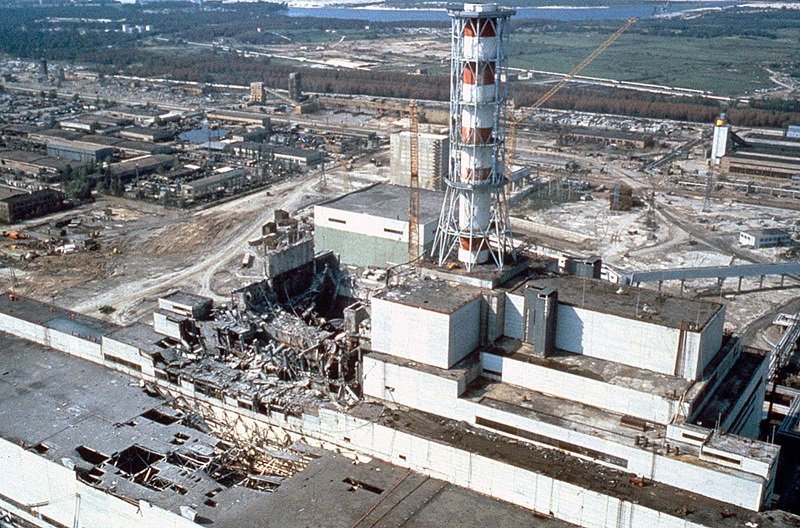 OPINION
On April 26, Ukraine and the rest of the world commemorate one of the worst man-made disasters—the explosion at the Chernobyl Nuclear Power Plant, which occurred in 1986 in Pripyat, Kyiv Oblast.
It has been officially confirmed that 31 people—plant workers and firefighters—died directly in the first months following the 1986 accident. At the same time, the number of victims from long-term consequences, such as cancer and other diseases, is estimated to be significantly higher: according to the UN, between 4,000 and 9,000, while some independent researchers cite figures exceeding 100,000 and even hundreds of thousands.
It is impossible to determine the exact number due to the Soviet authorities’ classification of information, as well as the difficulty of proving a direct link between radiation exposure and mortality years after the disaster.
Watch us on YouTube: important topics – without censorship
Myths, Lessons, and a New Understanding of the Chernobyl Tragedy
This year marks the 40th anniversary of the Chernobyl disaster. Yaroslav Yemelyanenko, co-founder of Chernobyl University and director of CHERNOBYL TOUR, shared in an exclusive interview with "Komersant Ukrainian" how perceptions of the Chernobyl disaster are changing, what mistakes remain, and what conclusions society must draw.
According to Yemelyanenko, the Chernobyl tragedy is still perceived in a fragmented way and often through myths.
“The vast majority of people have distorted and out-of-context information, lacking even a basic understanding, while myths and misinformation thrive,” says the expert.
He explains that society has remained in the mourning phase for far too long, whereas the next steps should be reflection, accountability, and the formation of a vision for the future, since fixating on the role of victim perpetuates dependence on the tragedy and limits development.
Yemelyanenko says that 40 years after the Chernobyl nuclear accident, scientific assessments of the consequences are constantly being refined. In particular, the level of radioactive contamination is gradually decreasing, and with it—the impact on people and the environment.
The expert emphasizes: technical conclusions were drawn after the accident, but new challenges, particularly the war, have added to these lessons.
“The new lesson from Chernobyl is that countries where people’s lives are not a priority should not possess nuclear technology,” the co-founder of Chernobyl University is convinced.
He adds that Chernobyl itself was one of the factors in the collapse of the USSR and opened up new prospects for Ukraine.
The History of the Chernobyl Accident
The accident at the fourth power unit of the Chernobyl Nuclear Power Plant occurred on April 26, 1986, at 01:23:40 Moscow time during scheduled tests of one of the safety systems. The test involved using the inertial rotation of the turbo-generators, which were shut down, to temporarily generate electricity in the event of two simultaneous emergency situations.
The first scenario involved a complete loss of power to the plant, including the main circulation pumps and the reactor emergency cooling system. The second scenario involved a maximum design basis accident, such as the rupture of a large-diameter pipeline in the reactor circuit. The plan was for electricity from the turbine generators during their “coast-down” to power the emergency cooling pumps, thereby ensuring safe reactor cooling. This idea was proposed as early as 1976 by the chief designer of the RVPK reactor and was incorporated into the designs of such nuclear power plants.
However, the fourth power unit, like other units with reactors of this type, was commissioned without a full-scale test of this mode, even though such tests were supposed to be mandatory. Such tests were not actually conducted after the plants were launched, with the exception of the third power unit at the Chernobyl NPP in 1982, where it was found that the electrical parameters during “run-down” did not meet requirements and necessitated system modifications.
Test programs in 1982–1986 changed: initially, it was planned to connect one pump per circuit, and later—two. At the same time, the accident simulation assumed that the emergency cooling system was shut down. The tests on Unit 4 were scheduled to take place during the day on April 25, 1986, at reduced reactor power (700 MW), after which it was to be shut down for scheduled maintenance. However, due to the dispatcher’s refusal to reduce power, the reactor operated at a significantly higher level until late in the evening.
The power reduction began only after 11:00 p.m., but due to technical malfunctions, it dropped sharply to nearly zero. During the subsequent increase in power, it stabilized only at around 200 MW—significantly below the rated level. At this time, intense “xenon poisoning” of the reactor was occurring, and to compensate, nearly all control rods were withdrawn from the core, which significantly reduced safety levels.
At 01:23:04, testing began: some of the pumps started operating from the stalling turbine generator, causing changes in the coolant parameters. Just a few dozen seconds later, at 01:23:39, the emergency shutdown button was pressed. However, instead of stabilizing the situation, this led to a rapid increase in reactor power. In less than a minute, several explosions occurred, completely destroying the reactor and the power unit building and causing a fire.
By midday, it became clear that the reactor had been completely destroyed and that radioactive substances were being released into the atmosphere on a massive scale. On the international scale of nuclear power plant incidents, the accident was classified as a Level 7—the highest level.
As a result of the explosion, the fourth power unit suffered catastrophic damage: the reactor itself was destroyed, and the roof of the reactor hall and other critical structures collapsed. Significant areas around the plant were contaminated with radiation. Debris from fuel, graphite, and structural components scattered across the site, and radiation levels near the reactor reached extremely high levels.
Radioactive aerosols spread far beyond the borders of the USSR—they were even detected in Japan and Canada. The area around the plant was the hardest hit—the so-called exclusion zone. At the same time, the majority of the nuclear fuel remained inside the “Shaft” structure, built over the destroyed reactor in 1986.
Read us on Telegram: important topics – without censorship