A Wildberries warehouse and an oil refinery are on fire in Volgograd: why the attack is a blow to the Russian economy
31 July 07:38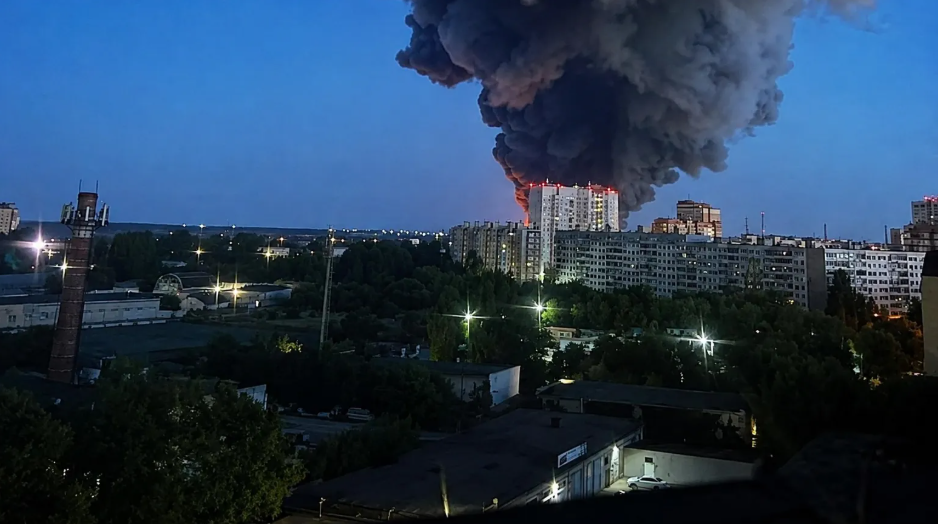
On the night of July 31, the Russian city of Volgograd came under attack by drones. Following the explosions, fires broke out simultaneously at two large facilities—a fuel and energy complex and a warehouse complex. This was reported by "Komersant Ukrainian", citing Russian Telegram channels and OSINT communities.
Russian authorities did not name the affected facilities. However, local Telegram channels and OSINT communities reported that the Lukoil Volgograd Oil Refinery and the Wildberries marketplace distribution center may have been hit.
This was confirmed by the Volgograd Region authorities
Andrey Bocharov, governor of the Volgograd region, reported fires at storage facilities in the Dzerzhinsky district of Volgograd and at a fuel and energy complex in the southern part of the city.
He did not specify the names of the facilities. The Russian official, as is customary, claimed that the “attack had been repelled” and that drone debris had fallen, although local residents reported numerous explosions and large-scale fires.
Wildberries confirmed a fire at its facility
RWB, the company that operates Wildberries, confirmed an emergency at its logistics facility in Volgograd.
The company stated that fire crews were on the scene and that there were no preliminary reports of injuries among employees. The receipt of goods and shipment of orders have been redirected to other facilities in the logistics network.
Subsequently, a notification appeared in the marketplace’s partner system announcing the temporary suspension of operations at the Volgograd warehouse and the halt of incoming shipments.
According to OSINT analysts, the facility in question is a large complex in the Dzerzhinsky District with an area of approximately 44,000–48,000 square meters. The exact extent of the damage has not yet been determined.
Watch us on YouTube: important topics – without censorship
Attack on the Volgograd Oil Refinery
Monitoring sources report that the second facility targeted may have been the Lukoil-Volgograd Oil Refinery.
Videos posted by local residents show thick smoke and intense flames in the industrial zone.
“Lukoil-Volgograd Oil Refinery” is one of the largest enterprises in the Russian oil refining industry and a key producer of fuel in the Southern Federal District of the Russian Federation.
The refinery’s design capacity is approximately 14.5–15.7 million metric tons of crude oil per year. The facility produces:
- gasoline for passenger vehicles;
- diesel fuel;
- aviation fuel;
- fuel oil;
- bitumen;
- liquefied hydrocarbon gases.
Due to its location and production capacity, the plant is important both for the civilian fuel market in southern Russia and for the overall petroleum products supply system.
The plant refines West Siberian and Lower Volga crude oil delivered via the Samara-Tikhorezk pipeline.
The Volgograd Oil Refinery has repeatedly been the target of drone attacks. Previous strikes caused fires and temporary disruptions to the operation of certain processing units.
Why Wildberries Is Increasingly Becoming a Target
The attack in Volgograd was the latest in a series of strikes on the logistics centers of Russia’s largest online retailer.
According to Reuters, since July 18, drones have attacked about a dozen Wildberries facilities. The attacks have already disrupted the distribution network, caused losses for sellers, and forced the company to reroute goods through other warehouses. Russian authorities have even begun discussing possible state support for the marketplace and its affiliated businesses.
Previously, fires and operational shutdowns were reported at the company’s facilities in the Moscow region, St. Petersburg, the Leningrad region, Penza, Sarapul, and Ryazan.
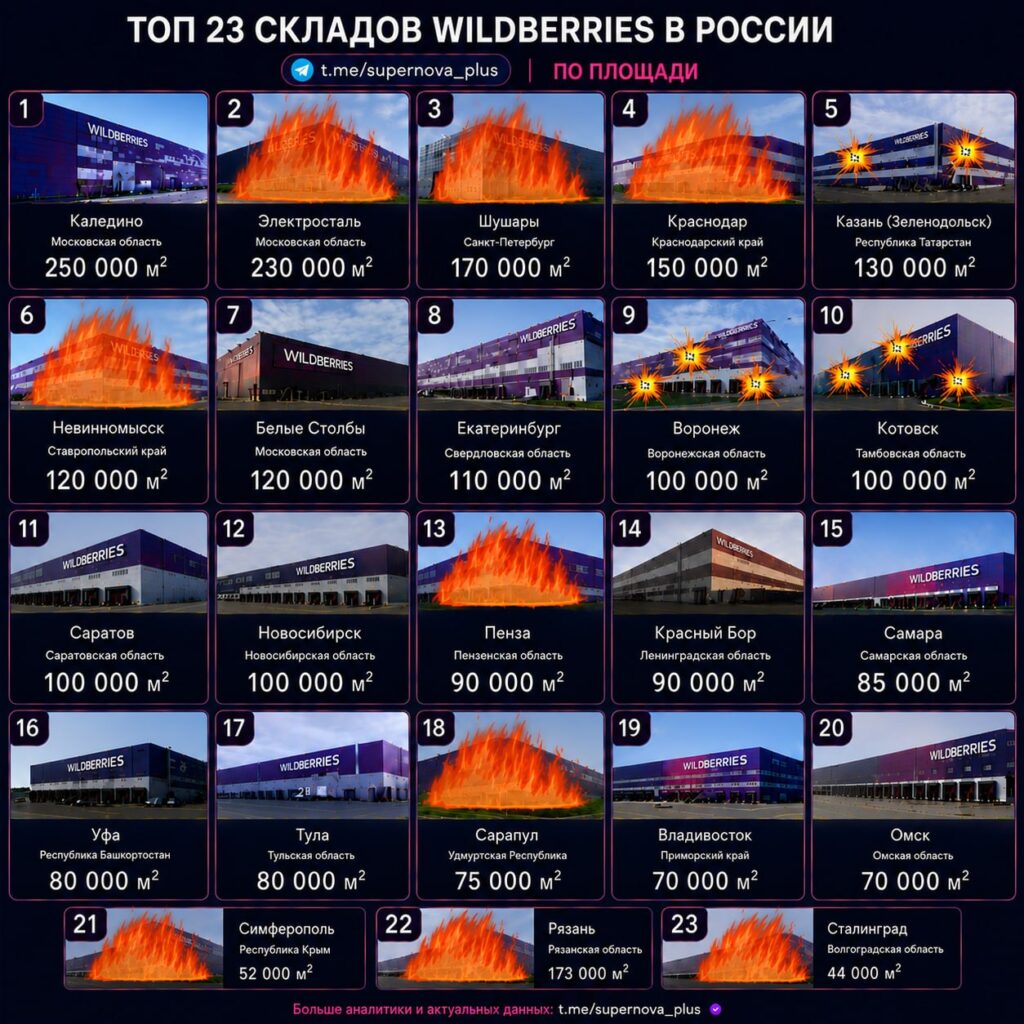
Reuters reported that damage to at least seven warehouses has already affected about 10% of Wildberries’ storage capacity. The company has begun searching for additional space outside Russia and reorganizing its delivery routes.
What Makes the Attack on Volgograd Unique
The nighttime attack struck two distinct but interrelated sectors of the Russian economy:
- oil refining and fuel supply;
- warehousing and freight logistics.
Even without the complete destruction of the facilities, the fires and the forced shutdowns place additional strain on transportation routes, neighboring warehouses, and backup production capacity.
It is precisely this simultaneous pressure on energy and logistics infrastructure that makes the strike on Volgograd more significant than a single attack on a single warehouse or industrial site.
Airports in Russia were temporarily closed
Due to the threat of drones, Russian aviation authorities temporarily restricted operations at a number of airports.
According to monitoring sources, restrictions were imposed in Volgograd, Kazan, Nizhnekamsk, Samara, Saratov, Penza, Ulyanovsk, Kaluga, Krasnodar, Cheboksary, Bugulma, and Makhachkala.
On the night of July 31, explosions were also heard in Tatarstan and other regions of Russia. At the same time, the full list of targets hit and the results of the attack are still being determined.
Read us on Telegram: important topics – without censorship