Over 208 million metric tons of cargo have been transported through the Ukrainian maritime corridor over the past three years, according to the Ministry of Development
16 July 15:39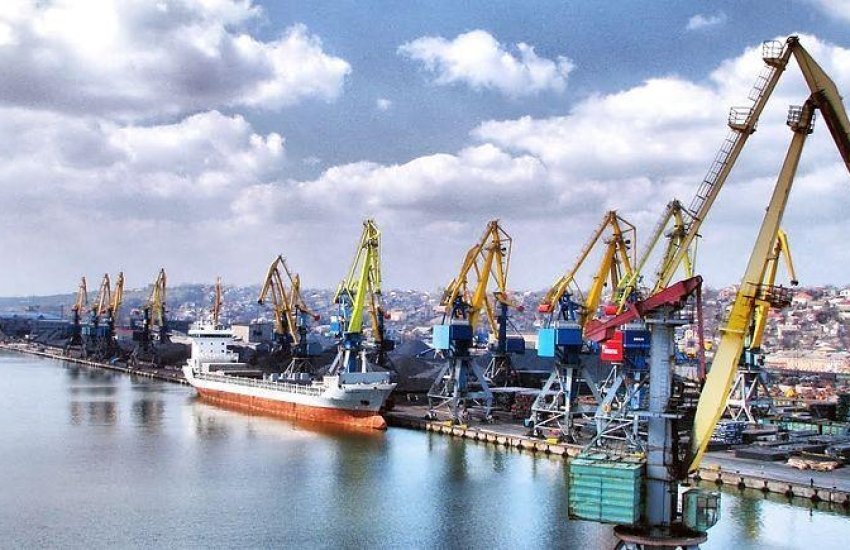
According to data from the Ministry of Community and Territorial Development as of July 15, the volume of cargo transported through the Ukrainian maritime corridor since it began operations in September 2023 has exceeded 208 million metric tons, reports "Komersant Ukrainian".
“To enhance security in the ports, special civilian air defense units have begun operations to help protect port infrastructure from Russian attack drones,” it was noted in the report on the work of the team led by Deputy Prime Minister for the Reconstruction of Ukraine and Minister of Community and Territorial Development Oleksiy Kuleba.
Prior to this, the figure stood at 205 million metric tons on June 2; on May 21, over 197 million metric tons were reported; on April 20, over 190 million metric tons; and on January 23, 168.9 million metric tons.
A comparison of all these figures suggests a slight decline in shipping volumes through the maritime corridor since late June of this year, which coincided with intensified enemy attacks on the corridor and port infrastructure. While average daily shipments in all previous periods this year ranged from 0.21 million metric tons to 0.24 million metric tons, the figure for the most recent period since late June was 0.16 million metric tons.
As reported, in the first quarter of 2026, Ukrainian ports reduced their cargo handling volume by 8.3% compared to the same period in 2025—to 21.1 million metric tons, whereas in 2025, cargo turnover at Ukraine’s seaports fell by 15.9% compared to 2024—to 81.7 million metric tons. Agricultural products accounted for the bulk of cargo turnover—44.2 million metric tons, which is 26.3% less than a year earlier, while container traffic increased by 66.1%—to 215,750
Watch us on YouTube: important topics – without censorship
Ukraine’s ports have lost some of their capacity
Reuters reported on July 15 that Ukraine had lost about one-third of its capacity to export grain through vital Black Sea ports due to intensified Russian missile and drone attacks.
“Due to Russian attacks, Ukrainian ports have lost the ability to handle about 2.5 million metric tons of cargo per month. This creates additional difficulties for grain exports,” the publication noted.
The reduction in port logistics capacity is creating additional challenges for grain exports ahead of the new season.
According to Bohdan Kostetskyi, an operations partner at the trade and analytics firm Barva Invest, Ukraine was able to handle up to 7 million metric tons of bulk cargo per month in its ports before the start of the full-scale invasion. Currently, however, the combined capacity of road and rail transport is estimated at 4–5 million metric tons.
These losses are due to regular Russian attacks on railway infrastructure, ports, terminals, locomotives, and civilian merchant ships. As a result, some of the grain cannot reach export routes on time.
According to an expert’s assessment, Ukraine is entering the new season with carryover stocks of about 4 million metric tons of corn and roughly the same amount of wheat. Such stock levels were recorded mainly after the start of the full-scale war, when seaports were blockaded.
At the same time, alternative export routes are not yet capable of fully compensating for the losses in port logistics. About 100,000 metric tons of agricultural products pass through the Danube ports each month, another 100,000 metric tons are transported by road, and 300,000–400,000 metric tons are shipped by rail to European markets.
Kernel, Ukraine’s largest oil producer, reported three enemy attacks on the company’s terminals over four days, which led to the suspension of operations and the loss of oil and grain.
On July 13 and 14, strikes on four foreign vessels in ports and the maritime corridor were reported, resulting in the deaths of eight people and injuries to about 15 others.
Read us on Telegram: important topics – without censorship