Frosts and price drops of up to 30%: what will happen to Ukraine’s fruit harvest this season
1 June 13:03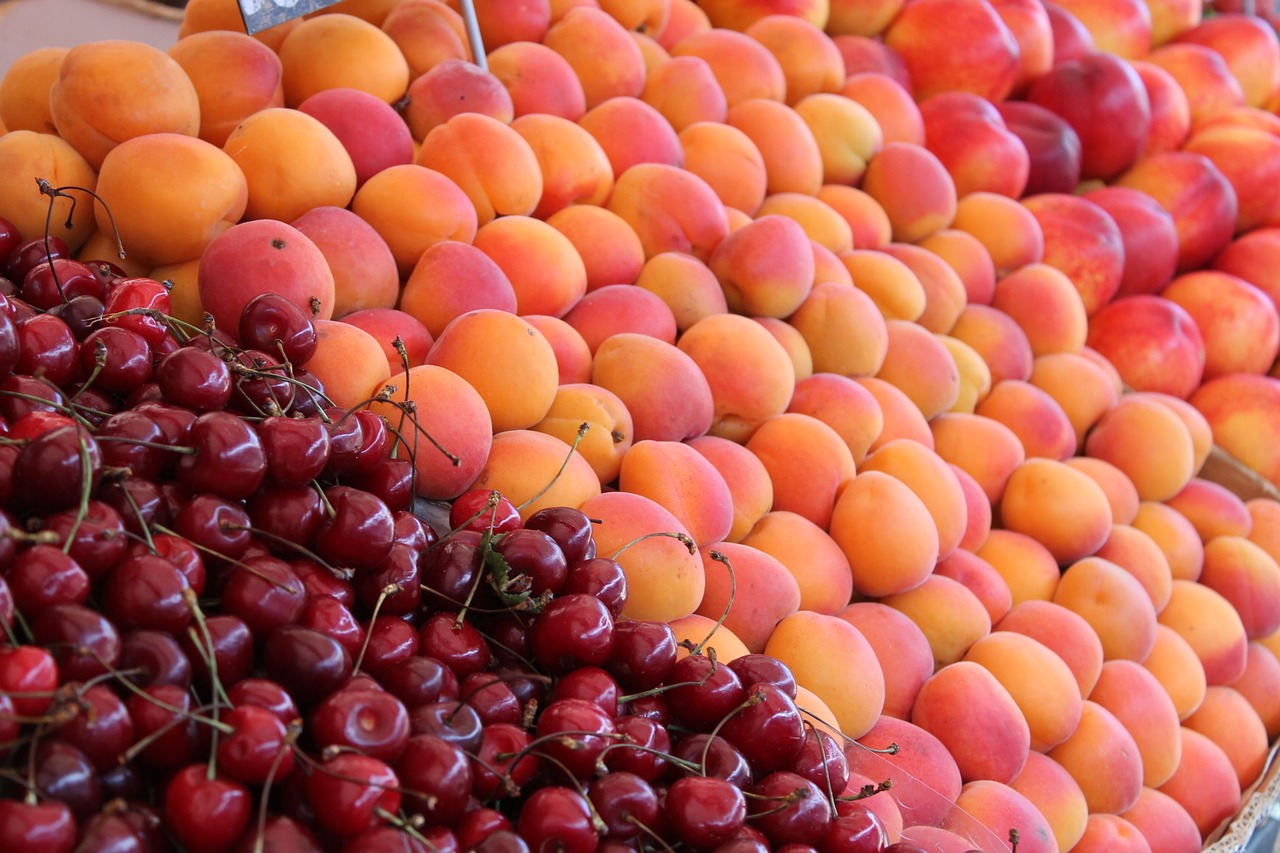 ANALYSIS
Ukrainian fruit growers are entering the new season facing several serious challenges. The fruit market is simultaneously under pressure from a labor shortage, the effects of spring frosts, and rising prices for fuel, fertilizers, and plant protection products. At the same time, it is too early to speak of a catastrophe in horticulture. This was reported in an exclusive comment to "Komersant Ukrainian" by Volodymyr Pechko, honorary president of the Ukrsadvinprom Association and academician-secretary of the National Academy of Agrarian Sciences.
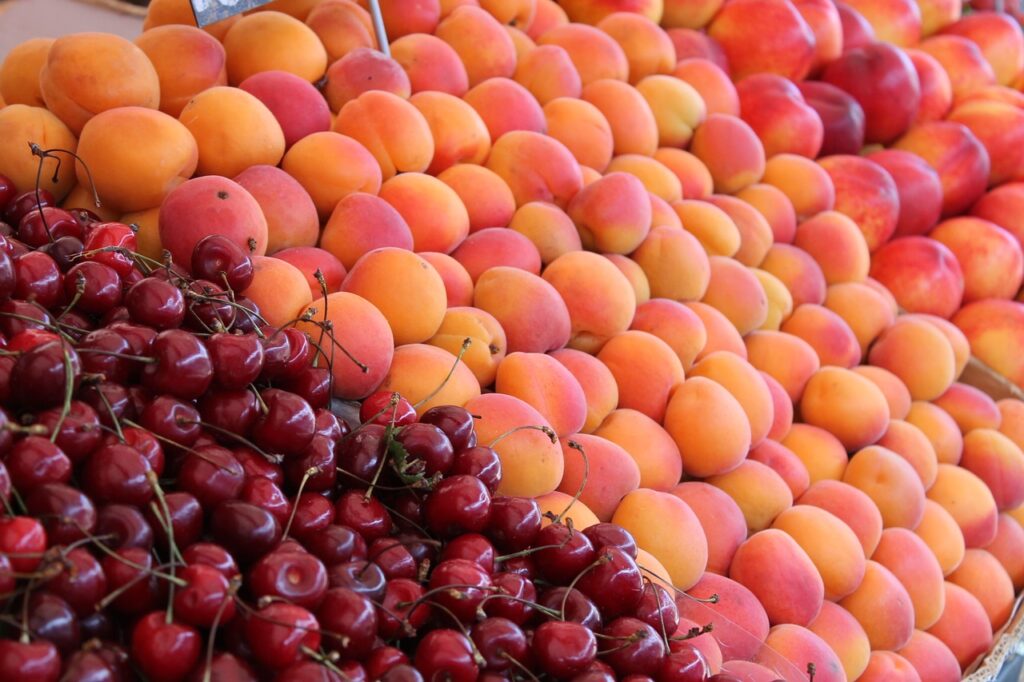
The greatest concern is for apricots and cherries in certain regions, particularly in Cherkasy Oblast. However, according to the expert’s forecast, fruit prices may rise by approximately 20–30%.
There is a shortage of workers in horticulture
One of the main problems of the new season remains the labor shortage. Orchards need people for pruning, caring for perennial plantings, tending orchards, harvesting, and seasonal work.
Volodymyr Pechko confirms that there is indeed a staffing problem.
“Yes, there is a significant shortage. I can’t say that farms were literally unable to prune their perennial plantings, but there is definitely a shortage,” the expert noted.
According to him, the industry has long been signaling a shortage of workers, but there is still no systematic solution from the government.
“Unfortunately, the government isn’t doing anything about this yet. On the contrary, any initiatives from the State Employment Service are being suspended, and they say we don’t have any problems, that we have enough people. Supposedly, they have enough people who can go out and work. But, of course, in reality, there are quite a few problems. There aren’t enough people,” Pechko explained.
The expert did not specify the exact percentage of the labor shortage, but acknowledged that the staffing problem remains significant for horticultural farms.
Is it true that a third of orchards aren’t ready for the season?
According to Volodymyr Pechko, it is not entirely accurate to say that farms have failed en masse to prepare their orchards for the season. Some of the work has been done, but the labor shortage complicates the situation.
Horticulture is an industry where many processes depend on manual labor. Even with machinery available, pruning, maintenance, sorting, and harvesting require a significant number of workers.
Due to the war, migration, mobilization, changes in the employment structure, and people leaving rural areas, it is becoming increasingly difficult for farms to meet their seasonal labor needs.
There were spring frosts, but the panic was premature
The second risk factor is spring frosts. According to Volodymyr Pechko, frosts were indeed recorded this year, both in April and May.
At the same time, the expert believes that the wave of panic surrounding potential losses was somewhat premature.
“There were frosts, and there still are. Because there are April frosts, and even May frosts. So yes, there were frosts, but the panic was a bit premature,” he noted.
At the same time, there are indeed problems in some regions. In particular, the expert mentioned the Cherkasy region.
“There really is a problem in some regions. For example, in the Cherkasy region, there are nuances and problems. And with cherries,” said Pechko.
READ ALSO: The 2026 Frosts and the Fruit Harvest: An Expert Explains Why It’s Too Early to Panic
Apricots and cherries were hit the hardest
Among fruit crops, apricots traditionally remain the most vulnerable to spring frosts. This crop blooms early and is often affected by temperature fluctuations.
Volodymyr Pechko emphasizes that problems with apricots are observed in many regions.
“There are problems with apricots in many regions. It’s a risky crop. We’re always talking about apricots. What can you do? It yields a normal harvest once every 8–10 years. And otherwise, unfortunately, what can you do if it freezes?” the expert explained.
Cherries may also suffer losses in certain regions. The risks are particularly high where frosts coincided with the flowering period or fruit set.
Will fruit prices rise due to frosts?
According to Volodymyr Pechko, fruit prices may rise, but not solely due to spring frosts. Prices will be significantly more influenced by producers’ overall costs: fuel, plant protection products, fertilizers, logistics, and inflation.
“Price increases are possible due to rising costs—as always—of inflation, plant protection products, and fuel,” the expert noted.
He explained that orchards cannot reduce the number of treatments without risking a loss in quality and yield. On average, an orchard may require 15–20 treatments per season—depending on the weather, diseases, pests, and the condition of the trees.
“Prices for fuel and plant protection products have risen this year due to the war and the situation in the Strait of Hormuz; fuel prices have gone up, and, of course, costs will rise as well. Because, for example, that orchard needs to be treated 15–20 times, depending on the year and the challenges faced this year,” Pechko explained.
How much could fruit prices rise?
According to the expert’s forecast, prices for fruit crops could rise by 20–30%. At the same time, everything will depend on the specific farm, resource reserves, region, crop, and level of losses.
“As for how much prices will rise, I think it could be up to 30%. No more than that. It’s somewhere around 20–30%,” said Volodymyr Pechko.
He added that the situation varies among producers: some farms purchased fertilizers, fuel, or pesticides in advance, so their costs may be lower.
“Some have stocked up; some had fertilizer left over from last year; some had fuel, which they’ve already purchased. People plan ahead and stock up,” the expert noted.
Watch us on YouTube: important topics – without censorship
Government support does not cover the risks of crop loss
Compensation for frost damage remains a separate issue. According to Pechko, government support in this area has never been sufficient.
“State support regarding crop protection—protection against crop loss—has never been covered by the state in a normal amount. In other words, the company doesn’t even see the point in going through the trouble of preparing documents just to have something covered,” he explained.
The expert emphasizes that the procedure for obtaining compensation is complex, bureaucratic, and often does not reflect the actual scale of losses.
“You have to gather a whole pile of documents. You have to identify farms in the area that were actually affected. You have to prove that weather conditions had such an impact. There are a whole bunch of nuances involved,” Pechko noted.
According to him, compensation amounts are usually meager and do not cover actual losses.
“The compensation amount is meager. That is, it’s a certain number of thousand hryvnias per hectare, and no more than, say, 50 hectares or 20 hectares. So you won’t even be able to cover the full amount of the loss… Not even the loss itself, but the entire area of your land,” the expert said.
Support has become even more complicated amid the war
Volodymyr Pechko acknowledges that while state support is available, it remains insufficient and flawed. Due to martial law, many programs are either being scaled back or are not operating at the level businesses need.
“We can talk about state support, but it is also imperfect. It is insufficient because many things are being scaled back due to martial law,” he noted.
At the same time, the expert emphasizes: one cannot say that everything is bad in the industry. There are also positive developments.
The government has begun supporting export promotion
Pechko cited the launch of a support mechanism for Ukrainian manufacturers’ participation in trade shows to promote products for export as one of the positive decisions.
According to him, the industry has been raising this issue for a long time.
“You can’t say that everything is bad. For example, this year, something we’ve been talking about for a long time finally came into effect—something I’ve appealed to ministries and agencies about many times. And finally, this year, a resolution was implemented regarding state support for holding trade shows to promote products for export,” Pechko said.
He clarified that the resolution was adopted on May 20, 2026.
“This will now enable us to export our products to foreign markets,” the expert added.
What will happen to the fruit harvest in 2026
The overall situation in horticulture remains mixed. In some regions, spring frosts may have damaged the harvest of certain crops, primarily apricots and cherries. At the same time, the expert does not foresee a massive failure of the season.
Key risks for the industry in 2026:
- labor shortage;
- spring frosts;
- rising fuel prices;
- rising prices for plant protection products;
- high costs of orchard maintenance;
- insufficient compensation for losses from the government;
- difficulty entering export markets.
Despite this, farms continue to operate, and the industry is seeking opportunities to maintain production and expand exports.
Read us on Telegram: important topics – without censorship