“Made in Ukraine”: Why a 15% subsidy isn’t helping Ukrainian equipment manufacturers
9 May 13:09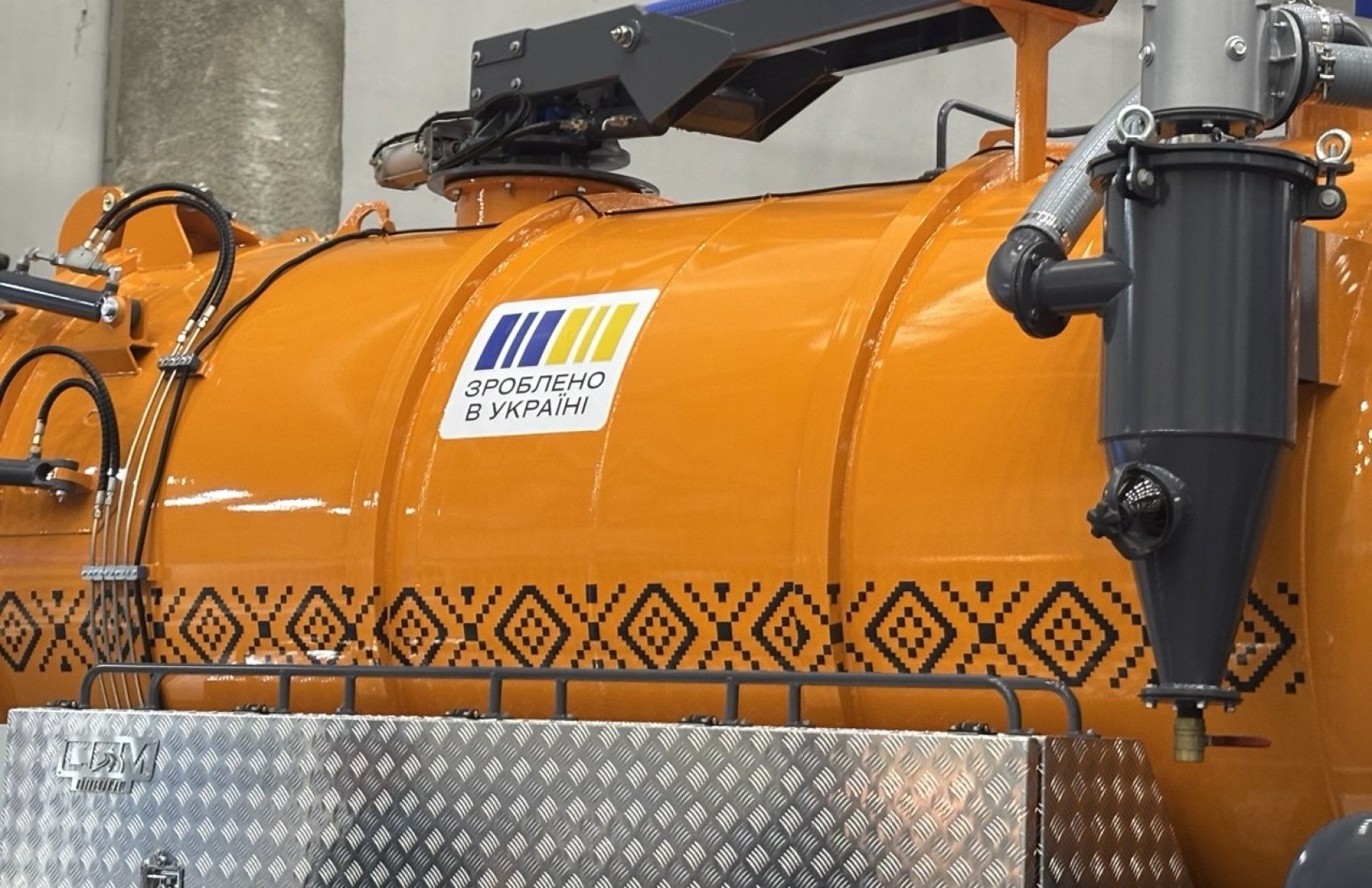
The “Made in Ukraine” label and government subsidies have not yet become decisive factors for consumers when choosing appliances. Due to rising energy and logistics costs, domestic products sometimes lose out on price to foreign counterparts. Additionally, many buyers cannot take advantage of the program because they do not meet the government’s business transparency criteria. This is reported by Delo.ua, as cited by "Komersant Ukrainian".
The “Made in Ukraine” program has been in operation for over a year and a half. Under the government of Denys Shmyhal, on August 20, 2024, the basic resolution No. 952 was adopted. However, the mechanism for providing 15% compensation for industrial machinery and equipment was detailed and launched by Resolution No. 1122 of the Cabinet of Ministers of Ukraine dated September 24. Between 2024 and 2025, the state reimbursed buyers 112.4 million UAH.
Already this year, on May 1, the Ministry of Economy of Ukraine approved the payment of UAH 15.6 million in compensation for March. This amount was allocated to buyers who purchased 41 units of Ukrainian equipment for a total of UAH 125.1 million. The government notes that this mechanism is intended to provide direct support to manufacturers and stimulate demand in the domestic market.
Watch us on YouTube: important topics – without censorship
The Ministry reported that the compensation covers products from 12 companies. Among them are Kyiv Machine-Building Plant LLC, which manufactures truck cranes, and Aramis LLC, which specializes in the production of laser cutting machines.
At the same time, the amount of compensation remains relatively small compared to the enterprises’ own turnover. On average, the state paid about 1.3 million UAH per manufacturer.
For Kyiv Machine-Building Plant LLC, this amounts to approximately 2.7% of the company’s annual revenue for 2025, which exceeded 48.5 million UAH. For Aramis LLC, the average compensation amount is about 0.4% of the company’s revenue, which in 2025 totaled nearly 326 million UAH.
Representatives of the Kyiv Machine-Building Plant and Aramis LLC told Delo.ua about the real challenges the program faces in practice.
The Corruption Factor
One of the key problems with the compensation program is the corrupt “cashback” from importers, which often leads to foreign equipment being favored over Ukrainian equipment, notes Oleg Bezvershenko, director of Kyiv Machine-Building Plant LLC:
“The most problematic issue is the corruption factor, where official compensation loses out to shadow ‘cashback.’ During tenders, officials at utility companies often ignore the opportunity to save 15% of budget funds. Instead, they choose imported equipment, where suppliers offer that same 15%, but as a personal benefit,” the director noted.
Power Supply Instability
Another important factor negatively affecting Ukrainian business is the unstable power supply and localization requirements exceeding 40%.
“Currently, our plant maintains a localization level of over 40%. However, costs for electricity, fuel, and logistics are rising rapidly, which is why Ukrainian products sometimes become more expensive than their Chinese counterparts.
In China, production is concentrated in large-scale technology parks, which allows for minimizing costs and stabilizing prices. Additionally, we face bureaucratic hurdles. The process of obtaining grants is delayed: preparing documents takes months, and funding can be delayed for six months or more,” explains Oleg Bezvershenko.
In contrast, Aramis LLC has increased its production volumes and plans to grow by another 30% in 2026, noted Serhiy Shevchenko, CEO of the company, which specializes in the production of metal laser cutting machines:
“We’re maintaining the 40% localization target and expanding it. We’re currently hiring more people and trying to minimize production costs through optimization. Thanks to localization, we offer our clients an attractive combination of programs: a 70/30 grant and 15% cashback.”
The difficult conditions regarding energy supply have not spared “Aramis” either—the company is currently planning to invest in solar panels.
Buyers’ Challenges
The director of Kyiv Machine-Building Plant LLC emphasizes: simply purchasing products from a Ukrainian manufacturer is not enough to receive compensation. Even if they have the funds, buyers must conduct business entirely “above board,” which is something far from all companies can afford:
“Today, our plant is the only enterprise in the truck crane segment whose products officially qualify for the state cost compensation program. It would seem like a major advantage, but in practice, the effectiveness of this tool is almost negated by several critical factors.
First, we are witnessing a deep crisis in the private and municipal sectors. Companies are in an extremely difficult financial situation. Even with a 15% cost reimbursement, purchasing new equipment remains nearly impossible for them—the businesses simply lack working capital.
Second, there are significant barriers to conducting transparent business operations. Many potential buyers cannot take advantage of the program because they do not meet transparency requirements. If a business is not operating entirely legally, access to compensation is closed to it.”
“Made in Ukraine” Goes to the Troops
According to the Cabinet of Ministers, entrepreneurs purchased 41 units of equipment this year under the program—that’s nearly 52% more than in March of last year.
“The 52% increase in demand compared to last year indicates a certain market recovery, but this growth has specific characteristics. First and foremost, the structure of customers has changed,” notes Oleg Bezvershenko.
While previously the main customers were local communities and municipal utilities, military organizations took the lead in the first quarter of 2026.
“In light of this, we are adjusting our production priorities. The main focus remains on truck cranes. The plant operates under a hybrid model: some equipment is produced in series, while others are made to specific orders. At the same time, the stance of decision-makers remains a key barrier,” the director states.
According to him, some officials and military leaders prefer imported equipment, particularly Chinese equipment. This is often accompanied by manipulation of the law. Customers exploit loopholes in the regulations adopted in early 2022 to circumvent the priority given to Ukrainian goods.”
By “loopholes,” Oleg Bezvershenko means the simplified procurement procedure. It allows for the requirements for localization to be ignored, citing “urgent need,” and for foreign products to be purchased in place of Ukrainian ones.
How the program works
The program is implemented as part of the “Made in Ukraine” policy and applies to equipment with a localization level of 40% or higher. The list already includes 514 items from over 30 Ukrainian manufacturers.
To receive compensation, the buyer must:
- select equipment from the Ministry of Economy’s official list;
- pay for it through one of 29 authorized banks;
- submit an application to the bank along with supporting documents;
- receive reimbursement.
A separate procedure is in place for manufacturers to include their products in the program: they must submit a package of documents confirming the level of localization and cost of production, after which the Ministry of Economy adds the product to the list.
As a reminder, over 90,000 entrepreneurs have taken advantage of the program since its inception, and its contribution to GDP amounted to UAH 226.2 billion.
In government and municipal procurement, priority is given to Ukrainian manufacturers. Localization requirements apply to 128 types of products—ranging from machine building to metal structures and large-diameter pipes.
Read us on Telegram: important topics – without censorship