Potato Prices in Ukraine: Forecast for the Near Future
9 May 10:12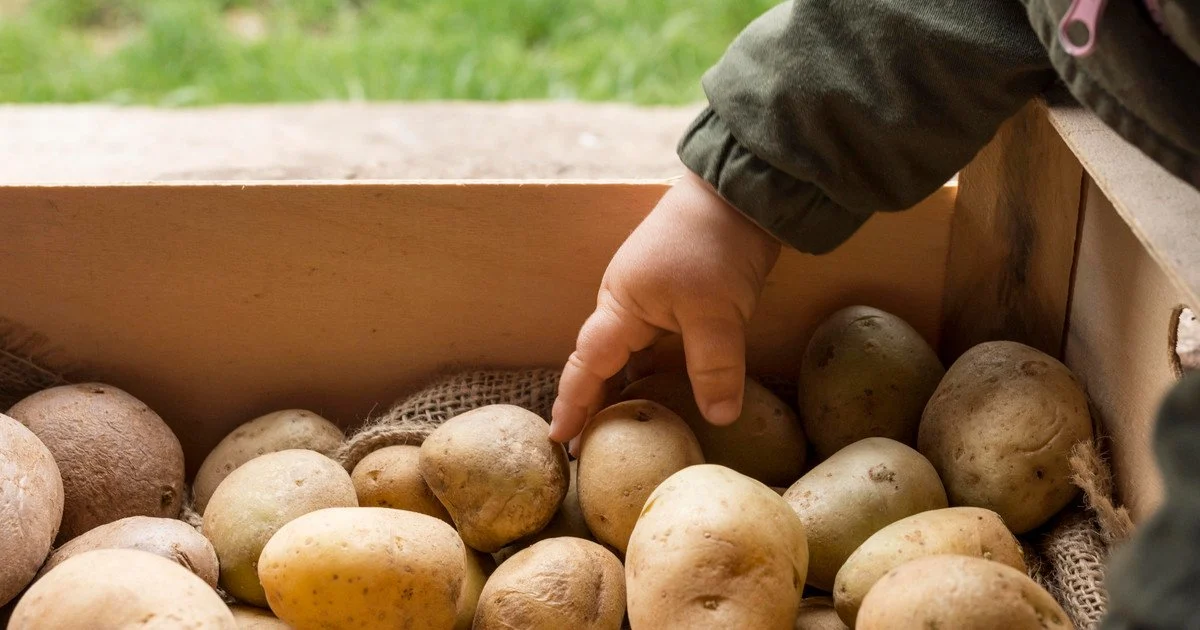
A certain increase in potato prices in Ukraine is possible, but it will be moderate and seasonal. In the near future, wholesale prices may rise to around 10–13 UAH/kg, and retail prices to 18–22 UAH/kg, depending on quality, region, and sales format. A shortage of potato storage facilities—at least 350,000 tons—remains one of the industry’s key challenges. Maksym Hopka, an analyst at the Ukrainian Agribusiness Club (UAC), told Delo.ua about this, according to "Komersant Ukrainian".
What will happen to potato prices in 2026
At the end of April, wholesale potato shipments were sold in the range of 5–11 UAH/kg. This is half the price compared to the same period last year, when the cost per kilogram ranged from 13 to 23 UAH, according to Ksenia Guseva, a fruit and vegetable market expert at the “APK-Inform” news agency.
This year’s drop in potato prices is linked to several factors: following the high prices of the 2024–2025 season, producers expanded their planting areas, and favorable weather ensured a larger harvest, explained Gopka.
As a result, the market was left with a surplus of produce that domestic consumption could not fully absorb, while exports remain limited.
The situation was exacerbated by a shortage of high-quality vegetable storage facilities: due to deteriorating product quality, farmers were forced to actively sell off their stocks. Imports also put additional pressure on the market. As a result, the potato surplus, storage issues, and competition from imports led to a significant drop in prices compared to last year, the expert noted.
Some growth in potato prices is possible, but it will most likely be moderate and seasonal, without a repeat of last year’s price peaks, Gopka stated.
READ ALSO: Cucumber prices in Ukraine continue to fall rapidly: main reasons
In the short term, prices may rise due to the gradual depletion of high-quality potato stocks that were stored in professional warehouses and meet the requirements of retail chains. In other words, there may still be plenty of cheap potatoes on the market, but high-quality produce will become scarcer, and this will support prices, the analyst explained.
Watch us on YouTube: important topics – without censorship
At the same time, a sharp spike is not expected, as the market will be tempered by imports of early potatoes and the arrival of the first batches of young Ukrainian produce.
However, in the summer, with the arrival of a larger quantity of new potatoes, the market will likely stabilize at a lower level than last year, and in the fall, during the mass harvest of the new crop, another seasonal price drop is traditionally possible, the analyst predicts.
A Severe Shortage of Potato Storage Facilities in Ukraine
The key problem remains the shortage of potato storage facilities—at least 350,000 tons. According to the Ministry of Economy, the available storage capacity for vegetables (including potatoes) is 300,000 tons with a controlled gas environment and microclimate support, and 324,000 tons with natural ventilation. For comparison: in Belgium, storage capacity exceeds 4 million tons for potatoes alone, noted Olga Samoilichenko, executive director of the Ukrainian Potato Producers Association.
This means that in Ukraine, a significant portion of potatoes is sold directly from the field at a minimum price.
Building storage facilities is a fundamental investment that transforms the industry’s economy:
- it allows products to be sold at a higher price during the off-season;
- ensures high-quality storage of seed potatoes;
- reduces dependence on imports.
The government has already begun to incentivize this area: potato storage facilities are included in the “5-7-9” program, and grant programs are being launched to cover 30–50% of construction costs.
Is a reduction in potato acreage expected in 2026?
No significant reduction in potato planting area is expected this year, as Ukraine still has a large amount of seed stock that was stored throughout the winter, often under difficult conditions using generators. No one wants to throw it away, so it is being actively planted, noted Samoilychenko.
READ ALSO: Ukrainian producers have raised carrot prices: how much does a kilogram cost
Spring frosts, if they had any impact on the situation at all, were minimal. Those producers who planted potatoes earlier chose cold-resistant varieties and treated them with protective agents. Furthermore, these frosts were not critical for potatoes, unlike for fruit trees, the expert explained.
The active phase of potato planting is currently underway, as just last week some producers were unable to go out into the fields due to low soil temperatures.
“It is expected that the total planted area will be close to last year’s levels. According to the State Statistics Service, professional producers planted 15,700 hectares in 2024 and 17,000 hectares in 2025. It is likely that in 2026, the planted area will not be smaller than the 2024 level,” Samoilychenko predicts.
Production volumes also increased: from 388,000 tons in 2024 to 510,800 tons in 2025.
At the same time, this season’s yield will depend much more on summer weather conditions—specifically temperature and the presence of drought—than on spring conditions, noted the executive director of the Ukrainian Potato Producers Association.
Professional potato growers are not reducing acreage despite price pressures
Professional potato growers in Ukraine do not plan to significantly reduce acreage, as most of their production already has a buyer. At the same time, full-scale contracting is typical mainly for processing—specifically the production of potato chips and starch, said Samoilychenko.
Thanks to high-quality varieties and modern technologies, such potatoes sell consistently even during periods of overproduction, when the market is oversaturated but there is a shortage of quality products. In contrast, a significant portion of potatoes in Ukraine is sold through markets without standardization, which exacerbates price instability.
A reduction in acreage is possible, but mostly due to security risks or irrigation issues. In most regions, growing high-quality potatoes without irrigation is difficult, and the high cost of water and electricity makes it unprofitable, the expert explained.
A separate issue remains Ukraine’s dependence on imported seed material, as the production of seeds from Ukrainian breeding programs is limited due to insufficient state funding. Members of the Ukrainian Potato Producers Association actively support and propagate varieties from Ukrainian breeding programs and establish demonstration sites for the Potato Research Institute on their farms, but this is insufficient on a national scale.
Potato processing in Ukraine is growing but remains uneven
The potato processing sector in Ukraine is gradually developing, but it remains dependent on investment and has significant imbalances.
In particular, French fries are almost entirely imported, while domestic production of potatoes for French fries is only just taking shape due to high requirements for irrigation and temperature control during the period when the tubers are gaining weight in the field, noted Samoilychenko.
In contrast, the situation in starch production is significantly better: Ukrainian enterprises are modernizing, developing deeper processing, and implementing contract farming for raw materials. At the same time, according to the expert, new areas are emerging—the production of potato flakes for mashed potatoes, as well as modern solutions such as product cleaning and vacuum packaging.
At the same time, the transition to processing requires different quality standards and significant investments, which limits the participation of small producers, Samoilychenko noted.
An additional limiting factor is the lack of a packaging culture: most potatoes in Ukraine are still sold in bulk without variety identification.
According to market estimates, the development of processing, packaging, and storage is key to increasing the industry’s added value and competitiveness. Without this, Ukraine risks remaining a raw material market with high dependence on price fluctuations and imports, emphasized the director of the Ukrainian Potato Producers Association.
Conditions for the Development of the Potato Industry
According to the expert, there are several basic conditions for the development of the potato industry in Ukraine:
- potato storage facilities that enable sales management, quality preservation, and higher profit margins;
- irrigation. Without irrigation, it is difficult to produce consistently high-quality potatoes in most regions of Ukraine. At the same time, the development of irrigation is hindered by several factors: limited access to water, complex permitting processes, and high costs of electricity and water supply. As a result, some farms either abandon irrigation or reduce their cultivated areas;
- Development of in-house packaging and processing lines. This includes both basic packaging in small nets and more advanced processing: cleaning, slicing, and vacuum-sealing. It is processing that creates added value and opens up a new level of income for the producer.
When a stable processing market emerges, the so-called “chain effect” is triggered. Higher product prices encourage producers to invest:
- in modern equipment;
- in storage facility upgrades;
- in higher-quality cultivation technologies;
- in more effective and safer plant protection.
This creates a cycle of development: better prices → investments → higher quality → even better prices → new investments, noted Samoilychenko.
Last year demonstrated this well: due to the relatively favorable price situation, many producers invested in equipment and infrastructure upgrades. In other words, the industry responds to economic incentives, she emphasized.
Therefore, the key task is to “set this chain in motion” systematically: through the development of storage, irrigation, and processing. It is these three elements that will determine whether potato farming remains a raw material industry or moves to a qualitatively new level, Samoilychenko concluded.
Read us on Telegram: important topics – without censorship