China has confirmed Trump’s visit: what the U.S. president will discuss with Xi Jinping
11 May 10:32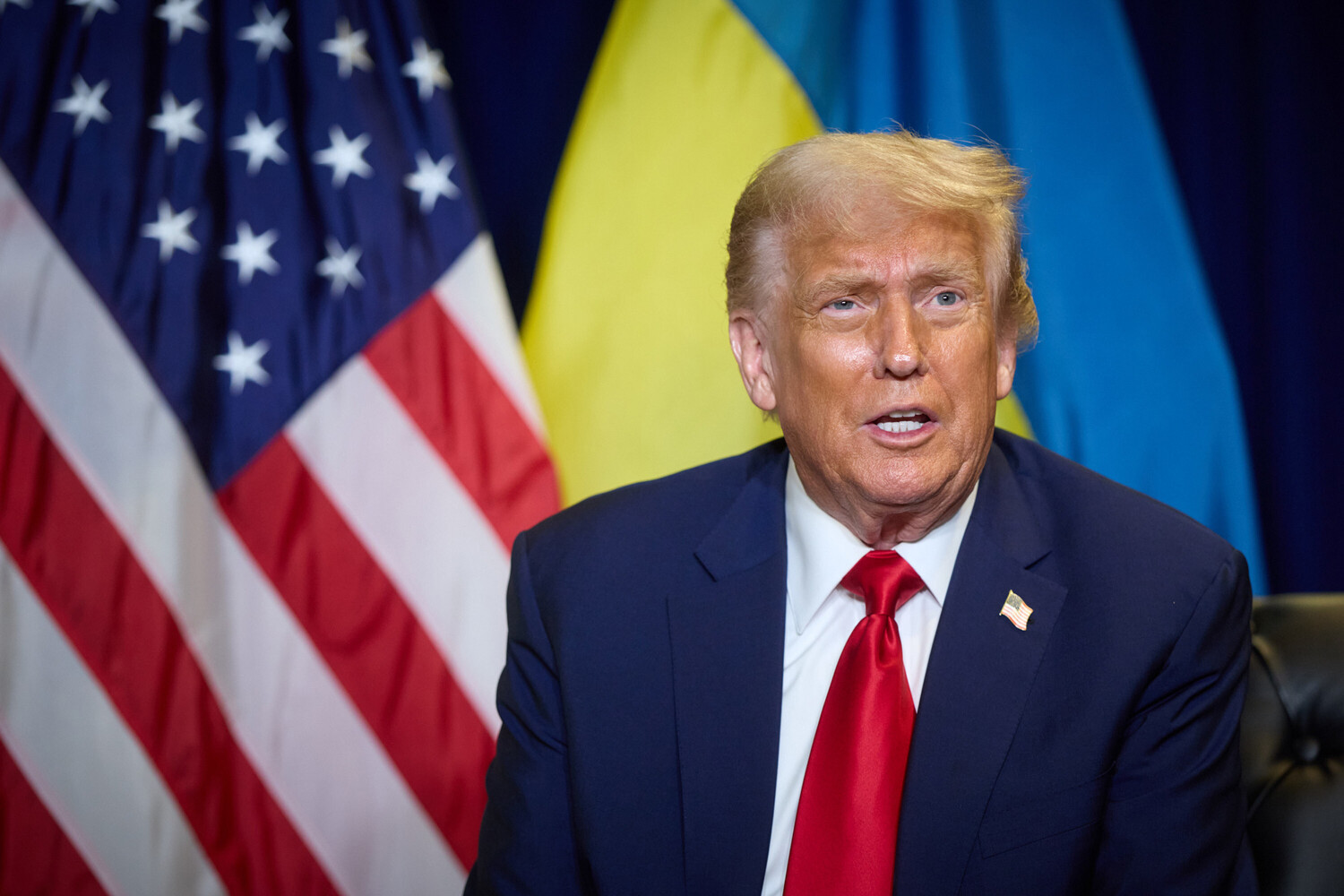
The Chinese Ministry of Foreign Affairs has officially confirmed U.S. President Donald Trump’s state visit to China. This is stated on the ministry’s website, according to "Komersant Ukrainian"
Beijing announced the trip just a few days before it begins, in line with China’s practice regarding high-level visits.
This will be an important summit against the backdrop of trade tensions between Washington and Beijing, the war in Iran, issues with the Strait of Hormuz, and disputes over Taiwan.
When will Trump’s visit to China take place?
According to a statement from China’s Ministry of Foreign Affairs, “At the invitation of Chinese President Xi Jinping, U.S. President Donald J. Trump will pay a state visit to China from May 13 to 15.”
This will be one of the most important meetings between the U.S. and China in recent times. Reuters reports that Trump is set to meet with Xi Jinping in Beijing, with trade, Taiwan, and the war in Iran as key topics.
According to international media reports, the summit has already been postponed due to the escalating situation in the Middle East. China has been cautious about holding the meeting amid the war in Iran, as Beijing is one of the largest buyers of Iranian oil and an important diplomatic partner of Tehran.
Trade will be one of the main topics
One of the key issues in the negotiations will be the extension of the trade truce between the U.S. and China. This refers to the agreements reached in October 2025 in South Korea, which were intended to stabilize economic relations between the two countries.
Reuters notes that the parties do not expect major breakthroughs but may agree on partial results, including the extension of the trade truce.
For Washington, one of the top priorities is stable access to rare earth metals. These minerals are needed for the production of machinery, electronics, automobiles, equipment, and defense technologies.
Rare earth metals: why this matters to the U.S.
The U.S. depends on stable supplies of rare earth metals, a significant portion of which is tied to the Chinese market. That is why Washington wants assurances that Beijing will not restrict exports of such materials.
Rare earth elements are used in the production of smartphones, computers, electric vehicles, energy equipment, and military hardware. Therefore, any restrictions imposed by China could create problems for American industry.
The issue of supplying these materials is expected to be a central topic during the talks between Trump and Xi.
Iran and the Strait of Hormuz will also be on the agenda
The talks between Trump and Xi Jinping will take place against the backdrop of the unstable situation surrounding Iran and the Strait of Hormuz. About one-fifth of the world’s oil and gas flows passed through this strategic sea route.
Reuters reports that tensions surrounding Iran are affecting global energy markets, and the U.S. is trying to enlist China in pressuring Tehran.
For Beijing, this issue is particularly sensitive, as China remains a major buyer of Iranian oil. At the same time, the U.S. has recently intensified sanctions pressure on Chinese entities involved in processing Iranian crude.
READ ALSO: Global oil market under threat: Iran sets the rules in the Strait of Hormuz
U.S. sanctions against Chinese refineries
Ahead of the visit, tensions between the U.S. and China have escalated due to Washington’s sanctions against Chinese private oil refineries, which, according to the U.S., were processing Iranian oil.
This could become one of the most difficult topics in the negotiations. China publicly opposes unilateral U.S. sanctions, while Washington insists on the need to restrict Iran’s financial and energy capabilities.
Trump is expected to try to persuade Xi Jinping to use Beijing’s influence on Tehran to unblock the Strait of Hormuz and advance peace agreements.
Watch us on YouTube: important topics – without censorship
Taiwan: Another Sensitive Topic in the Talks
The issue of Taiwan remains one of the most contentious in U.S.-China relations. Beijing reacts sharply to U.S. arms sales to Taiwan and considers the island part of its territory.
According to Reuters, Taiwan will be among the main topics of the summit, and China may demand clearer signals from Washington regarding its opposition to the island’s independence.
At the same time, the U.S. administration, according to media reports, does not plan to abandon its support for Taiwan’s defense capabilities.
U.S. Business Delegation: Who Might Travel with Trump
A business delegation may accompany Trump to China. Reuters reported that executives from major U.S. companies, particularly in the technology, finance, aerospace, and industrial sectors, were invited to a state dinner with Xi Jinping.
Among the companies whose executives were mentioned in the media are Nvidia, Apple, Qualcomm, Citigroup, and Boeing. At the same time, Reuters noted that the full list of invited companies had not been definitively confirmed.
It is expected that during the visit, the parties may announce a number of commercial agreements, particularly regarding Boeing aircraft, energy resources, and agricultural products.
What to Expect from the Trump-Xi Summit
Experts do not expect a breakthrough across all fronts from the meeting, but the very fact of the visit is important for stabilizing relations between the world’s two largest economies.
Potential outcomes of the summit:
- an extension of the trade truce;
- agreements on rare earth metals;
- consultations on Iran and the Strait of Hormuz;
- discussions on sanctions and energy;
- new commercial agreements;
- establishment or revitalization of trade dialogue mechanisms;
- an attempt to reduce tensions surrounding Taiwan.
Why this visit is important for the world
U.S.-China relations influence the global economy, trade, commodity markets, supply chains, and security in Asia. If Washington and Beijing can extend the trade truce, this could reduce risks for business and financial markets.
At the same time, the issues of Iran, the Strait of Hormuz, and Taiwan remain potential sources of new escalation. That is why Trump’s visit to China on May 13–15 will be one of the most important diplomatic events in the coming days.
Read us on Telegram: important topics – without censorship