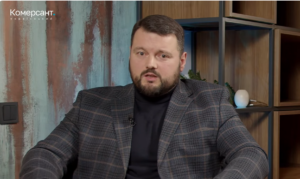
Less than 20% of actual convictions: Lawyer calls for transparent statistics from NABU
11 May 15:19
Vyacheslav Trunov, a Distinguished Lawyer of Ukraine, believes that the National Anti-Corruption Bureau should be more transparent in its communications regarding the final outcomes of its cases and more restrained in disclosing pre-trial investigation materials due to their potential political impact. He stated this in an interview with "Komersant Ukrainian": “Before asking for even more power, NABU must show the public complete statistics on the duration of investigations.”
The lawyer is convinced that the public is shown only a portion of the results, specifically high-profile allegations, searches, wiretaps, presentations of schemes, and high-profile operations. Meanwhile, people have the right to know the final outcome: the percentage of cases concluded with convictions, the stability of those convictions on appeal, the actual structure of penalties, and the actual return of assets to the state.
“Because a press release is not justice. A suspicion is not a verdict. An indictment is not proven guilt. And even a verdict does not always mean actual punishment,” noted Vyacheslav Trunov.
He also cited VAKS statistics for 2025, according to which 133 individuals were convicted. Of these, 25 individuals received actual imprisonment—approximately 18.8%; 97 were released on probation—72.9%; 7 were fined—5.3%; and 4 received other forms of exemption from punishment—about 3%.
“This raises a very simple question: how should society assess the effectiveness of the anti-corruption system if less than 20% of those convicted receive actual prison sentences under final judgments?” the lawyer noted.
READ ALSO: Before asking for even more power, NABU must provide society with complete statistics on investigation timelines
In his view, the strength of a law enforcement agency in a state governed by the rule of law is measured not by the number of press releases or the scope of its powers, but by the quality of evidence, the consistency of sentences, and adherence to procedural safeguards. Therefore, NABU’s arguments in favor of reducing judicial oversight appear more like a political argument than evidence of a genuine need.
“Before asking for even more power, anti-corruption agencies must demonstrate greater transparency—especially regarding the duration of investigations,” the lawyer asserts.
He also drew attention to the problem of publishing pre-trial investigation materials, which exists at NABU and the SAPO.
In such cases, any publication of materials prior to a verdict has a political impact.
“Informing the public is normal. Reporting on suspicions, searches, asset freezes, or the facts of a case is acceptable if done correctly. But selectively releasing fragments of pre-trial investigation materials, audio recordings, transcripts, and ‘tapes’ into the public domain—which create the impression of guilt in the public before a court verdict—is a different story,” Trunov believes, adding that law enforcement agencies in European countries approach this much more cautiously. After all, there are certain risks of political influence.
“Political influence arises when several factors coincide: very broad powers, weaker judicial oversight, lengthy proceedings, selective public disclosure of materials, and the absence of a swift judicial resolution. In such cases, criminal proceedings can influence political careers, approval ratings, government decisions, personnel appointments, and business reputations—even before a verdict is reached. This is dangerous not only for the suspects. It is dangerous for the state,” the lawyer added.
Context
Earlier, NABU Director Semen Kryvonos and SAPO Head Oleksandr Klymenko sent a letter to the Prime Minister of Ukraine demanding that their powers be strengthened and funding increased. Subsequently, the publication “Sudovo-Yuridichna Gazeta” published a draft of legislative changes proposed by the anti-corruption agencies. In particular, the document calls for extending the duration of pre-trial investigations, eliminating judicial oversight, and expanding a range of powers for NABU and the SAPO.
It should be noted that over the past five years, NABU has referred less than 14% of criminal cases to court.
Watch us on YouTube: important topics – without censorship