Preparing for a “nuclear war”? Russia is buying up millions of metric tons of buckwheat and stockpiling it in the permafrost
20 August 19:46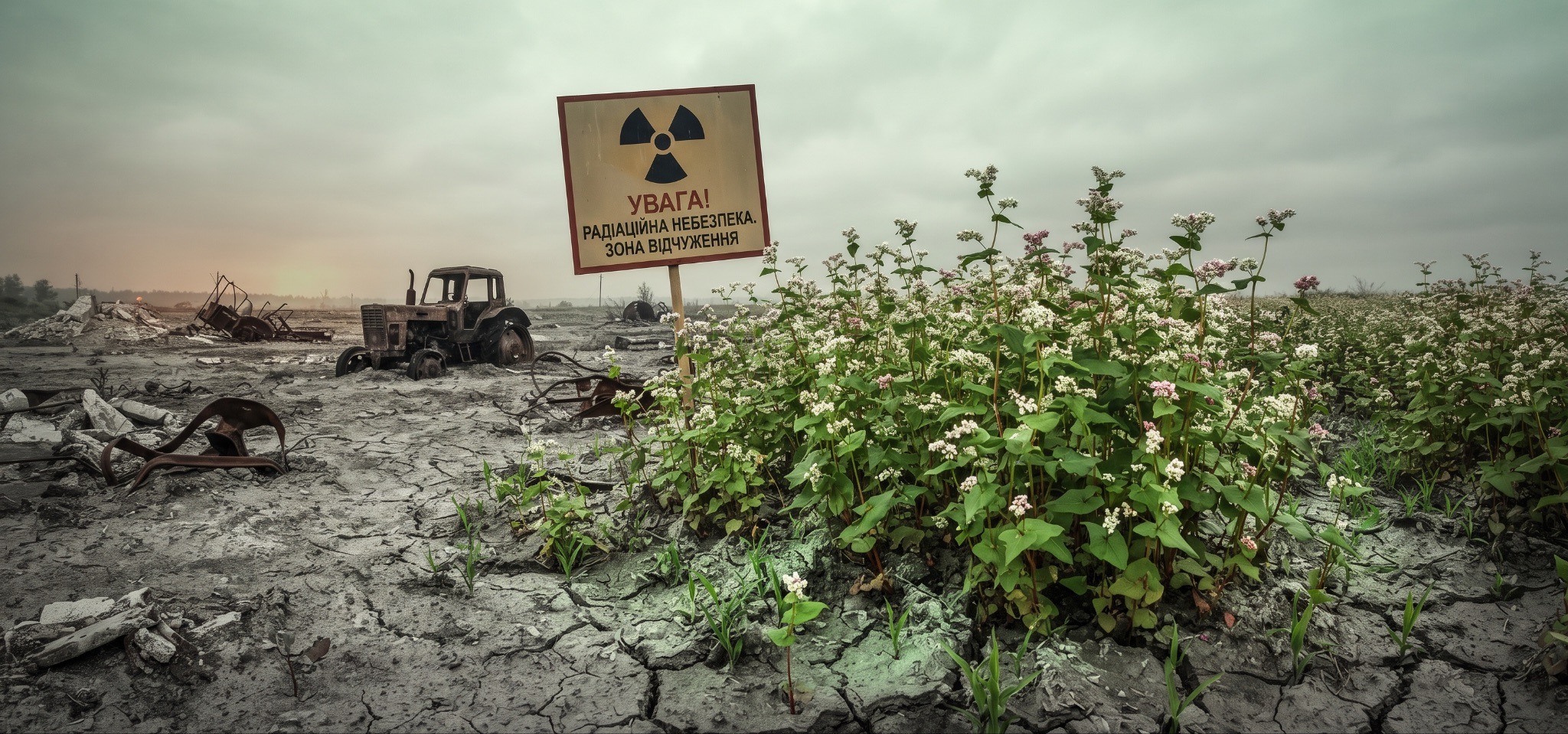 ANALYSIS
The unique properties of buckwheat—as the only crop that grows in radioactively contaminated areas—make it a strategic resource on a global scale. However, while Russia is building a global monopoly and stockpiling millions of units, Ukraine is losing its own position. The International Buckwheat Association has warned that the government continues to completely ignore the need to build critically important reserves. And while officials throw up their hands in helplessness, the neighboring aggressor is carrying out a large-scale food sabotage operation, turning an ordinary grain into a silent weapon of the future. Why were the unique properties of ordinary buckwheat once studied under the auspices of the KGB, and how is this crop linked to survival during a nuclear war? In this article—
Ukraine’s food security is under threat due to an underestimation of buckwheat’s strategic importance. This was stated by Sergei Gromovoy, executive director of the International Buckwheat Association, in a comment to the publication "Komersant Ukrainian". According to him, the state has completely withdrawn from building strategic reserves of this crop, which is a fatal mistake.
The Nuclear Legacy and Unique Properties of Buckwheat
Buckwheat is not just a staple of the Ukrainian diet, but a unique biological crop.
“It is the only crop that grows in areas contaminated with radionuclides. By the second generation, it recovers—there are no longer any mutations—and it is safe to consume,” emphasizes Serhiy Gromovyi.
According to the expert, as early as the mid-1970s, during the Cold War, secret research was conducted in Ukraine under the auspices of the KGB. It was determined that buckwheat does not accumulate radionuclides but rather excretes them. The entire modern Ukrainian buckwheat industry was historically developed as part of this program.
In the Soviet Union, strategic reserves of buckwheat were stored in special silos on permafrost in preparation for a nuclear war. Studies have shown that buckwheat retains its quality for 75 years.
How Russia Destroyed the Ukrainian Market
Armed with this information, Russia launched a hybrid war against Ukraine as early as 2016, targeting the buckwheat market. By the start of the full-scale invasion, Russia had driven Ukraine out of the markets of Europe, Canada, and the United States.
“By early 2022, the aggressor already controlled 50% of the Ukrainian market. Our buckwheat acreage began to plummet catastrophically,” said Serhiy Hromovyi.
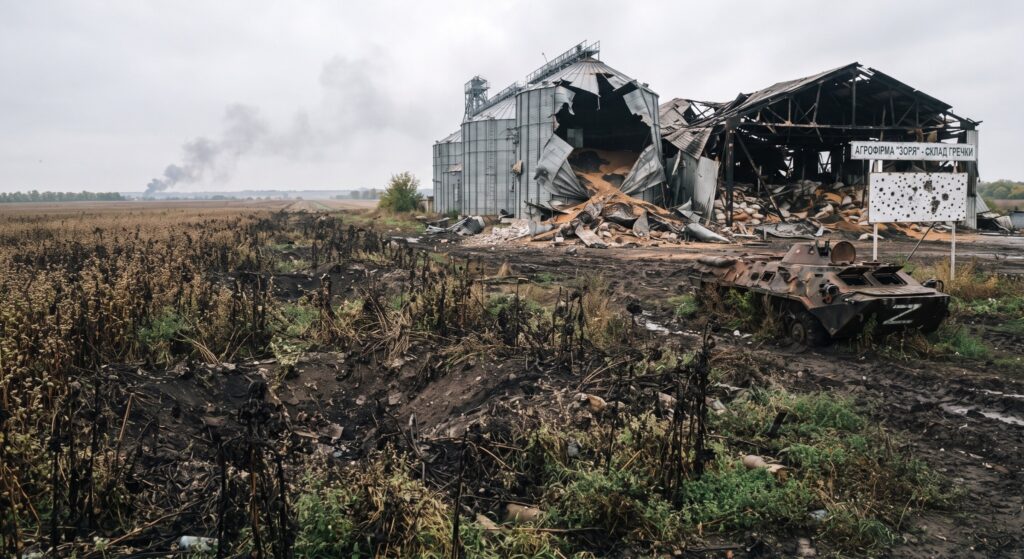
While the area had been restored to 120,000 hectares before the war, it fell to 58,000 last year and stands at only 61,000 hectares this year. This is significantly less than the country’s minimum needs.
Demographic Indicators and Russia’s Global Monopoly
The standard consumption rate for buckwheat groats should be 6.8 kg per person per year. Today, however, this figure in Ukraine is less than 2.5 kg and continues to fall. According to Serhiy Gromov, based on the actual level of buckwheat consumption, no more than 25 million people currently live in the territory controlled by Ukraine.
Meanwhile, according to Serhiy Gromov, Russia is aggressively expanding its global presence:
- Since 2022, Russia has captured the Chinese market (exporting nearly 300,000 metric tons of buckwheat there annually).
- Only 24 countries in the world grow buckwheat, with Russia, China, and Ukraine historically being the main exporters.
- Today, Russia has become the de facto monopolist in global production.
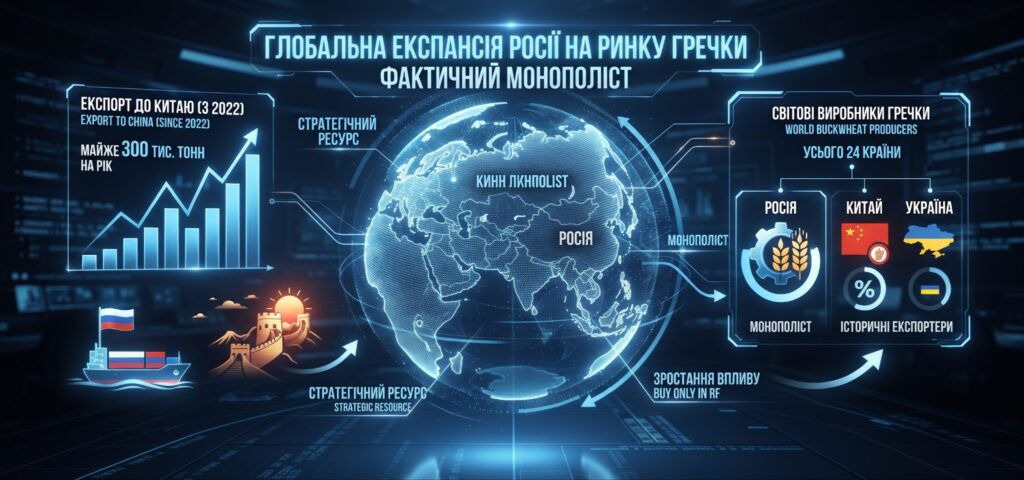
“In other words, Russia is effectively a monopoly in global buckwheat production. There is simply nowhere else to buy more buckwheat than in Russia. And it has accumulated a surplus of grain that exceeds its own consumption,” said Serhiy Gromovyi.
According to the expert’s estimates, Russia has accumulated a surplus of buckwheat totaling nearly one and a half million metric tons (with domestic consumption at about 750,000 metric tons). There are no official figures on these volumes, which indicates the creation of secret state reserves.
“This suggests that Russia is building up strategic reserves of buckwheat in preparation for a nuclear war,” Gromov emphasized.
Thus, the situation surrounding buckwheat goes far beyond a mere market shortage or agro-industrial problems, becoming a matter of global security. The crop’s unique ability to grow in areas contaminated with radionuclides and maintain its quality for decades makes it a strategic resource in the event of a disaster. As other countries build up significant reserves and consolidate their market positions, Ukraine faces the need to rethink its approach to agricultural production. Experts emphasize the need to develop a national strategy that takes into account both current economic indicators and long-term factors affecting the country’s food security.
Watch us on YouTube: important topics – without censorship