The example of Israel flying amid wartime conditions: Can Ukraine do the same? Mykhaylo Kurachenko explains
27 May 11:30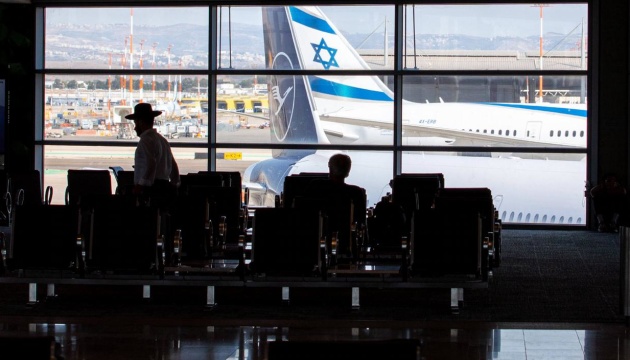
Despite the full-scale war, the issue of resuming civilian air traffic in Ukraine remains on the agenda. Discussions intensify whenever statements are made about the possible reopening of certain airports or news emerges about new technological solutions in air traffic control. In such discussions and forecasts, Israel is often cited as a country that has lived under the threat of rocket attacks for decades yet has maintained international air traffic. Whether Ukraine can follow this example and what makes it unique was explored by
First of all, a direct comparison between Ukraine and Israel in the context of a possible resumption of civil air traffic under martial law is not as obvious as it might seem at first glance.
Read us on Telegram: important topics – without censorship
As explained by civil aviation expert and Ukrainian-American entrepreneur Mykhailo Kurachenko, the mere fact that Israel continues to operate international flights during military conflicts does not mean that a similar model can automatically be applied in Ukraine.
“Israel demonstrates that civil aviation can function even under conditions of constant military risks. But this works only when the state is capable of providing a multi-layered air defense system, rapid response to threats, and a high level of trust from international carriers in these security mechanisms,” notes Kurachenko.
Israel’s Unique Experience
Israel truly has unique experience. Even after the massive attacks by Hamas in 2023 and numerous missile strikes by Yemeni Houthis in 2024–2025, Ben Gurion International Airport continued to operate, although some airlines temporarily canceled flights following the missile attacks. In May 2025, a strike near the airport grounds led to a brief suspension of flights and the cancellation of some international flights, but the airport’s operations were quickly restored.
This example is often cited by proponents of a gradual opening of Ukrainian airspace. However, experts point out that the nature of the threats remains a key difference.
“In the case of Ukraine, we are dealing not only with the threat of missiles. We are talking about a full-scale war with a state that possesses a significant arsenal of cruise and ballistic missiles, combat aircraft, and long-range strike capabilities. For insurance companies, this is an entirely different level of risk,” explains Kurachenko.
According to him, even after political agreements are reached on the partial reopening of airspace, aviation insurance will still be the decisive factor.
“An aircraft may be technically ready for flight, and an airport may be fully prepared to receive passengers. But if the insurance market is not ready to assume the risks, regular flights simply won’t take off. That is why the issues of security and insurance are virtually inseparable today,” the expert explains.
Is Ukraine preparing?
At the same time, the Ukrainian aviation system continues to prepare for the future resumption of flights. Among the evidence supporting this thesis is, in particular, UkSATSE’s participation in the European Flight Centric ATC project within the SESAR program—one of the key elements of the “Single European Sky” concept. The project involves moving away from the traditional division of airspace into sectors and transitioning to a model where a controller manages a specific flight regardless of sector boundaries, notes, in particular, the publication ua.news. It is also noted that this approach allows for more efficient distribution of workload among air traffic controllers, optimization of routes, and reduction of fuel consumption.
Watch us on YouTube: important topics – without censorship
According to Kurachenko, such decisions do not directly open up Ukrainian airspace, but they lay the groundwork for the country’s rapid integration into the European aviation system once the active phase of the war has ended.
“Today, Ukraine is effectively investing in its post-war aviation future. The more we are integrated into common European standards now, the faster we will be able to return to full-scale air service after the airspace is opened,” the expert believes.
This is precisely why most experts are cautious in assessing the prospects for a rapid resumption of flights. The most realistic scenario currently cited is the launch of a limited number of international flights from the western regions of the country after receiving the necessary security guarantees first and foremost.
At the same time, Israel’s experience undoubtedly remains a valuable benchmark for Ukraine, as well as an example of a successfully implemented model for ensuring international aviation safety under the most challenging conditions.
As reported by "Komersant Ukrainian", airlines are canceling flights due to rising fuel prices.